Singapore Parliament Approves Motion on AI's Impact on Jobs
Lawmakers unite to ensure economic progress from artificial intelligence is inclusive and benefits all citizens.

SINGAPORE —
Key facts
- Singapore Parliament unanimously passed a motion on Wednesday, May 6.
- The motion addresses the impact of artificial intelligence on jobs and livelihoods.
- Twenty-four Members of Parliament debated the motion for over seven hours.
- Seven Members of Parliament from the Workers' Party contributed to the debate.
- The motion affirms that Singapore must avoid jobless growth amid the AI transition.
- Labour chief Ng Chee Meng moved the private member's motion.
- A proposal for a national 'AI equity fund' was suggested by MP Gerald Giam.
Parliament United on Inclusive AI Growth
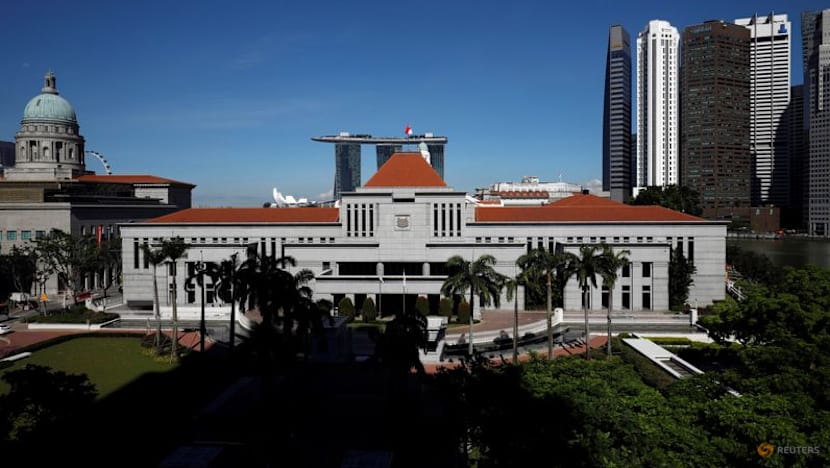
Singapore's Parliament has unanimously passed a significant motion affirming the nation's commitment to ensuring that economic progress driven by artificial intelligence is inclusive and does not lead to job losses. The consensus reached on Wednesday, May 6, underscored a collective determination to manage the profound impact of the AI transition on workers' livelihoods. Labour chief Ng Chee Meng described the outcome as a "clear consensus" that the challenges posed by AI must be a shared responsibility. This private member's motion, the first tabled by the labour movement in over a decade, called upon the House to acknowledge the transformative power of new technologies. It emphasized that Singapore's strategy must be equitable and that economic advancement must benefit all segments of society. The motion's passage followed an extensive two-day debate that spanned more than seven hours, showcasing a united front across political lines. The core message resonated throughout the parliamentary sessions: artificial intelligence adoption is inevitable for Singapore to maintain its competitive edge. Both businesses and individuals must embrace AI fluency to harness emerging opportunities. The debate highlighted a shared understanding that proactive measures are essential to navigate this technological shift.
A Debate Spanning Seven Hours
The motion, co-moved by Mr Ng alongside Mr Saktiandi Supaat and Ms Yeo Wan Ling, both from the People's Action Party (PAP), and Nominated Member of Parliament Mark Lee, saw robust participation from across the political spectrum. A total of 24 Members of Parliament contributed to the discussion, including seven from the opposition Workers' Party (WP). Two political office holders, Manpower Minister Tan See Leng and Minister of State for Digital Development and Information and Education Jasmin Lau, also delivered speeches. Discussions delved into the potential for AI to exacerbate existing inequalities, with several MPs warning of a future where some workers thrive while others are left behind. Mr Ng, in his concluding remarks, echoed these concerns, stating that market forces alone may not automatically translate AI-driven growth into benefits for the workforce. He stressed the government's commitment to actively shape the direction of AI development rather than leaving outcomes to chance. The comprehensive debate ensured that a wide array of perspectives and proposals were considered. The active engagement from MPs from both ruling and opposition parties demonstrated a shared commitment to the nation's future prosperity and the well-being of its citizens in the face of technological disruption.
Workers' Party Proposals for an Equitable Future
Seven Members of Parliament from the Workers' Party actively contributed to the debate, putting forth several concrete proposals aimed at supporting workers through the AI transition. Despite their distinct suggestions, all seven ultimately voiced their support for the motion, underscoring a common ground on the need for proactive government intervention. Among the notable proposals was one from Mr Gerald Giam, the MP for Aljunied GRC. He suggested the establishment of a national "AI equity fund." This fund, he elaborated, would channel a portion of its revenue into a "social dividend," distributed directly to every adult Singaporean citizen. Mr Giam further outlined potential sources for such a fund, including corporate taxes and Singapore's net investment returns. These ideas reflect a broader sentiment within the Workers' Party that the benefits of technological advancement should be more widely and equitably shared among the population.
Government's Commitment to Shaping AI's Trajectory
The government has affirmed its intention to actively steer the course of AI adoption, ensuring that its benefits are broadly distributed. Manpower Minister Tan See Leng and Minister of State Jasmin Lau both emphasized the necessity of collective action in harnessing AI's potential while mitigating its risks. Their contributions reinforced the motion's call for deliberate government strategy rather than passive reliance on market dynamics. Mr Ng Chee Meng highlighted that the government's affirmation through this motion provides confidence that outcomes will not be left to chance. He expressed anticipation for the forthcoming Economic Strategy Review (ESR) report, which is expected to outline further governmental plans and responses to AI-enabled growth. This review is seen as a crucial step in solidifying Singapore's approach. The commitment to shaping AI's trajectory signals a proactive stance by the Singaporean government. It aims to foster an environment where enterprises and workers can collaborate, leveraging tripartism—a partnership between government, employers, and unions—to achieve mutually beneficial outcomes, mirroring past successes in national development.
Tripartism as the Bedrock for AI Era
The motion's passage signifies a unified resolve within Parliament to strengthen national plans and responses as Singapore navigates a period of AI-driven growth. The emphasis on tripartism, a cornerstone of Singapore's industrial relations, is seen as particularly vital in the current technological landscape. Mr Ng expressed full confidence that this united approach will fortify the nation's strategies. The goal is to forge a robust model of tripartism that can adapt to the demands of the AI era, ensuring that progress is achieved in a manner that benefits all Singaporeans. This collaborative framework is intended to replicate past successes in fostering inclusive economic development. The overarching sentiment is that through collective action and a shared vision, Singapore can successfully harness the power of AI. This will involve enabling enterprises to innovate and empowering workers to adapt, ultimately leading to win-win outcomes for the nation.
The bottom line
- Singapore's Parliament has unanimously passed a motion to ensure AI-driven economic growth is inclusive.
- The motion, debated for over seven hours by 24 MPs, emphasizes managing the impact of AI on jobs.
- Labour chief Ng Chee Meng moved the motion, highlighting the need for collective action on AI's effects.
- Workers' Party MPs proposed an 'AI equity fund' to distribute benefits directly to citizens.
- The government has committed to actively shaping AI adoption rather than relying solely on market forces.
- The motion reinforces the importance of tripartism (government, employers, unions) for navigating the AI era.





Ong Ah Heng, Former PAP MP and Union Leader, Dies at 84

BJP Secures Historic Victory in West Bengal, Mamata Banerjee Loses Bhabanipur Stronghold
Taiwan President Defies China with Diplomatic Trip to Eswatini
