Taiwan President Defies China with Diplomatic Trip to Eswatini
Lai Ching-te's journey, marked by overflight denials and Beijing's sharp rebukes, underscores the island's struggle for international space.
SINGAPORE —
Key facts
- Taiwan President Lai Ching-te visited Eswatini from May 2 to May 5.
- China accused Taiwan of "dollar diplomacy" and Eswatini of being "kept and fed" by Taipei.
- Three Indian Ocean nations – Seychelles, Mauritius, and Madagascar – denied overflight permission for Lai's earlier planned trip.
- Lai traveled on King Mswati III's private A340 aircraft, previously operated by China Airlines.
- Eswatini is one of only 12 countries maintaining formal diplomatic ties with Taiwan.
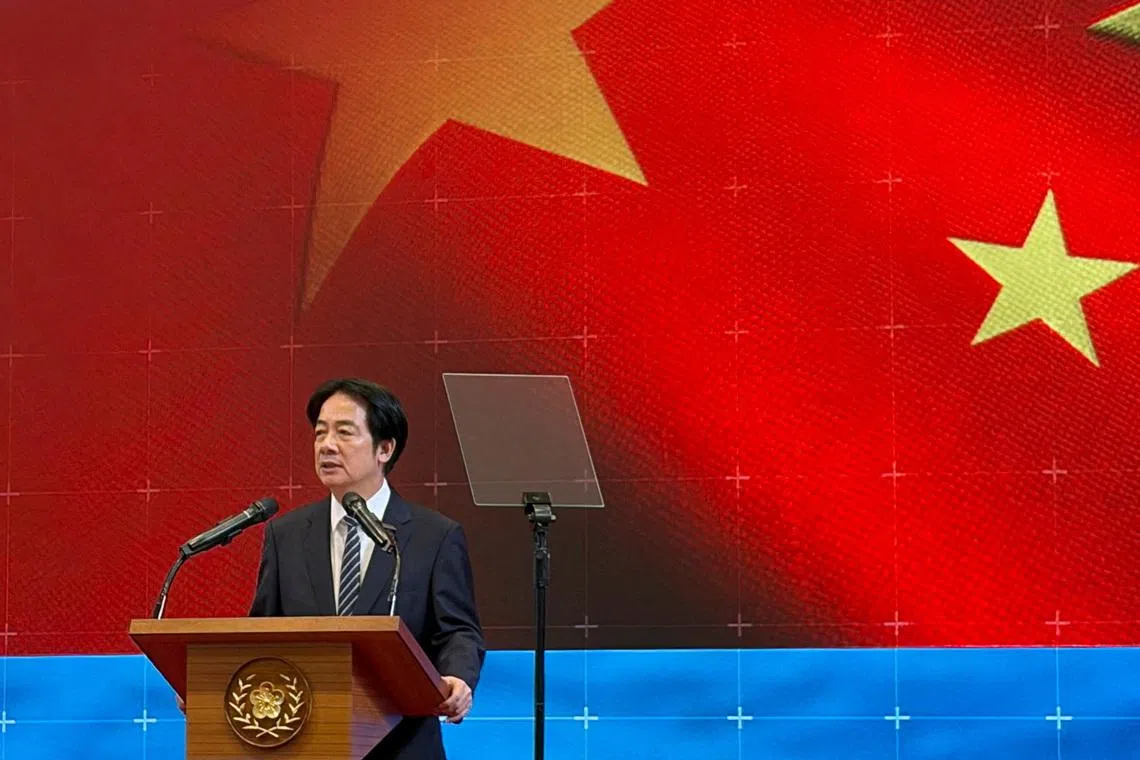
- Lai stated Taiwan "will not give in to pressure" and will "advance steadily onto the international stage."
- Indonesia affirmed the Eswatini aircraft's right of overflight under international law.
Lai's Diplomatic Gambit to Eswatini
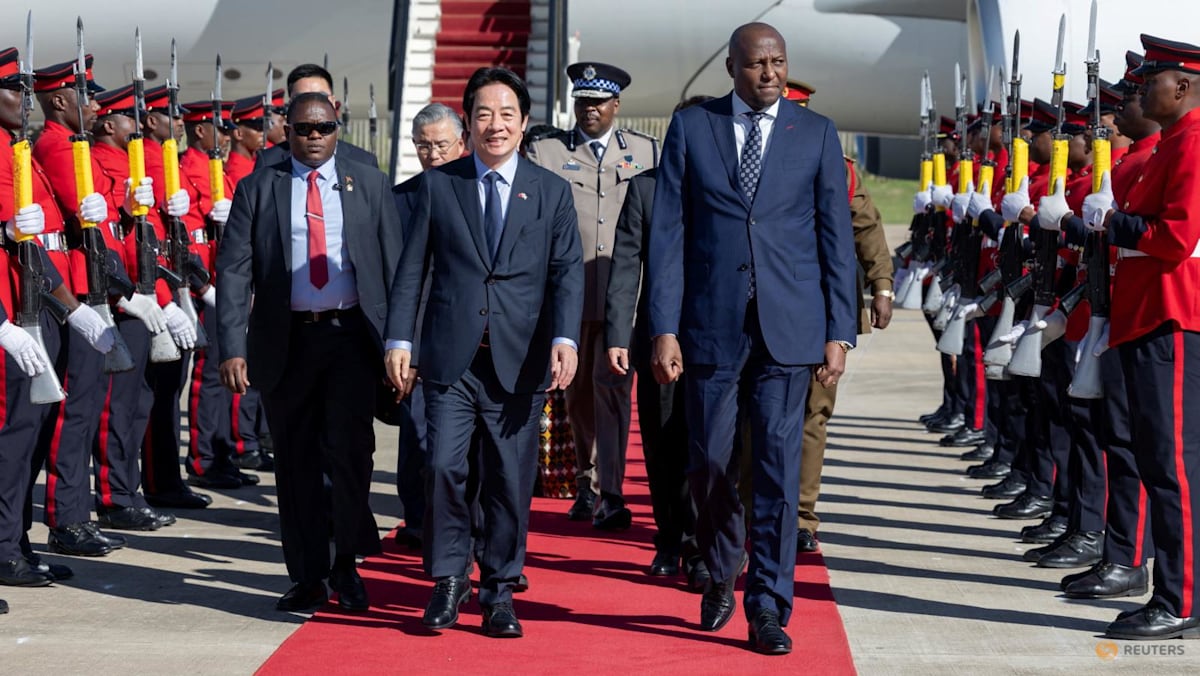
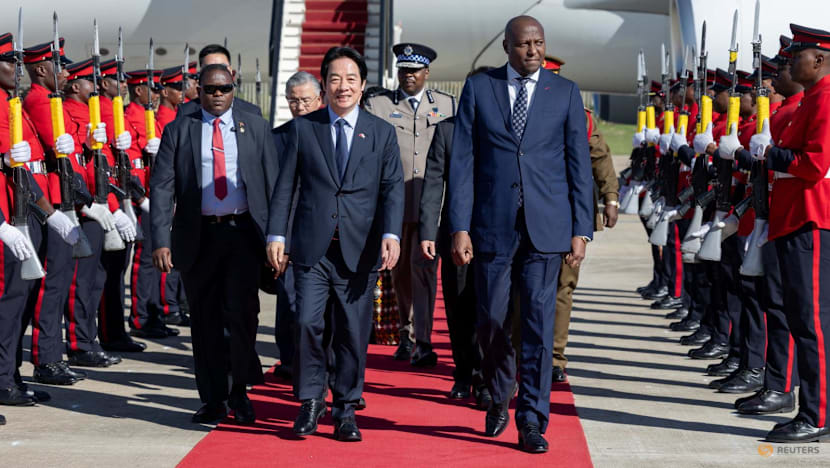
Taiwanese President Lai Ching-te returned to Taipei on May 5, concluding a significant diplomatic visit to Eswatini, one of the island's few remaining formal allies. The trip, undertaken with a circuitous route over the Indian Ocean, highlighted the intensifying diplomatic contest between Beijing and Taipei, with China employing strong rhetoric to condemn Eswatini's engagement with the democratically governed island it claims as its own. Beijing views Lai as a "separatist" and has consistently pressured countries to sever ties with Taipei. This latest diplomatic maneuver saw Lai travel to the southern African kingdom, formerly known as Swaziland, for an undisclosed period, arriving on May 2 and departing on May 4. The visit, kept unannounced until after Lai's return, aimed to reinforce Taiwan's international standing amidst persistent Chinese pressure. Upon his arrival at Taoyuan International Airport, Lai declared Taiwan's resolve, stating, "Taiwanese people have the right to engage with the world. We will not retreat in the face of suppression." He emphasized that the trip's initial obstructions only served to demonstrate Taiwan's "firm determination and will to engage with the world."
China's Scathing Condemnation
China responded with unusually forceful language, accusing Eswatini's leaders of being "kept and fed" by Taiwan. Lin Jian, a spokesperson for China's foreign ministry, described Lai's journey as a "scandal and a farce," asserting that such "separatist" activities are rejected by the international community. "Some politicians in Eswatini, kept and fed by Taiwan, have provided space for Taiwan independence forces - this runs counter to the tide of history, and China strongly condemns it," Lin stated in Beijing on Wednesday, May 6. The phrasing used, a derogatory expression implying servitude, underscored the depth of Beijing's displeasure. China's foreign ministry also characterized Lai's visit as a "skulking" trip, likening him to a "rat" in a previous, unconfirmed statement. This aggressive stance reflects Beijing's broader strategy to isolate Taiwan diplomatically and economically.
Overflight Denials and Strategic Routes
The diplomatic journey was fraught with challenges, as Taiwan's government revealed that China had coerced three Indian Ocean nations—the Seychelles, Mauritius, and Madagascar—into denying overflight permission for Lai's aircraft during an earlier planned trip in April. This was intended to disrupt Lai's attendance at celebrations marking the 40th anniversary of King Mswati III's accession to the throne. To circumvent these obstacles, Lai's recent trip utilized a circuitous route. Instead of flying on a plane chartered from Taiwan's China Airlines, as is customary, he traveled on King Mswati III's private A340 aircraft. This plane was previously operated by Taiwan's national carrier. Upon departure from Eswatini, the A340 took a lengthy path over the southern Indian Ocean, deliberately avoiding the flight information regions of Mauritius and Madagascar, both of which have substantial economic and diplomatic ties with Beijing. The aircraft subsequently flew over Australia's Christmas Island, Indonesia, Malaysia, and the Philippines before reaching Taiwan.
Taiwan's Resilience and International Law
Despite China's "blockade and suppression," President Lai asserted that Taiwan "will surely advance steadily onto the international stage" through unity and collaboration with like-minded partners. He highlighted that the trip, though obstructed, ultimately showcased Taiwan's determination to engage globally. In a notable affirmation of international norms, Indonesia's Foreign Ministry stated that the Eswatini aircraft had flown "in accordance with its right of overflight under international law." This statement implicitly pushed back against China's efforts to control regional airspace for political purposes. Upon his return to Taiwan, Lai was accompanied by Eswatini Deputy Prime Minister Thulisile Dladla, who had recently visited Taipei as the King's special envoy. The presence of Ms. Dladla underscored the ongoing friendly relations between the two nations. Taiwan's F-16 fighter jets escorted Lai's aircraft during its final approach, a symbolic display of sovereignty and security.
The Enduring Battle for Diplomatic Recognition
The exchange over President Lai's visit to Eswatini is a microcosm of the broader, long-standing competition between China and Taiwan for diplomatic recognition and influence in developing nations. This practice, often termed "dollar diplomacy," involves offering economic or developmental aid in exchange for formal diplomatic ties. Taiwan, a self-governing democracy, faces constant pressure from Beijing, which views the island as a renegade province that must be unified with the mainland, by force if necessary. This diplomatic isolation is a key component of China's strategy, aiming to diminish Taiwan's international legitimacy and prevent it from participating in global forums as an equal. Eswatini's continued recognition of Taiwan is significant, especially given the shrinking number of countries that maintain formal diplomatic relations with Taipei. The visit, and the subsequent diplomatic sparring, underscores the high stakes involved in Taiwan's quest to maintain its international space and assert its sovereignty.
Future Implications and Unanswered Questions
The incident raises questions about the future of Taiwan's diplomatic allies and the effectiveness of China's pressure tactics. Beijing's aggressive rhetoric suggests a willingness to escalate its efforts to curb Taiwan's international engagement, potentially leading to further diplomatic incidents. Taiwan, under President Lai, appears committed to a more assertive foreign policy, seeking to strengthen ties with existing allies and explore new avenues for international cooperation. The island's ability to navigate these challenges will depend on its diplomatic resilience and the support it receives from like-minded democracies. As the geopolitical landscape continues to shift, the diplomatic tug-of-war between China and Taiwan over international recognition remains a critical element of regional stability. The world watches to see how these dynamics will unfold and what impact they will have on Taiwan's long-term prospects.
The bottom line
- Taiwan President Lai Ching-te undertook a diplomatic visit to Eswatini, one of the island's few remaining formal allies.
- China strongly condemned the visit, accusing Taiwan of "dollar diplomacy" and Eswatini of being complicit.
- Lai's journey was complicated by overflight denials from three Indian Ocean nations, attributed to Chinese pressure.
- Taiwan's government stated its resolve to engage internationally despite Chinese suppression.
- The visit highlights the ongoing diplomatic competition between Beijing and Taipei for international influence.
- Indonesia affirmed the principle of free overflight rights under international law, implicitly countering China's actions.





TVK Surges Ahead in Tamil Nadu, Stalin Loses Kolathur Seat
TVK Surges in Tamil Nadu Count, DMK and AIADMK Trailing in Early Trends

BJP on Course to Oust Mamata Banerjee in West Bengal as Actor Vijay Reshapes Tamil Nadu Politics
