US Job Openings Steady as Hiring Shows Signs of Life
While headline figures remain flat, a surge in hiring suggests underlying resilience in the American labor market.
SINGAPORE —
Key facts
- US job openings were 6.87 million in March, nearly unchanged from February's 6.92 million.
- Hiring increased significantly in March, with employers adding 5.55 million gross jobs.
- More Americans quit their jobs in March, indicating confidence in job prospects.
- Layoffs rose in March, but the increase in hiring offset this trend.
- Transportation, warehousing, utilities, professional services, and food services saw notable hiring gains.
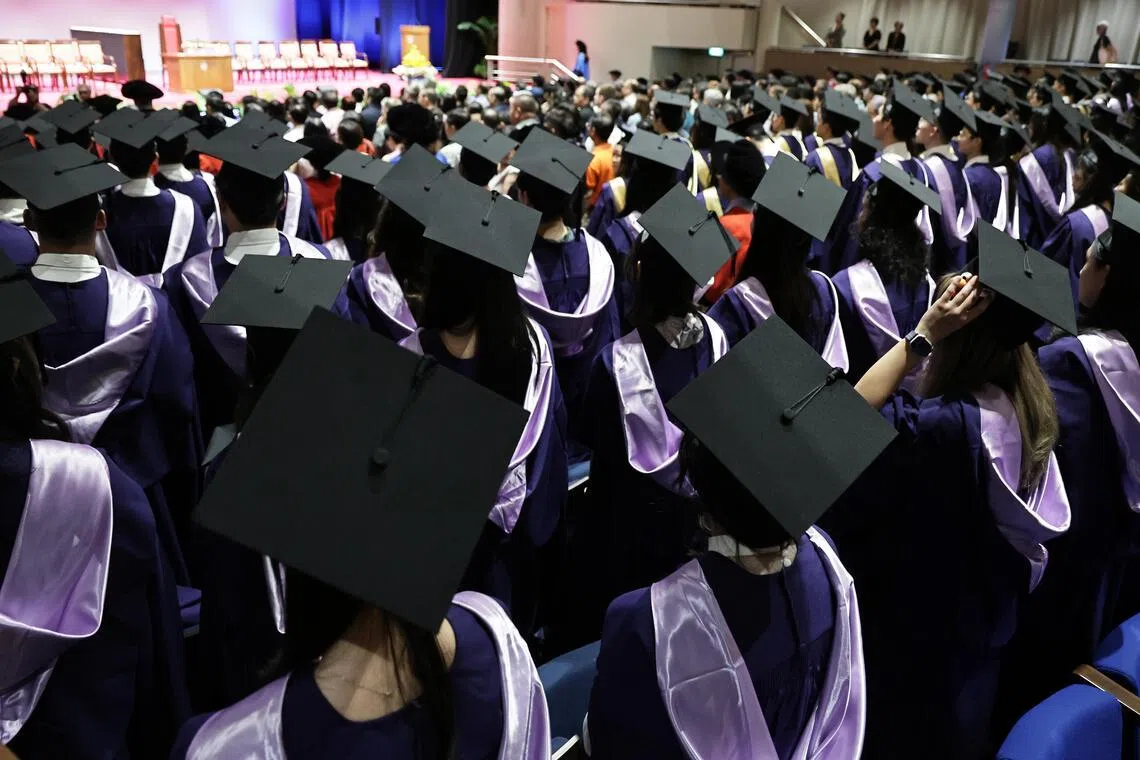
- Singaporean fresh graduates faced a softening employment market, with 74.4% securing full-time roles in 2025.
- Overall employment for Singaporean degree holders aged 25-29 remained stable at around 90% over the past decade.
A Labor Market at a Crossroads
American employers posted nearly the same number of job openings in March as in the previous month, a sign that the nation's labor market, while showing some signs of life, remains sluggish. 6.87 million job openings, a marginal dip from February's 6.92 million, reflecting a cautious hiring environment that has persisted through the early part of 2026. This plateau in openings occurs against a backdrop of economic uncertainties, including the ongoing conflict in the Middle East and lingering inflation concerns. While headline figures suggest a steady state, a deeper look at the data reveals a more dynamic picture, with a notable uptick in actual hiring. The figures come at a time when the Federal Reserve is closely monitoring labor market health as a key indicator, alongside inflation, for potential policy adjustments. The delicate balance between job creation and economic stability remains a central challenge for policymakers.
Hiring Accelerates Amidst Layoffs
Despite the static number of available positions, the pace of hiring accelerated significantly in March. Employers added 5.55 million gross jobs, the highest figure recorded since February 2024. This surge in hiring suggests that while companies may be hesitant to create new roles, they are actively filling existing vacancies and potentially replacing departing staff. More Americans also chose to quit their jobs in March, a move often interpreted as a signal of confidence in their ability to find new, potentially better, employment opportunities. This increased voluntary departure rate, coupled with rising layoffs, paints a complex picture of labor turnover. The Job Openings and Labor Turnover Survey indicated a rise in layoffs during March. However, the substantial increase in hiring appears to have absorbed much of this churn, preventing a net decline in employment and suggesting a degree of underlying strength in the market's ability to reallocate workers.
Sectoral Shifts and Economic Headwinds
The increase in hiring was particularly pronounced in several key sectors. Transportation, warehousing, and utilities saw a significant boost, adding 108,000 workers. Professional and business services also experienced robust growth, with 165,000 new hires, alongside accommodation and food services, which brought on 124,000 employees. These gains were partially offset by a reduction in federal government employment, which shed 7,000 workers, though this decline was less severe than in previous months. The overall trend points to a dynamic labor market where certain industries are expanding their workforce even as others contract or maintain a steady state. Several factors continue to weigh on the broader hiring landscape. High interest rates, enacted to combat inflation that spiked in 2021-2022, have historically discouraged robust hiring. Uncertainty surrounding geopolitical events, such as the conflict involving Iran, and the potential disruptive impact of artificial intelligence also contribute to a cautious approach by businesses.
Singapore's Graduates Navigate a Softer Market
In Singapore, fresh graduates are experiencing a more challenging entry into the full-time workforce. Data from 2025 indicates that only 74.4% of university graduates secured full-time employment, a notable decrease from 87.5% in 2022. This trend suggests a longer school-to-work transition period for many. However, Manpower Minister Tan See Leng emphasized that this softening is viewed in the context of a post-COVID-19 hiring surge that created unusually high employment rates. He pointed to longer-term trends, noting that employment rates for degree holders aged 25 to 29 have remained broadly stable at around 90% over the past decade. The government is actively addressing concerns about unequal access to internships and professional networks. Initiatives are underway to expand internship opportunities, industry attachments, and career advisory services in collaboration with higher learning institutions. The upcoming merger of Workforce Singapore and SkillsFuture Singapore into the Skills and Workforce Development Agency aims to provide a unified platform for training, career guidance, and job matching.
Future Outlook and Policy Considerations
Looking ahead, economists anticipate a further moderation in job growth for April, with expectations for around 57,000 to 70,000 net new jobs. The unemployment rate is projected to remain low, potentially ticking up slightly to 4.3% or 4.4% as labor force participation may increase. The Federal Reserve's policy decisions will continue to be heavily influenced by incoming labor market data and persistent inflation, exacerbated by rising oil prices driven by Middle East shipping threats. The duration of these energy cost increases remains a critical question. For Singapore, the focus remains on equipping graduates with relevant skills and fostering lifelong learning to adapt to evolving industry demands. The creation of a single agency for workforce development signals a commitment to streamlining support for job seekers and employers alike, aiming to reduce skills mismatches and improve career outcomes.
The bottom line
- US job openings remained largely unchanged in March, indicating a plateau in available positions.
- A significant increase in hiring activity in March suggests underlying strength and worker mobility.
- Sectors like transportation, professional services, and food services are driving job creation.
- Singapore's fresh graduates face a tougher job market, though overall youth employment remains stable long-term.
- Geopolitical tensions and inflation continue to pose risks to the US labor market's stability.
- Government initiatives in Singapore aim to improve graduate employability and reduce skills mismatches.




Singapore COE premiums hit new highs as Category A crosses S$124,790

London Police Launch New Unit to Counter Antisemitic Threats

Metal Beam Falls Through Yishun HDB Roof During Construction