Kīlauea Eruption Pauses as Scientists Forecast Next Episode of Lava Fountaining
The ongoing eruption at Halemaʻumaʻu crater has entered a pause, with deflation and increased earthquake activity observed at the summit.
UNITED STATES —
Key facts
- The eruption of Kīlauea within Hawaiʻi Volcanoes National Park is currently paused.
- The USGS Hawaiian Volcano Observatory forecasts the next episode of high lava fountaining between Sunday, May 3 and Thursday, May 7.
- The Uēkahuna tiltmeter recorded 9.0 microradians of inflationary tilt since the end of episode 45 on April 23.
- 96 small earthquakes were recorded on Wednesday morning, all less than magnitude 2.0.
- Sulfur dioxide emission rates range from 1,000 to 5,000 tonnes per day during the pause.
- The USGS Volcano Alert Level remains at ADVISORY and Aviation Color Code at YELLOW.
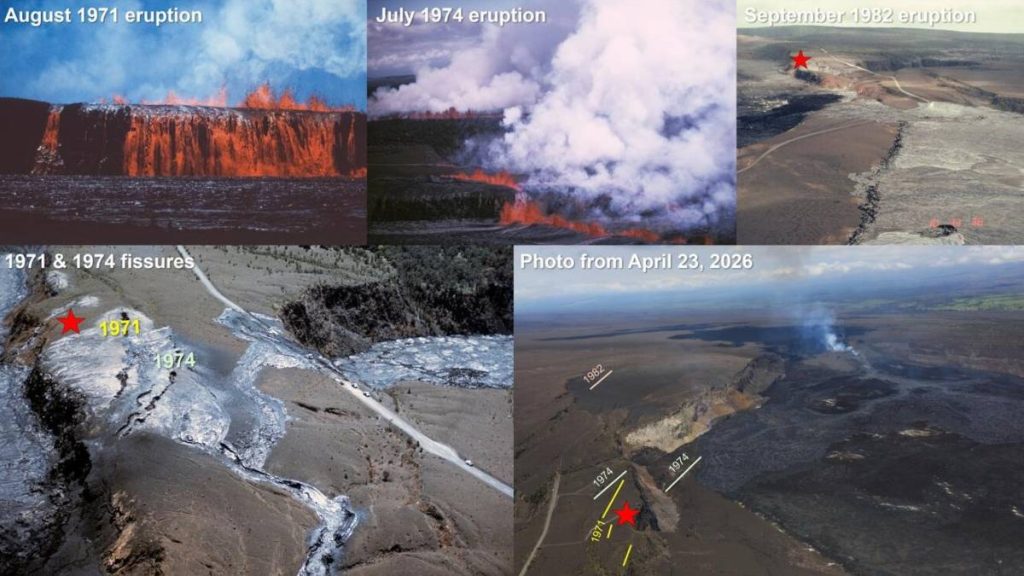
- Historical summit eruptions outside Halemaʻumaʻu occurred in 1832 and 1868, east of Kaluapele.
Eruption Pause and Current Observations
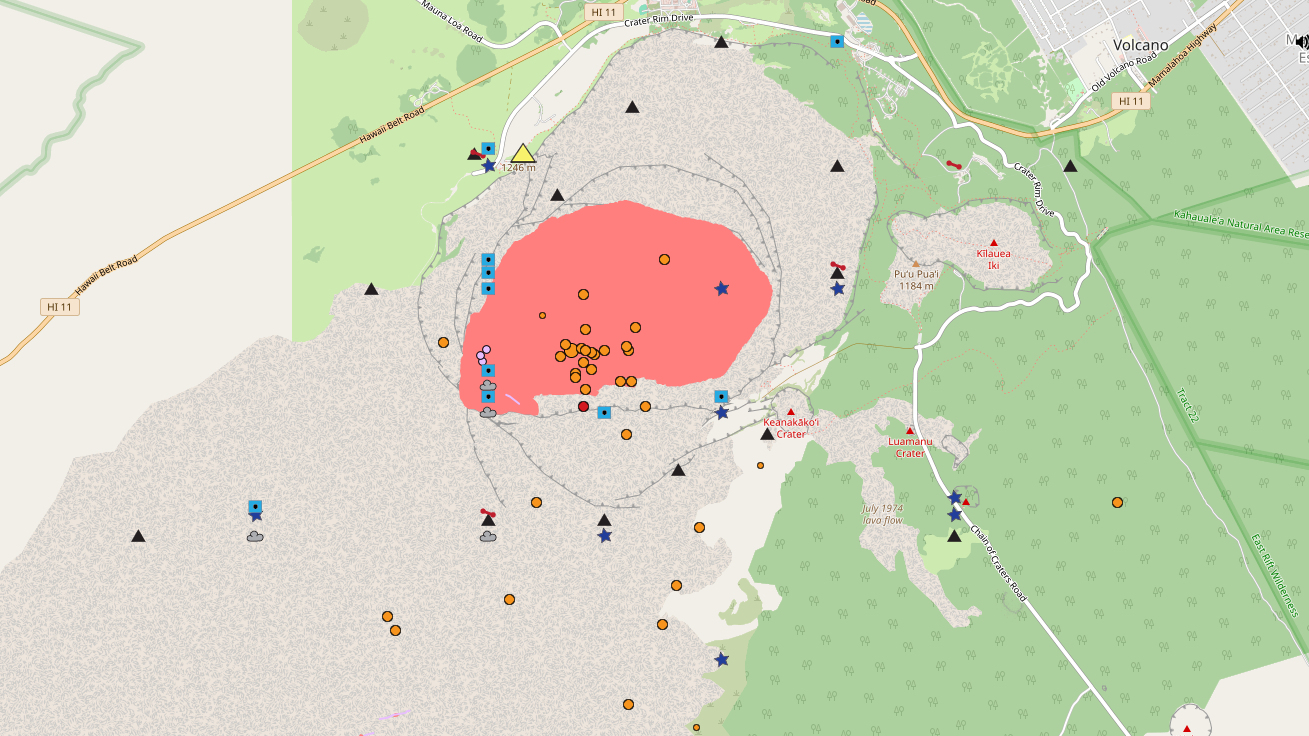
The ongoing eruption of Kīlauea within Hawaiʻi Volcanoes National Park has paused, with scientists monitoring deflation and increased earthquake activity at the summit. The Uēkahuna tiltmeter is currently recording slight deflationary tilt, having measured a total of 9.0 microradians of inflationary tilt since the end of episode 45 on April 23. The USGS Hawaiian Volcano Observatory noted that fluctuations in tilt are normal during eruptive pauses. Seismic tremor continues with regular pulses, and scientists have reported increased earthquake activity over the past day. On Wednesday morning, 96 small earthquakes were recorded, primarily within Halemaʻumaʻu crater and south/southwest of the caldera, all with magnitudes less than 2.0. Consistent glow was observed from both vents on webcams overnight, with significantly brighter glow in the south vent, and both vents produced occasional flames likely caused by the ignition of volcanic gases.
Forecast for Episode 46
The expected start of the next episode of high lava fountaining has been pushed back. The USGS Hawaiian Volcano Observatory stated that “the forecast window for episode 46, based on tilt data, suggests that lava fountaining will occur again sometime between Sunday, May 3 and Thursday, May 7.” The Observatory added that the window may be adjusted based on continuing observations. This pause follows episode 45, which ended on April 23, marking the latest in a series of eruptions that have characterized the current activity at Halemaʻumaʻu.
Volcanic Gas Emissions and Alert Levels
With the eruption paused, sulfur dioxide emission rates are likely varying within a typical range of 1,000 to 5,000 tonnes per day, according to scientists. The USGS Volcano Alert Level for Kīlauea remains at ADVISORY, and the Aviation Color Code is YELLOW. These levels indicate that volcanic activity is elevated but not posing an immediate threat to life or property, though caution is advised for aviation.
Historical Context of Summit Eruptions
Halemaʻumaʻu Crater, home of the ancient Hawaiian lava and volcano goddess Pele, is situated within the larger, steep-walled Kaluapele caldera at the summit of Kīlauea. While eruptions at the summit most frequently occur within Halemaʻumaʻu, they can occur outside the modern caldera as well. The earliest written documentation of summit eruptions outside the caldera occurred in 1832 and 1868, both to the east of Kaluapele. In recent decades, Kīlauea summit eruptions have been confined to Halemaʻumaʻu. Starting in 2008, a decade-long lava lake formed within the crater that drained during the 2018 caldera collapse. This was replaced for a year and a half by a water lake, which was destroyed during the December 2020 eruption. Since then, multiple Halemaʻumaʻu eruptions have occurred, with the ongoing lava fountaining reaching episode 45 on April 23.
Implications and Future Outlook
The current pause and the forecast for episode 46 highlight the dynamic nature of Kīlauea's volcanic activity. Scientists emphasize that the ongoing earthquakes beneath the summit are not indicative of an imminent eruption along the south rim of Halemaʻumaʻu, but rather part of normal volcanic processes. The historical record of eruptions outside Halemaʻumaʻu serves as a reminder that future eruptions could occur beyond the modern caldera, though current activity remains focused within the crater. As the USGS continues to monitor tilt, seismicity, and gas emissions, the forecast window for the next episode may be refined. The public and authorities are advised to stay informed through official updates, as the situation remains fluid.
The bottom line
- Kīlauea's eruption is paused, with deflation and increased seismicity at the summit.
- The next episode of high lava fountaining is forecast between May 3 and May 7, subject to change.
- 96 small earthquakes were recorded in one day, all below magnitude 2.0.
- Sulfur dioxide emissions are within a typical range of 1,000 to 5,000 tonnes per day.
- Historical eruptions outside Halemaʻumaʻu occurred in 1832 and 1868, indicating potential for future activity beyond the crater.
- Current alert levels (ADVISORY/YELLOW) indicate elevated but non-imminent hazard.



Phillies and Giants Set for Doubleheader as MLB Broadcast Changes Add Confusion

Andreeva, 19, to Face Kostyuk in Madrid Open Final After Saving Three Set Points

In 'Hokum,' Adam Scott Confronts Irish Folklore and Personal Demons
