Why Full Moon Flower Moon is making news
Here's what you need to know as the full "Flower Moon" takes to the spring sky on May 1 and when to look out for a rare "Blue Moon" later in the month.
SOUTH AFRICA —
Here's what you need to know as the full "Flower Moon" takes to the spring sky on May 1 and when to look out for a rare "Blue Moon" later in the month. Full Moon Flower Moon has emerged this Saturday as one of the stories drawing attention in South Africa.
Key facts
- Here's what you need to know as the full "Flower Moon" takes to the spring sky on May 1 and when to look out for a rare "Blue Moon" later in the month.
- May's full moon rises as flowers bloom across the northern hemisphere.
- The Flower Moon sets the stage for a rare lunar event later in the month, when a second full moon — known to some as a "Blue Moon" — rises on May 31.
- May’s sky features not one but two full moons as well as the dazzling Eta Aquarids meteor shower.
- The May full moon is also known as the "Flower Moon" in reference to the plentiful blooms that appear around this time as the northern hemisphere slips deeper into spring.
What we know
Going deeper, May's full moon rises as flowers bloom across the northern hemisphere.
On the substance, the Flower Moon sets the stage for a rare lunar event later in the month, when a second full moon — known to some as a "Blue Moon" — rises on May 31.
Beyond the headlines, May’s sky features not one but two full moons as well as the dazzling Eta Aquarids meteor shower.
More precisely, the May full moon is also known as the "Flower Moon" in reference to the plentiful blooms that appear around this time as the northern hemisphere slips deeper into spring.
It is worth noting that Last month, Artemis II launched right around the time of the April 1st Full Moon, sending astronauts around the Moon for the first time in more than 50 years and giving us some spectacular new views of our closest neighbor.
By the numbers
At this stage, And now, May ends with another lunar moment: a Full Moon on May 31st.
On a related note, EDT (1723 GMT) on May 1 (local moonrise and moonset times depend on your location), as the lunar disk appears opposite the sun in our sky, fully lit by its rays.
Going deeper, because this is close to the length of a calendar month, we usually experience 12 full moons in a year.
On the substance, However, every 2.5 years, the subtle shift in monthly full moon timings conspires to give us 13 full moons in a single calendar year, with two occurring in a single month.
The wider context
On a related note, the night sky brims with spectacles this May, from a meteor shower and planet-moon conjunctions to not one but two full moons.
Going deeper, May’s full moon is named for the month’s abundance of blossoms.
On the substance, Just as the sky darkens, you can also spot Mercury above the west horizon, with Jupiter above the moon-Venus conjunction, too. (Remember: Only point optical aids west once the sun has fully set.).
Beyond the headlines, May closes out with an uncommon lunar event: a second full moon in a single calendar month, often called a blue moon.
More precisely, Mars, crescent moon, Saturn appear close together—May 12-13.
The bottom line
- The Flower Moon sets the stage for a rare lunar event later in the month, when a second full moon — known to some as a "Blue Moon" — rises on May 31.
- The May full moon is also known as the "Flower Moon" in reference to the plentiful blooms that appear around this time as the northern hemisphere slips deeper into spring.
- Because this is close to the length of a calendar month, we usually experience 12 full moons in a year.



Lakers on brink of historic collapse as Rockets force Game 6
Moon — and what comes next
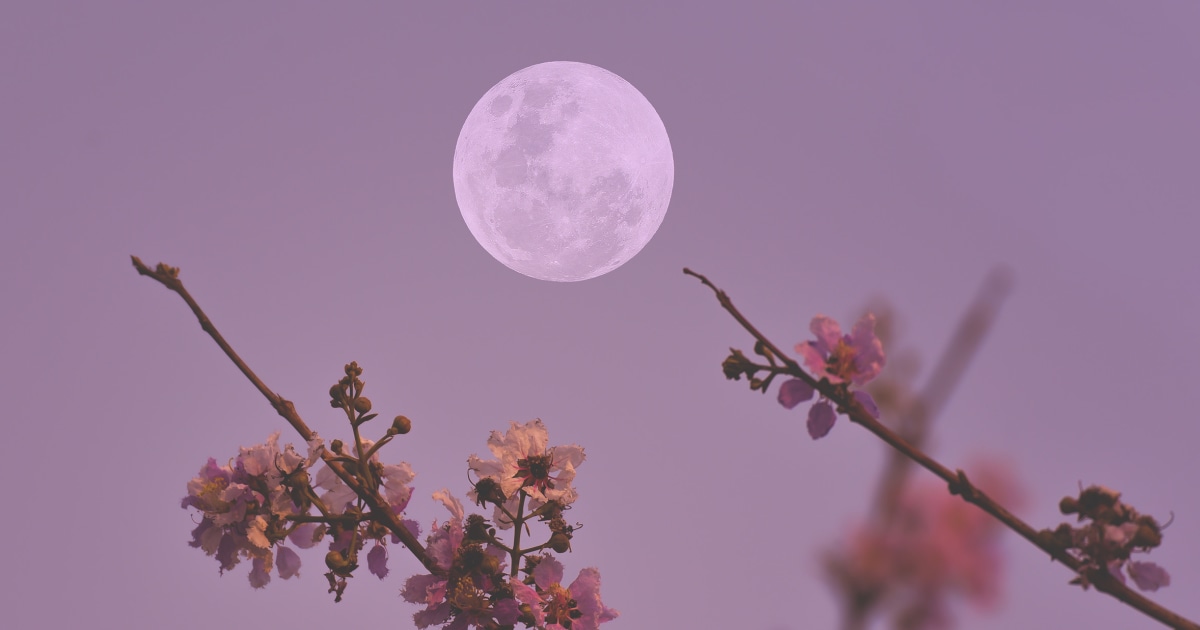
May Brings Two Full Moons: Flower Moon and Rare Blue Moon to Grace the Sky