Garden Route Storms Unleash Fury: Fatalities, Flooding, and Road Closures
Heavy rains and gale-force winds batter South Africa's popular tourist region, causing widespread disruption and claiming a life.
SOUTH AFRICA —
Key facts
- Nearly 80km/h winds uprooted trees across the Garden Route.
- Rainfall totals approached 200mm in some areas by Wednesday afternoon.
- A woman died and her daughter was hospitalized after a tree fell on their car.
- Major passes, including Meiringspoort and Swartberg, were closed.
- Schools in the affected areas were closed for two days.
- Businesses in Sedgefield and Knysna largely shut down.
- The Touw River Mouth was opened by SANParks to mitigate flooding.
Storms Lash Garden Route, Causing Devastation
A powerful storm system has unleashed a torrent of wind and rain across South Africa's picturesque Garden Route, triggering widespread damage and a tragic fatality. Gale-force winds, reaching speeds of nearly 80km/h, have uprooted mature trees, while relentless rainfall has inundated homes and businesses, forcing many to close their doors. The deluge has also rendered numerous roads impassable, disrupting travel and essential services across the region. The full extent of the damage is still being assessed, but insurance assessors are already preparing for a surge in claims from affected towns like Mossel Bay, George, and Knysna. The storm, which began intensifying late Tuesday, continued its assault through Wednesday, with significant rainfall totals recorded in a matter of hours. Residents and authorities alike are grappling with the immediate aftermath, as clean-up operations face significant hurdles due to ongoing adverse weather conditions. The storm's ferocity has underscored the vulnerability of infrastructure and communities to extreme weather events.
A Deadly Encounter on the N2
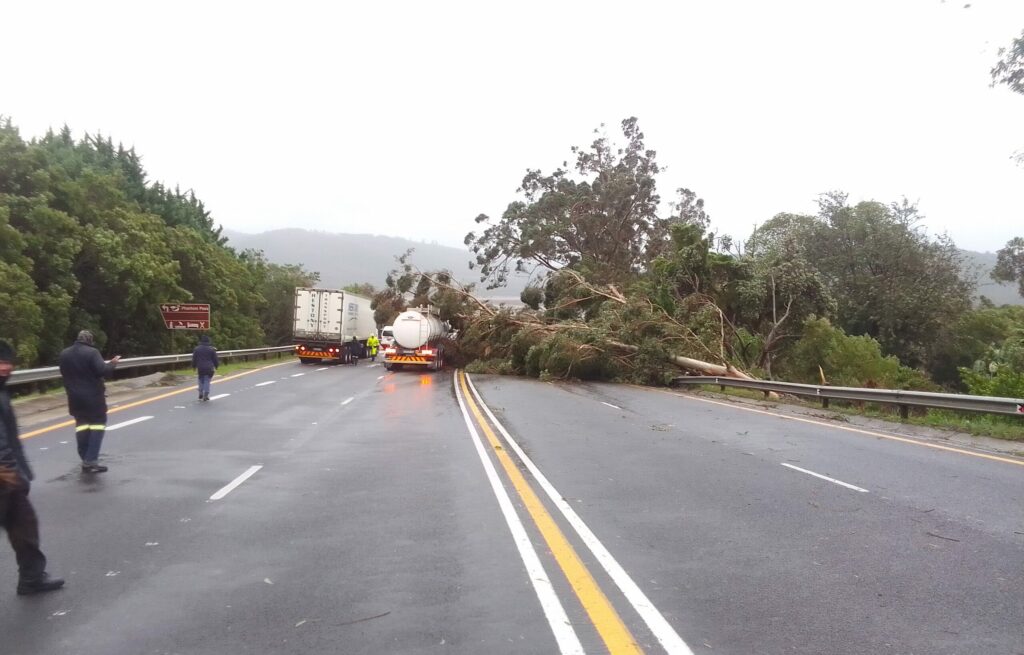
The storm's human toll became tragically apparent when a woman and her daughter were struck by a falling tree near a local hospital. The tree crashed onto the car they were travelling in, resulting in the woman's death and her daughter's admission to hospital. The incident occurred just a few hundred metres from medical facilities, highlighting the perilous conditions on the roads. Mere minutes later, further along the N2 highway leading into Knysna from George, a large blue gum tree toppled across the road, causing immediate traffic gridlock. This was swiftly followed by another treefall, which landed atop a milk truck caught in the ensuing congestion. These events illustrate the immediate and dangerous impact of the high winds on critical transport routes. The N2, a vital artery for the region, faced further disruption as multiple roads were closed due to fallen trees and accumulating floodwaters by Wednesday morning. The sheer force of the storm transformed familiar landscapes into hazardous obstacles, underscoring the unpredictable nature of the event.
Record Rainfall and Flooded Landscapes
exceptional rainfall figures, with some areas receiving close to 200mm of rain by Wednesday afternoon. Overnight until 8am Wednesday, several locations registered rainfall exceeding 100mm. The Knysna Kleingrysbos weather station recorded 120mm, Charlesford 122mm, and Diepwalle 106mm. George Airport measured nearly 60mm in the early morning, with Wilderness Heights also recording 60mm. By 3pm on Wednesday, many areas had experienced an additional 60mm of rain, pushing cumulative totals towards the 200mm mark. In the George municipal area, persistent downpours from late Tuesday afternoon had not abated by noon on Wednesday. Uniondale, in particular, recorded 136mm by 9am Wednesday, with Waboomskraal at 117mm and Herold Lovain at 78.4mm. The Haarlem Dam, which supplies Uniondale, began spilling later that morning. These extreme rainfall levels led to significant water accumulation and overflowing stormwater systems in low-lying areas of George's central business district. In Uniondale, several streets were submerged. The Piesang River Valley in Bitou was also severely affected, with reports of river flooding and damage to infrastructure, necessitating evacuations.
Infrastructure Grinds to a Halt
The storm's impact extended to critical infrastructure, forcing the closure of scenic mountain passes and disrupting local services. The Meiringspoort Pass, connecting the Karoo to the coast between Beaufort West and Oudtshoorn, and the Swartberg Pass between Oudtshoorn and Prince Albert, have been closed indefinitely. Oudtshoorn municipality stated that clean-up operations would only resume once water levels subsided. In George, vehicle testing stations were closed until further notice due to operational difficulties. The municipality's Planning and Development Directorate was operating with essential staff only until Friday, May 8. The Wilderness Tourism Office was also closed to the public, reflecting the widespread disruption to normal operations. SANParks initiated efforts to open the Touw River Mouth in Wilderness on Tuesday afternoon, deploying an excavator to mitigate potential flooding of low-lying properties along its banks. This proactive measure aimed to alleviate pressure on the river system and prevent further damage to riverside communities.
Schools Closed, Businesses Shuttered
Educational institutions bore the brunt of the storm's impact, with the Western Cape Department of Education making the decision to close all public primary and secondary schools in the affected areas for two days, Wednesday and Thursday. This precautionary measure, aimed at ensuring the safety of students and staff, echoed the disruptions experienced during COVID-19 lockdowns in 2021. Nelson Mandela University's George campus also cancelled on-campus classes, opting for online lectures. This move underscored the severity of the situation, forcing a rapid shift to remote learning for its students and staff. Economically, the storm forced many businesses in Sedgefield and Knysna to cease operations. Some decided not to open on Wednesday, while others closed their doors after only a few hours. By 2pm, these towns were largely deserted, with only pubs and towing companies reporting brisk business, a stark indicator of the widespread economic paralysis caused by the severe weather.
Community Rallies Amidst Chaos
In Pacaltsdorp, a large tree crashed onto a home in Acacia Road around 10:00 on Wednesday morning, leaving the Jantjies family destitute. Homeowner Rona Jantjies narrowly escaped serious injury as the tree smashed through her roof and into her bedroom. The damaged roof allowed heavy rain to pour into the already compromised structure. Despite the devastation, community members quickly mobilized. With assistance from Charl Gardener, who provided a TLB, members of the Pacaltsdorp Men's Group worked to saw up and remove the tree by 13:30, subsequently beginning the arduous task of clearing the debris. However, the family faced an uncertain night, with no immediate solution for accommodation. Elsewhere, at Victoria Bay, massive swells generated by the storm sent waves crashing over the access road and into seafront homes. Serpentine Road also sustained significant flood damage, leading to its closure and the arrival of contractors to assess and repair the affected section.
Outlook: Cautious Optimism as Waters Recede
The storm system is expected to begin clearing from midday on Thursday, May 7, offering a glimmer of hope for the beleaguered Garden Route. However, the immediate aftermath will be dominated by extensive clean-up operations and recovery efforts. The full economic and social impact of the storm will likely take weeks, if not months, to fully comprehend and address. Authorities are urging residents to remain cautious even as the weather improves, given the potential for lingering hazards such as unstable trees, damaged infrastructure, and continued waterlogging. The resilience of the Garden Route communities will be tested in the coming days and weeks as they work to rebuild and restore normalcy. The events serve as a stark reminder of the increasing frequency and intensity of extreme weather events, prompting renewed discussions about disaster preparedness and climate change adaptation strategies in vulnerable regions.
The bottom line
- The Garden Route experienced severe weather with winds up to 80km/h and nearly 200mm of rainfall in some areas.
- A fatal incident occurred when a tree fell on a vehicle, killing one woman and hospitalizing her daughter.
- Infrastructure was heavily impacted, with major road closures and damage to homes and businesses.
- Schools in the affected regions were closed for two days, and university classes shifted online.
- Community efforts played a crucial role in immediate rescue and clean-up operations.
- The storm's full impact is still unfolding, with recovery and rebuilding efforts expected to be lengthy.



Western Cape braces for severe weather as SAWS warns of heavy rain, cold and wind

Global Internet Disruptions Surge in Q1 2026 as Governments, Conflict, and Weather Cut Connectivity
Cold Front Brings Flash Flood Threat to Drought-Stricken South Florida
