South African Minister Sisisi Tolashe Accused of Misappropriation After Chinese SUV Given to Her Children
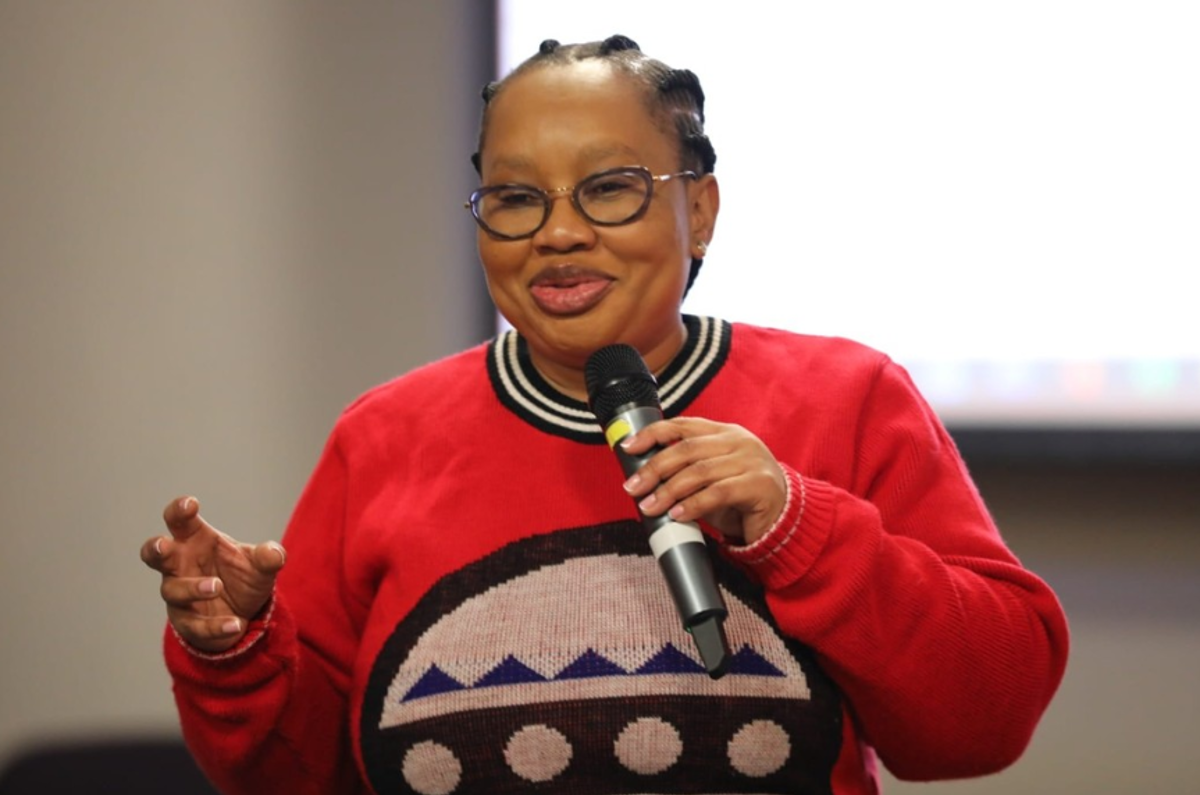
Social Development Minister Sisisi Tolashe faces allegations of failing to declare two vehicles from Chinese officials, which she claims were donated to the ANC Women's League but reportedly ended up with her children.
/file/attachments/orphans/ED_606570_965802.jpg)
SOUTH AFRICA —
Key facts
- Minister Sisisi Tolashe accused of failing to declare two vehicles received from Chinese officials.
- Tolashe claims the vehicles were donated to the ANC Women's League, but reports say they were given to her children.
- Former spokesperson Lumka Oliphant accuses Tolashe of diverting attention from the allegations.
- Tolashe blames Oliphant for orchestrating a smear campaign and leaking information to the media.
- Oliphant denies appointing an unqualified person to her office and defying Cabinet over a Director-General's contract.
- The controversy adds to a series of systemic challenges in South Africa, including economic strain and rising populism.
Allegations of Undeclared Gifts and Misappropriation
South Africa's Social Development Minister, Sisisi Tolashe, is under fire after reports emerged that she failed to declare two vehicles received from Chinese officials. The minister claims the cars were donated to the African National Congress Women's League, but according to multiple media reports, the vehicles were instead given to her children. The allegations have sparked a public dispute between Tolashe and her former spokesperson, Lumka Oliphant, who accuses the minister of trying to divert attention from the misappropriation claims. Oliphant insists that Tolashe should focus on accounting for the allegations rather than deflecting blame.
Minister Blames Former Spokesperson for Smear Campaign
In a statement, Tolashe did not directly address the allegations of misappropriation. Instead, she accused Oliphant of orchestrating a smear campaign and leaking information to the media. Tolashe's response has been widely seen as an attempt to shift the narrative away from her conduct. Oliphant, however, has pushed back, stating: 'It is a pity that she chooses to be the one who diverts attention on the multiple things that she needs to account for. I did not appoint an unqualified person in my office. I did not defy Cabinet and the president by giving the Director-General a five-year contract, against the one year that was recommended.'
Broader Context: Systemic Challenges in South Africa
The Tolashe controversy unfolds against a backdrop of multiple systemic challenges facing South Africa. The Weekend Wrap, a news digest covering political manoeuvring, economic strain, and shifting urban dynamics, highlights issues such as rising petrol prices, the threat of populism, and the immense energy demands of the tech sector. New data centres are set to consume 34% of Cape Town's current electricity supply, exacerbating the country's energy crisis. Meanwhile, inequality is described as 'no longer just a social issue but a systemic threat to democracy,' underscoring the high stakes of governance failures.
Political Fallout and Upcoming Elections
The scandal comes at a politically sensitive time, with local government polls approaching. The Electoral Commission of South Africa (IEC) is reportedly considering pausing school exams for the elections, while the Democratic Alliance (DA) targets corruption in Tshwane ahead of the polls. The ANC Women's League car controversy adds to the party's image problems, as it faces a rising populist threat in KwaZulu-Natal (KZN), where a party that cannot decide could hand the province to former President Jacob Zuma's faction.
What Comes Next: Accountability and Investigations
The allegations against Tolashe are likely to be investigated further, with calls for transparency from opposition parties and civil society. The minister's refusal to directly address the claims may prolong the controversy and damage her political standing. Oliphant has positioned herself as a whistleblower, insisting that the minister must come clean. The outcome of this dispute could have implications for the ANC's credibility ahead of the local elections.
A Test for Democratic Institutions
The Tolashe case is a test for South Africa's democratic institutions, which are already under strain from inequality, energy shortages, and political infighting. The ability of the media and civil society to hold officials accountable remains crucial. As the country grapples with these challenges, the handling of the minister's scandal will be closely watched as an indicator of whether the rule of law prevails over political expediency.
The bottom line
- Minister Sisisi Tolashe is accused of failing to declare two Chinese-donated vehicles that reportedly went to her children, not the ANC Women's League as claimed.
- Former spokesperson Lumka Oliphant accuses Tolashe of diverting attention from the allegations, while Tolashe blames Oliphant for a smear campaign.
- The scandal adds to a series of systemic challenges in South Africa, including energy crises, rising populism, and inequality threatening democracy.
- New data centres in Cape Town will consume 34% of the city's electricity supply, highlighting infrastructure strain.
- The controversy could impact the ANC's performance in upcoming local elections, especially in KwaZulu-Natal where populist factions are gaining ground.
- The case tests South Africa's democratic accountability mechanisms amid broader political and economic instability.
/file/attachments/orphans/ED_606570_965802.jpg)
/file/attachments/2991/tolashe_Pinoochio_Cars_550473_152996.jpg)
/file/attachments/2991/dmmideastinvestments2_149479_423457.jpg)
/file/attachments/2991/Greg-mbali-mk_374259_896114.jpg)
/file/attachments/2991/ED_606569_219428_923125.jpg)
King Charles III and Queen Camilla Conclude US State Visit Amid Diplomatic Outreach
African Continent Edges Closer to Splitting as Turkana Rift Crust Thins to 13 km
Caterpillar Posts 22% Revenue Surge to $17.4 Billion in First Quarter, Record Backlog