ShinyHunters Extortion Group Targets Ed-Tech Giant Instructure
Cybercriminals leverage third-party vendor breaches for wider impact, demanding ransom from Canvas platform users.

SOUTH AFRICA —
Key facts
- ShinyHunters breached Instructure, the company behind Canvas, last week.
- The group demanded payment from Instructure by May 6, 2026, or threatened data leaks.
- Instructure confirmed a cyber incident and data breach affecting its cloud-hosted environment.
- ShinyHunters claims to have stolen personal data from 275 million users on the Canvas platform.
- The hackers provided a list of 8,809 impacted educational institutions.
- Affected data includes names, email addresses, Penn ID numbers, and course enrollments.
- The breach has disrupted access for students at multiple universities, including the University of Pennsylvania.
Cyberattackers Target Education's Digital Backbone
The higher education sector has been served a stark warning regarding its vulnerability to cyber threats, as the criminal extortion group ShinyHunters breached Instructure, the company behind the widely used Canvas learning management system. The attack, which occurred last week, saw the hackers demand payment from the ed-tech giant, threatening a significant data leak if their demands were not met. While Instructure has stated it has contained the breach, cybersecurity experts highlight the strategic advantage cyberattackers gain by targeting third-party vendors. This approach allows them to access a far larger pool of data than by attacking individual institutions, amplifying the potential impact and ransom leverage. This incident underscores a growing trend of sophisticated cybercrime operations focusing on the education technology supply chain, leaving institutions and their users exposed through trusted partners.
A Pattern of Attacks on Educational Vendors
ShinyHunters has a documented history of targeting the education technology sector. Last fall, the group was linked to a breach of Salesforce, claiming the theft of approximately one billion customer records from numerous companies, including Instructure itself. This past March, ShinyHunters infiltrated Infinite Campus, a student information system prevalent in K–12 education. In April, the group also claimed responsibility for accessing internal data at the publisher McGraw Hill. These repeated attacks demonstrate a clear pattern. By infiltrating a central vendor like Instructure, which serves over 40 percent of colleges and universities, the attackers can potentially compromise thousands of partner institutions simultaneously. This "downstream" risk means that even organizations with robust individual security measures can be compromised through their reliance on third-party software. The strategy allows for highly targeted phishing campaigns in the future. With access to real names, email addresses, and even private teacher-student communications, attackers can craft messages that appear legitimate, referencing specific courses or conversations, thereby significantly increasing the success rate of their scams.
Demands and Disruptions: The Immediate Aftermath
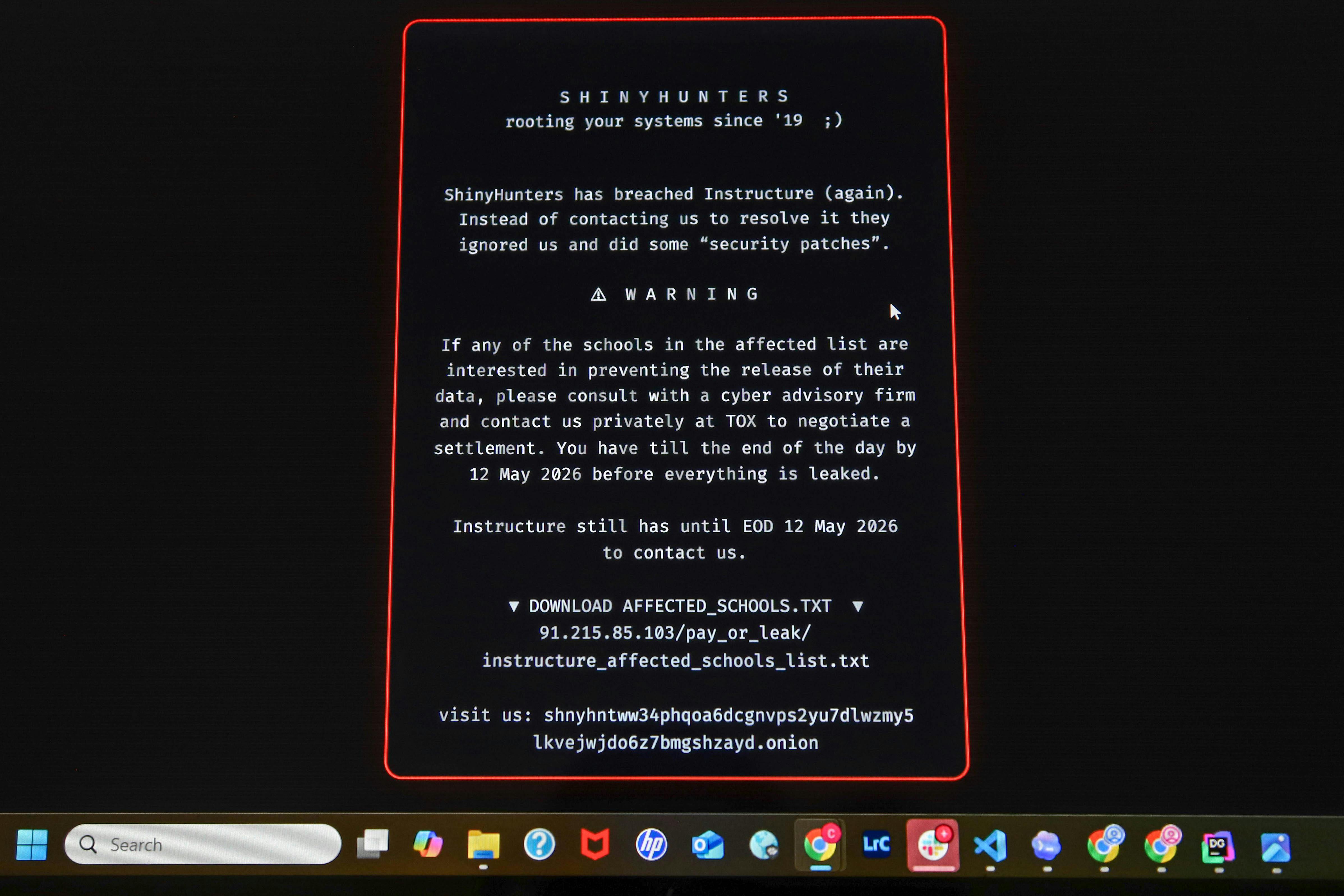
The breach at Instructure became apparent late last week when Canvas users began reporting disruptions to their authentication keys. Soon after, ShinyHunters issued a direct ultimatum to Instructure: "PAY OR LEAK." The hackers set a deadline of May 6, 2026, for the company to respond, warning of "annoying [digital] problems" and the risk of becoming "the next headline." Students at several universities, including the University of Pennsylvania, experienced direct disruptions. Penn's Canvas access was shut down on Thursday afternoon, May 7, following the breach. The hackers posted a message on Penn's Canvas page stating that any university wishing to prevent its data from being released should contact ShinyHunters before May 12, 2026. While Instructure did not comment on the ransom specifics, its Chief Information Security Officer, Steve Proud, confirmed the incident was "perpetrated by a criminal threat actor" and that the company was engaged in an active investigation with external forensics experts. Proud also provided updates on the restoration of services, noting that Canvas Data 2 and Beta were becoming available, though Canvas Test remained under maintenance.
Scale of the Breach: Millions of Records Compromised
ShinyHunters claims to have stolen a massive trove of personal data, estimating approximately 275 million records tied to students, teachers, and staff across educational institutions using Instructure's Canvas platform. The group has provided a list detailing 8,809 school districts, universities, and online education platforms they assert were impacted, with the number of compromised records per institution ranging from tens of thousands to several million. Data reportedly obtained by the hackers includes names, email addresses, student ID numbers, and course enrollments. While Instructure stated that passwords and other sensitive financial data were unaffected, the compromised information still presents significant risks. viewing sample data from universities in Tennessee and Massachusetts that included names, email addresses, and some phone numbers. This incident has affected a broad spectrum of educational bodies, with ShinyHunters publishing a list that reportedly includes all eight Ivy League universities. The scale of the breach highlights the interconnectedness of the education sector's digital infrastructure and the far-reaching consequences of a single vendor compromise.
Implications for Students and Institutions
The implications of this breach extend to millions of students, teachers, and staff. The stolen data, particularly names, email addresses, and student IDs, can be weaponized for highly personalized phishing attacks. These attacks could bypass standard security filters by referencing specific courses or academic details, making them far more convincing and harder to detect. For individuals whose data has been compromised, practical steps are recommended. These include verifying the authenticity of any notifications from schools or Instructure, immediately changing passwords for Canvas and any related accounts that reuse credentials, and enabling multi-factor authentication wherever possible. Parents are advised to manage credentials for younger children and to consider using password managers. Institutions are urged to implement systemic approaches to cybersecurity, focusing on stronger defenses, enhanced supply-chain accountability, and recognizing that data breaches are not isolated events but part of a broader strategic threat landscape. The incident serves as a critical reminder that even organizations taking appropriate security measures can remain vulnerable through their trusted vendors.
The Path Forward: Accountability and Systemic Defense
The repeated targeting of educational technology vendors by groups like ShinyHunters necessitates a re-evaluation of cybersecurity strategies across the sector. The current approach, often focused on individual institutional defenses, appears insufficient against adversaries who exploit the inherent vulnerabilities in third-party relationships. Moving forward, there is a clear need for greater transparency and accountability within the software supply chain. Educational institutions must demand more rigorous security assurances from their vendors, and vendors, in turn, must invest heavily in protecting their platforms, which serve as critical infrastructure for millions. Whether Instructure will meet the hackers' demands or if further data leaks will occur remains uncertain. However, the incident has irrevocably highlighted the systemic risks present in the digital education ecosystem, pushing the conversation towards a more unified and robust approach to safeguarding sensitive student and staff data.
The bottom line
- The cybercriminal group ShinyHunters has breached Instructure, the provider of the Canvas learning management system.
- ShinyHunters claims to have stolen personal data from approximately 275 million users across thousands of educational institutions.
- The hackers have demanded ransom from Instructure, threatening to leak stolen data by May 6, 2026.
- The breach has caused service disruptions for students at multiple universities, including the University of Pennsylvania.
- Experts warn that targeting third-party vendors like Instructure allows attackers to gain access to a much larger pool of data.
- The incident underscores the need for systemic cybersecurity improvements and greater accountability in the education technology supply chain.



Constitutional Court Rules on Parliament's Phala Phala Inquiry Stance

Aston Villa Eyes Europa League Final as Nottingham Forest Seeks to Defend Lead

Standard Bank's Fuel Rewards Face Scrutiny
