Victoria's $199 Billion Debt Looms as Pre-Election Budget Offers Surplus and Spending Spree
Treasurer Jaclyn Symes projects a $700 million surplus this year but cuts next year's forecast in half, while independent analysts warn the state is 'boxed in' by rising health costs and interest payments.

AUSTRALIA —
Key facts
- Net debt to peak at $199 billion within four years.
- Operating surplus of $700 million projected for 2025-26, down from budgeted $1.9 billion next year.
- Total government spending forecast at 16.4% of GSP in 2025-26, up from 14.5% in 2018-19.
- $750 million pledged for 20% refund on car registrations.
- $432 million to extend free public transport to end of May, then half-price fares for rest of 2026.
- $673 million for 25 new X'Trapolis 2.0 trains.
- e61 Institute analysis finds repeated spending growth has constrained fiscal options.
- Former Commonwealth Bank chief David Murray warns state may need federal bailout.
A Surplus Masking Deepening Debt
Victoria’s net debt is set to hit $199 billion within four years, even as Treasurer Jaclyn Symes projects a $700 million operating surplus for the current financial year. The Allan government’s pre-election budget, to be handed down Tuesday, will slash next year’s budgeted surplus from $1.9 billion to $1 billion after a flurry of spending announcements. Former Commonwealth Bank chief David Murray has warned the state could be on track to need a federal bailout. The operating surplus, a key metric watched by ratings agencies, does not account for capital expenditure; once infrastructure projects financed by debt are included, Victoria is expected to spend nearly $10 billion more than it generates this year.
The Spending Spree Before the Poll
The Allan government has unveiled more than $2 billion in spending measures ahead of Tuesday’s budget, including a $750 million pledge for a 20 per cent refund on car registrations and $432 million to extend free public transport until the end of May, followed by half-price fares for the rest of 2026. Another $100 million will upgrade bus routes across Melbourne and regional Victoria, while $673 million will fund 25 new X’Trapolis 2.0 trains and $77.5 million will go toward extra services. Two government sources, speaking anonymously, said the government believed the state would deliver a 2025-26 operating surplus slightly higher than its forecast of $700 million. The budget is cleverly structured for an election expected within six months, but critics question whether it is too late to make a difference.
‘Boxed In’: Independent Analysis Sounds Alarm
New analysis from the e61 Institute, an independent think tank, finds that successive Victorian governments have consistently failed to bring down spending as a share of the economy. Total government spending is forecast to be 16.4 per cent of gross state product (GSP) in 2025-26, up from 14.5 per cent in 2018-19, and still above COVID-era levels despite improvement since the pandemic. Michael Brennan, chief executive of e61 and former chair of the Productivity Commission, said the trend had left Treasurer Symes with little room to manoeuvre. “Victoria is not broke, but it is increasingly boxed in,” he said. “Treasurer Symes has the unenviable task of maintaining a credible fiscal trajectory, repairing past fiscal damage, and dealing with the health and hospitals juggernaut, all while Victorians face another cost-of-living shock.”
Health Costs and Interest Payments Drive Fiscal Strain
The state’s fiscal constraints are driven primarily by health expenses and rising interest payments on debt. The e61 analysis found that repeated spending growth had constrained Victoria’s options, with successive budgets forecasting the spending-to-GSP ratio would come down, only to see it persist. The health and hospitals sector is described as a “juggernaut” that consumes an ever-larger share of the budget. Brennan warned that this was not the moment for a pre-election spend-up. “Successive Victorian governments have promised fiscal restraint without delivering it. The situation now necessitates a real shift from past fiscal habits,” he said.
Winners and Losers in the 2026 Budget
The budget delivers clear wins for households facing cost-of-living pressures: car registration refunds, free and then half-price public transport, and investments in neurodiversity support and health. However, schools remain the ‘lowest funded’ in the country, and critics argue that future generations will bear the cost of today’s borrowing. Victoria’s shocking record of crime and debt also looms over the fiscal picture. The $1.1 billion lottery deal that saved the budget from a deficit underscores the government’s reliance on one-off revenues. While the surplus offers a veneer of fiscal discipline, the underlying debt trajectory raises questions about sustainability.
What Comes Next: Election and Ratings Scrutiny
With an election due within six months, the budget is widely seen as a campaign document. The government is betting that cost-of-living relief will outweigh concerns about debt. But ratings agencies are watching closely; the operating surplus is a key part of Symes’ fiscal strategy, and any downgrade could raise borrowing costs further. Brennan’s warning that the state needs a “real shift from past fiscal habits” echoes broader concerns. Whether the budget delivers that shift — or merely postpones difficult decisions — will be tested in the months ahead.
A High-Stakes Balancing Act
Victoria’s budget is a high-stakes balancing act between immediate relief and long-term fiscal credibility. The $700 million surplus provides a cushion, but the $199 billion debt peak and the structural pressures from health and interest costs suggest the state’s room for manoeuvre is narrowing. The government’s pre-election spending spree may win votes, but it also risks entrenching the very habits that independent analysts say must change. As Treasurer Symes prepares to deliver her budget, the question is whether Victorians will see a credible path forward — or just another promise of restraint that fails to materialise.
The bottom line
- Victoria's net debt is set to peak at $199 billion within four years, despite a projected $700 million surplus this year.
- The pre-election budget includes over $2 billion in new spending, including car registration refunds and public transport subsidies.
- Independent analysis from e61 Institute warns the state is 'boxed in' by rising health costs and interest payments, with spending as a share of GSP still above pre-pandemic levels.
- Treasurer Jaclyn Symes has slashed next year's surplus forecast from $1.9 billion to $1 billion.
- Ratings agencies are closely watching the operating surplus, while former Commonwealth Bank chief David Murray warns of a potential federal bailout.
- The budget is structured for an upcoming election, but critics argue it may be too late to address structural fiscal challenges.
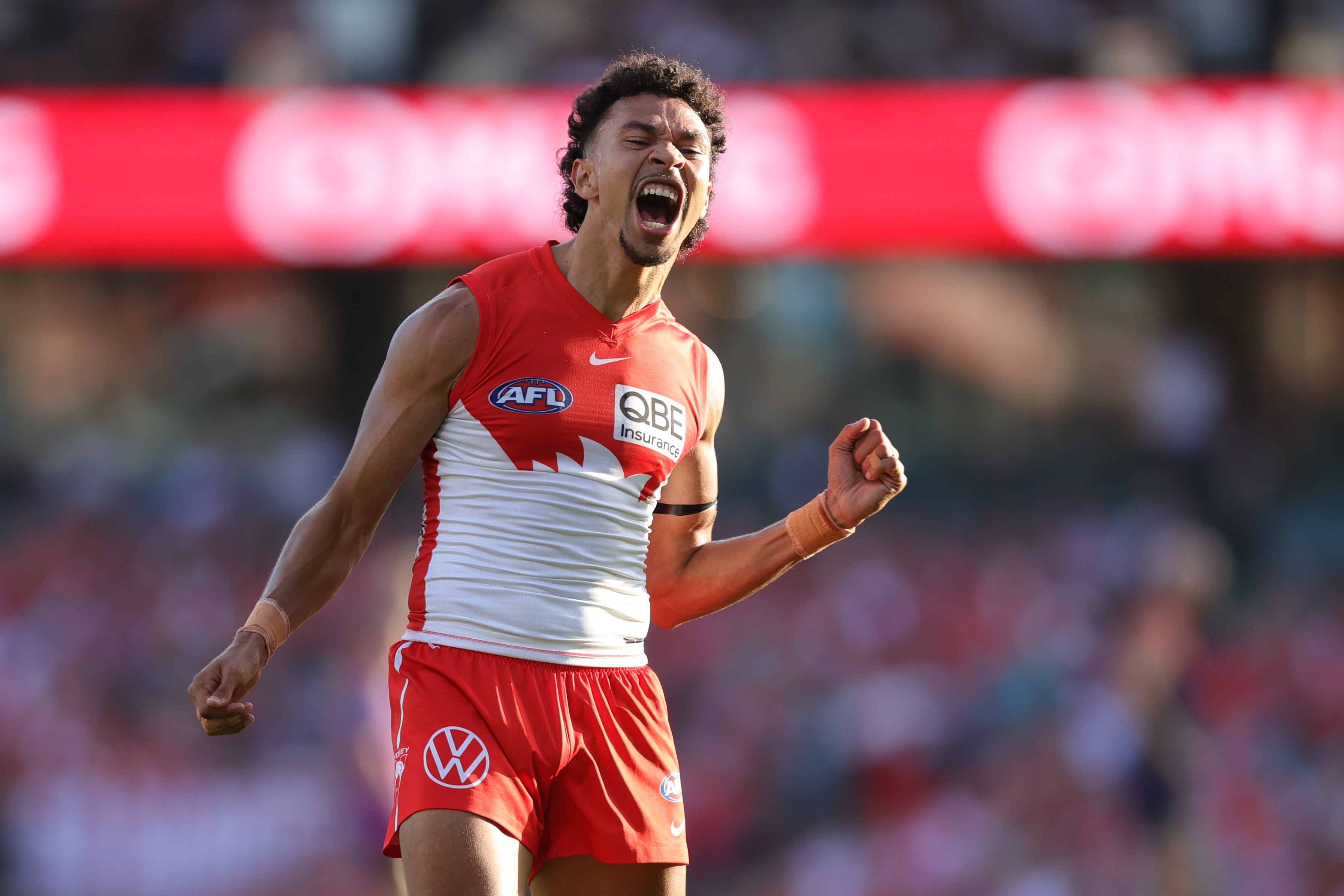
Sydney Swans Snap Melbourne's Unblemished Sunday Record with 17-Point Victory at SCG
Albanese Government to Revive Tax Trio on Trusts, Capital Gains and Negative Gearing in Budget
Malcom Rosas’s seven-goal haul propels Sydney Swans to 17-point win over Melbourne
