Israel Strikes Beirut for First Time Since Ceasefire, Escalating Tensions
An air raid on a Hezbollah stronghold follows a fragile truce, amidst broader diplomatic efforts to end the wider regional conflict.
AUSTRALIA —
Key facts
- Israel conducted an air strike on Beirut for the first time since a ceasefire with Hezbollah last month.
- The target was a senior Hezbollah official.
- The strike hit Dahieh, a southern suburb of Beirut known as a Hezbollah base.
- This is the first attack on Dahieh since a ceasefire was announced on April 16.
- Oil prices fell sharply amid optimism over a potential US-Iran peace deal.
- Brent crude futures settled at $US101.27 a barrel, a 7.8% drop.
- US West Texas Intermediate crude lost 7.03% to $US95.08.
- US President Donald Trump warned of intensified bombing if Iran does not agree to a peace deal.
Air Strike Shatters Fragile Truce in Beirut
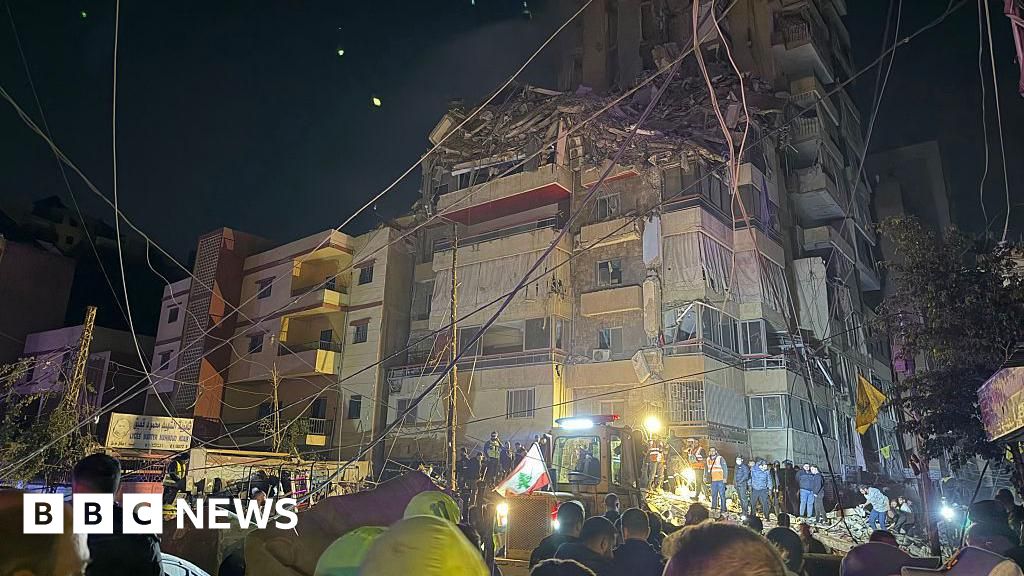
Israel launched an air strike on a target in Beirut, marking the first such attack on the Lebanese capital since a ceasefire agreement with Hezbollah was reached last month. The strike, which hit the southern suburbs of Dahieh, a known Hezbollah stronghold, occurred around 8:00 PM local time. Images circulating online depicted significant flames and visible damage to at least one building in the densely populated district. Prime Minister Benjamin Netanyahu stated that the operation personally received his approval, identifying the target as a commander within Hezbollah's elite Radwan Force. Reports from local media suggest that members of this unit were gathered at the time of the attack. This incident represents a significant escalation, directly challenging the fragile truce that had been in place. The attack on Dahieh is particularly notable as it is the first time the area has been hit since U.S. President Donald Trump announced a ceasefire deal between Israel and Lebanon on April 16. Despite this agreement, both sides have continued to accuse each other of violations, undermining the purported cessation of hostilities.
Broader Diplomatic Maneuvers Amidst Conflict
The strike comes at a critical juncture, as Iran is reportedly weighing a peace deal proposed by the United States. U.S. President Donald Trump has publicly urged Tehran to accept the terms, warning on social media that failure to do so would result in a new wave of U.S. bombing, characterized as being "at a much higher level and intensity than it was before." Trump also asserted that Iran "wants to make a deal very much" and commented on the ongoing naval blockade in the Strait of Hormuz, describing it as "unbelievable" and stating that Iran is "out of business" due to the restrictions. He indicated that if an agreement isn't reached promptly, Iran would eventually concede. Adding to the complex geopolitical backdrop, Iran's Islamic Revolutionary Guard Corps (IRGC) has suggested that the Strait of Hormuz could potentially reopen. This comes as the conflict, now nearing its ninth week, has significantly impacted global oil markets.
Economic Repercussions: Oil Prices Tumble
The growing optimism surrounding a potential peace deal between the United States and Iran has led to a sharp decline in oil prices, reaching two-week lows. Brent crude futures experienced a significant drop, settling $US8.60, or 7.8%, lower at $US101.27 per barrel. Earlier in the day, prices had dipped below $US100 for the first time since April 22. Similarly, U.S. West Texas Intermediate crude saw a substantial decrease, losing $US7.19, or 7.03%, to close at $US95.08 per barrel. These price movements reflect market expectations that a de-escalation in the Middle East conflict could ease supply concerns. Even with a potential restoration of normal shipping through key waterways, analysts caution that the complete normalization of global oil flow would require time. The disruption of marine traffic through the Strait of Hormuz since the conflict began in February has been a primary driver of elevated oil prices, with Brent crude reaching its highest point since March 2022 just last week. The drawdown in global oil and fuel inventories, as refineries struggled to compensate for production shortfalls, contributed to this situation.
Hezbollah's Continued Resistance and Civilian Impact
Hezbollah, an Iranian-backed militia and political party, has continued its attacks on Israeli troops stationed in Lebanon and northern Israel, employing rockets and drones. The group, which was not directly involved in the ceasefire negotiations, had initially indicated a willingness to abide by the truce if Israel also respected its terms. However, the recent Israeli strike on Beirut suggests a breakdown in this tentative understanding. Israeli attacks have resulted in the deaths of over 120 people across the country in the past week alone, including women and children. The ministry does not differentiate between combatants and civilians in its casualty figures. The Israeli military maintains a presence in a strip of Lebanese territory along the border, aiming to establish what it describes as a Hezbollah-free security zone to protect its northern communities. The impact on civilian life is profound. Dahieh, once a vibrant and densely populated district, has largely been evacuated since the ceasefire began. Residents express fear of returning to their homes due to the persistent threat of Israeli air strikes, highlighting the ongoing human cost of the conflict.
Strait of Hormuz: A Critical Chokepoint
The Strait of Hormuz remains a critical chokepoint for global energy supplies, with its closure having a significant impact on oil prices. The disruption to marine traffic since the war's commencement in February has led to a drawdown in global oil and fuel inventories as refineries attempted to offset production shortfalls. Analysts suggest that even a partial peace deal could be sufficient to allow for the gradual normalization of shipping through the strait. Pavel Molchanov, an analyst at Raymond James, noted that if current trends hold, consumers in the United States could see relief at the pump within the next one to two weeks. Despite the potential for de-escalation, the logistical challenges of restoring normal oil flows mean that any recovery in supply will likely take time. The situation underscores the delicate balance of power and the far-reaching economic consequences of regional instability.
Looking Ahead: Uncertainty and Potential Escalation
The coming days will be crucial in determining whether the fragile ceasefire holds or if the conflict escalates further. The response from Iran to the U.S. peace proposal, coupled with the continued military actions by both Israel and Hezbollah, will shape the trajectory of the situation. Questions remain about the extent to which the U.S.-Iran peace talks will succeed and whether they can truly bring an end to the broader regional tensions. The effectiveness of any agreement in restoring stability to vital shipping lanes, particularly the Strait of Hormuz, will also be closely watched. Meanwhile, the humanitarian toll continues to mount, with civilian casualties and displacement remaining a grave concern. The international community faces the challenge of navigating these complex diplomatic and military dynamics to prevent further bloodshed and economic disruption.
The bottom line
- Israel's air strike on Beirut marks a significant breach of the recent ceasefire with Hezbollah.
- The attack targeted a senior Hezbollah commander, indicating a deliberate escalation by Israel.
- Diplomatic efforts are underway, with the U.S. pushing for a peace deal between the U.S. and Iran.
- Optimism about a potential peace deal has led to a sharp decline in global oil prices.
- The Strait of Hormuz remains a critical point of contention and a driver of market volatility.
- Civilian casualties in Lebanon continue to rise amidst the ongoing conflict.




Pentagon Chief Insists Iran Ceasefire Holds as Hormuz Exchanges Test Truce
UAE intercepts Iranian missiles as fire engulfs Fujairah oil facility

Wemby's Blocks Under Scrutiny as Timberwolves Coach Cries Goaltend
