Iran Strikes UAE Oil Terminal in Fujairah, Shattering Truce
A coordinated barrage of missiles and drones hit the United Arab Emirates for the first time in a month, wounding three and sending oil prices surging.

CANADA —
Key facts
- Iran attacked the UAE with 12 ballistic missiles, 3 cruise missiles, and 4 drones on Monday.
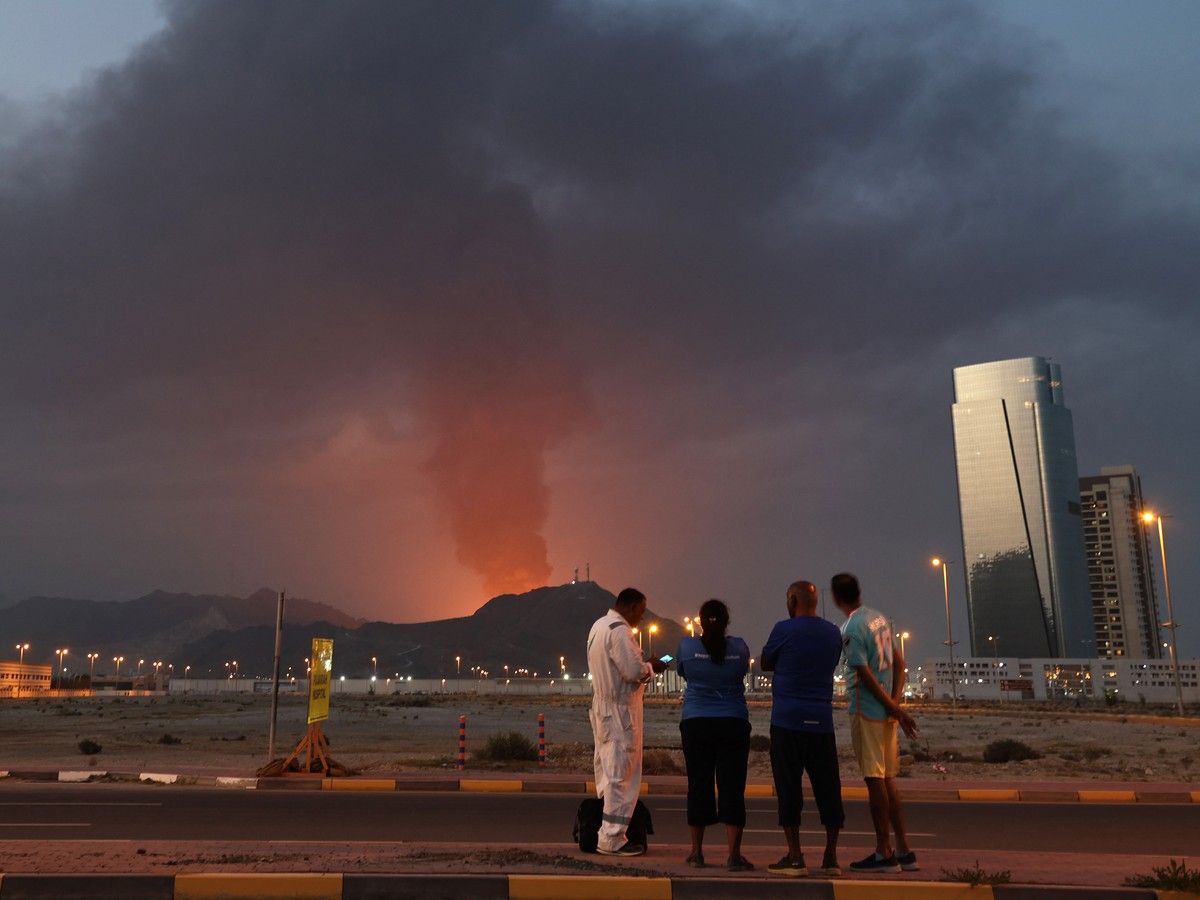
- An oil terminal part-owned by Vitol Group in Fujairah was hit, causing a large fire.
- Three people were injured in the drone attack on the oil industrial zone.
- Brent crude jumped nearly 6% to roughly US$114 a barrel following the strikes.
- The UAE had resumed in-person classes on April 20 after a distance-learning period.
- US Defense Secretary Pete Hegseth said Project Freedom in the Strait of Hormuz is temporary.
- 22,500 mariners remain trapped in the Gulf unable to transit.
- Iran has fired on commercial ships nine times and seized two container ships since the ceasefire.
Coordinated Assault Breaks Month-Long Calm
Iran launched a multi-pronged attack against the United Arab Emirates on Monday, firing 12 ballistic missiles, three cruise missiles and four drones at targets across the Gulf country, according to the UAE's air defence command. The assault shattered an uneasy calm that had held since a ceasefire between Tehran and the U.S.-Israel alliance took effect around April 8. The strikes marked the first Iranian attack on the UAE in nearly a month, fracturing a period of relative quiet after weeks of intense hostilities. The war began in late February with U.S. and Israeli strikes on Iran, which retaliated by firing thousands of missiles and drones at Israel and Gulf Arab states. Thousands have been killed, mostly in Iran and Lebanon, where Israel is fighting a parallel conflict against Iran-backed Hezbollah militants.
Fujairah Oil Terminal Blaze and Civilian Impact
An oil terminal in the port city of Fujairah, part-owned by the global commodity trading firm Vitol Group, was struck by a drone, igniting a large fire at the industrial zone, Fujairah's media office confirmed. Three people were injured in the attack. The UAE had been the most frequently targeted country during the conflict, and Monday's barrage underscored the fragility of the truce. Across the country, mobile-phone alerts warned residents in Dubai and other emirates, including Abu Dhabi, to seek safe areas. The Ministry of Education reinstated distance learning from Tuesday through Friday for all nurseries and public and private schools nationwide, after having resumed in-person classes on April 20 following a previous remote-learning period from March 2 to April 17.
UAE Vows Response as Oil Markets React
The UAE Foreign Ministry condemned the strikes as a 'dangerous escalation,' stating that the country 'will not tolerate any threat to its security and sovereignty under any circumstances, and that it reserves its full and legitimate right to respond to these unprovoked attacks.' The strong language signaled that Abu Dhabi may consider retaliation, raising the stakes for regional stability. Global oil markets reacted sharply, with Brent crude trading nearly six per cent higher at roughly US$114 a barrel. The price surge reflected fears that the renewed attacks could disrupt supplies from the Gulf, a region that accounts for a significant share of the world's oil output.
Strait of Hormuz Standoff Intensifies
The attack on the UAE coincided with escalating tensions in the Strait of Hormuz, a strategic waterway through which about a fifth of the world's oil passes. US Defense Secretary Pete Hegseth told a Pentagon press conference on Tuesday that the United States aims to protect shipping from Iranian aggression through an operation called Project Freedom, which he described as temporary. He emphasized that the US is 'not looking for a fight' but is committed to ensuring freedom of navigation. Iran's chief negotiator Mohammad Bagher Ghalibaf warned Washington that his country had 'not even started' in its standoff over the strait. US General Caine revealed that 22,500 mariners remain trapped in the Gulf, unable to transit, and that Iran has fired on commercial ships nine times and seized two container ships since the ceasefire took hold.
International Diplomacy and Outlook
French President Emmanuel Macron announced he would speak with his Iranian counterpart Masoud Pezeshkian later on Tuesday, pushing for Tehran to reopen the Strait of Hormuz. 'I will be speaking with the Iranian president shortly,' Macron told reporters in Yerevan, adding that France had long advocated for 'the restoration of freedom of navigation' in the vital waterway. The diplomatic effort comes as the US and its allies seek to de-escalate a crisis that threatens to reignite full-scale war. US General Caine stated that American joint forces are ready to resume major combat operations against Iran if ordered to do so, underscoring the precariousness of the current situation. The combination of renewed attacks on the UAE, the standoff in the Strait of Hormuz, and the trapped mariners suggests that the ceasefire is under severe strain, with the potential for a broader conflagration looming.
The bottom line
- Iran's coordinated missile and drone attack on the UAE marks the first such assault in a month, breaking a ceasefire with the U.S.-Israel alliance.
- The attack targeted an oil terminal in Fujairah, injured three people, and caused a large fire, sending oil prices up nearly 6%.
- The UAE has vowed to respond, calling the strikes a 'dangerous escalation' and reserving its right to retaliate.
- The Strait of Hormuz remains a flashpoint, with 22,500 mariners trapped and Iran having fired on commercial ships nine times since the ceasefire.
- US Defense Secretary Hegseth described the US mission in the strait as temporary, while Iran's negotiator warned that Tehran has 'not even started' its pressure campaign.
- French President Macron is engaging in diplomacy with Iran, but US forces remain ready to resume major combat operations if ordered.



Rare May Nor'easter Pummels Maritimes with Rain, Gusts and Snow

23 U.S. States Declare Emergencies as Winter Storm Threatens 200 Million

Flyers and Hurricanes Set for First Postseason Meeting After Four Overtime Thrillers