Boeing KC-135 Stratotanker Declares Emergency Over Persian Gulf
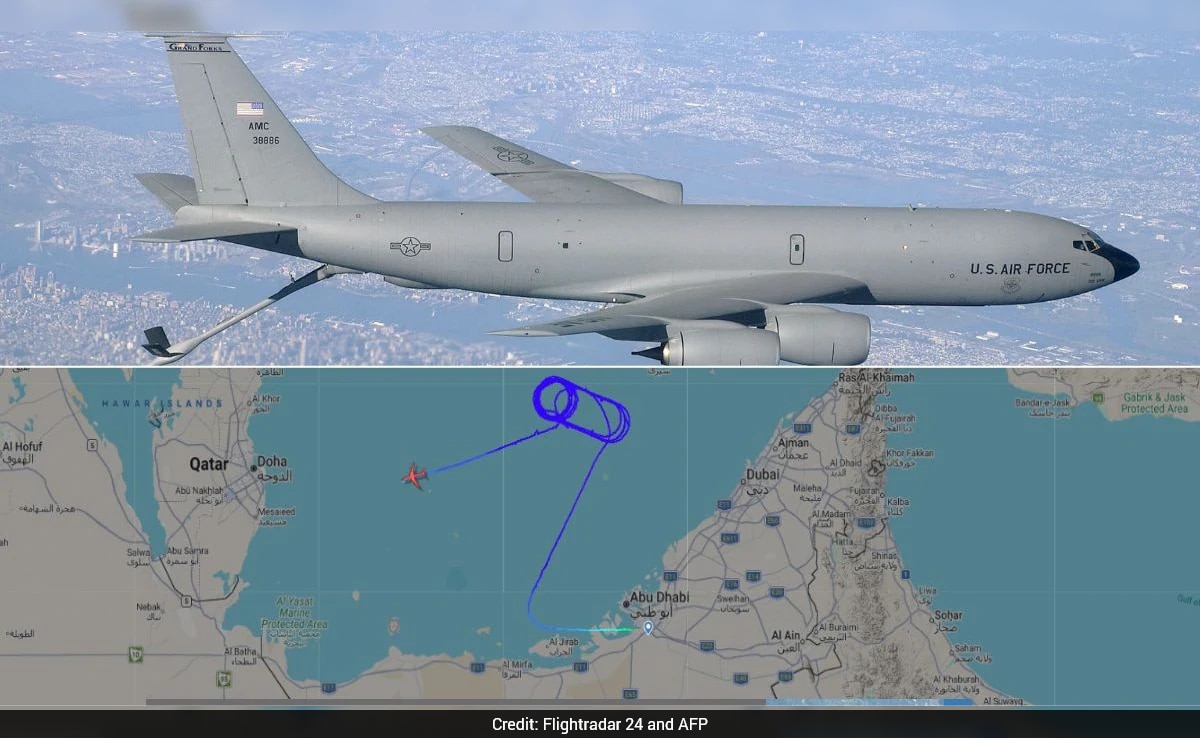
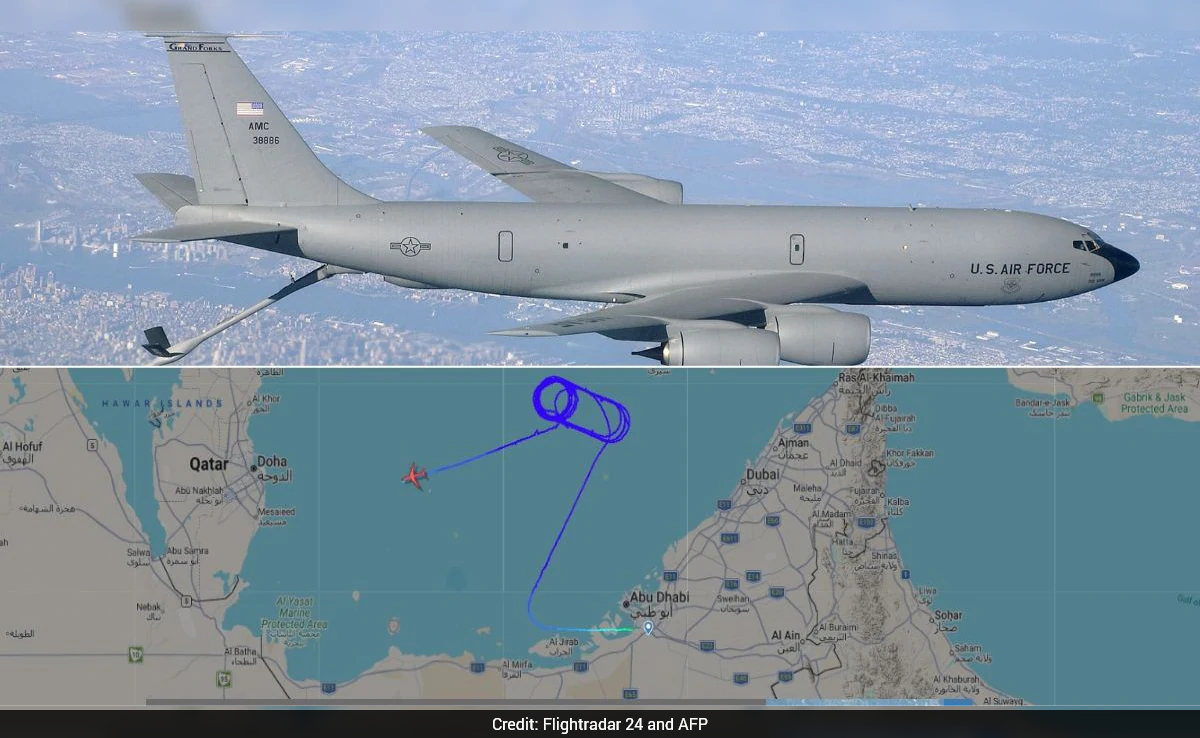
A U.S. Air Force aerial refueling tanker issued a distress signal before disappearing from tracking screens over Qatar.
ETHIOPIA —
Key facts
- A Boeing KC-135 Stratotanker issued a "7700" distress signal.
- The aircraft took off from Al Dhafra Air Base in the UAE.
- Flight tracking data showed the plane flying in a circular pattern before descending.
- The tanker disappeared from tracking screens over Qatar.
- The aircraft landed safely, according to a U.S. defense official.
- The incident occurred amid heightened Middle East tensions and a fragile ceasefire with Iran.
- The KC-135 Stratotanker has been in U.S. Air Force service for over 60 years.
In-Flight Emergency Declared Over Persian Gulf
A United States Air Force Boeing KC-135 Stratotanker, a vital aerial refueling aircraft known as a "flying gas station," declared an in-flight emergency over the Persian Gulf on Tuesday. The aircraft transmitted a general distress signal, coded "7700," before vanishing from flight tracking screens. This event unfolds against a backdrop of escalating Middle East tensions and a precarious ceasefire between the U.S. and Iran. The tanker had departed from Al Dhafra Air Base in the United Arab Emirates. Flight tracking data indicated that the aircraft initially flew in a circular pattern for a period before commencing its descent. The U.S. military has not publicly detailed the aircraft's specific mission or its intended destination at the time of the incident. Despite the alarming "7700" signal, which signifies a general in-flight emergency, a U.S. defense official later confirmed that the aircraft landed safely. No further details regarding the nature of the emergency or the circumstances of its landing were provided.
Context of Regional Instability and Ceasefire
This incident occurs at a critical juncture for regional stability. The United States and Iran are navigating a fragile ceasefire, a truce that has been tested by renewed attacks and ongoing efforts to secure the vital Strait of Hormuz shipping lane. Heightened military activities in the area have placed U.S. forces, commercial shipping, and regional allies on high alert. U.S. military leaders affirmed on Tuesday that the ceasefire with Iran remains in effect, a statement made a day after Washington attributed new attacks in the Strait of Hormuz and against targets in the UAE to Tehran. The truce, established nearly a month prior, appears to be holding, even as U.S. forces continue their operations to reopen the strategic waterway. Earlier in the week, the sinking six small Iranian boats that had threatened commercial vessels. President Donald Trump, when questioned about potential Iranian violations of the ceasefire, declined to specify definitive actions, stating only that Iran understood the boundaries of acceptable conduct.
The Stratotanker's Role and History
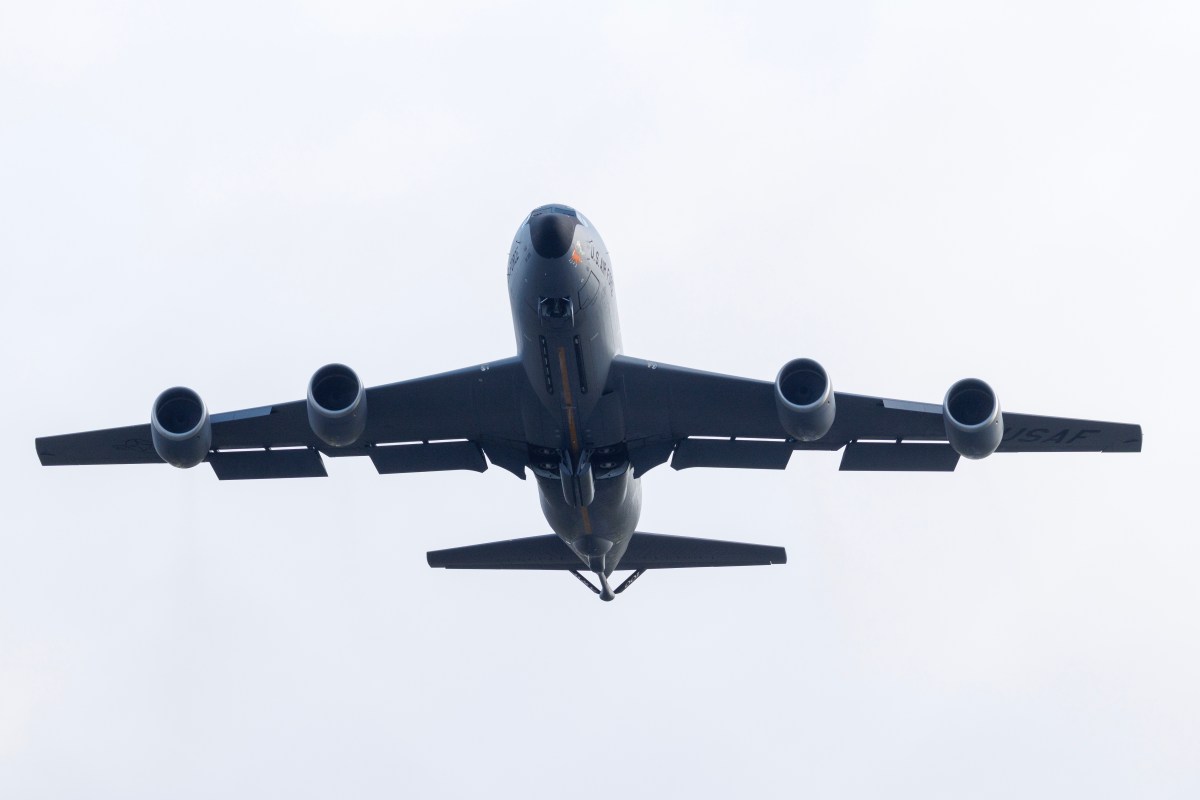
The KC-135 Stratotanker is a cornerstone of the U.S. Air Force's aerial refueling capabilities, having served as the backbone of the tanker fleet since the Cold War. Developed by Boeing in the 1950s based on the 367-80 prototype, it entered service in 1957. Its primary function is to extend the operational range and endurance of U.S. bombers and fighter aircraft by providing mid-air refueling. Beyond its refueling role, the KC-135 is a versatile platform. It features a cargo deck above the refueling system, enabling it to transport passengers and equipment. This capacity allows it to support aeromedical evacuation missions and transport injured or ill patients with specialized medical pallets, often accompanied by a dedicated medical team. Hundreds of KC-135 aircraft remain in active service with the U.S. Air Force, Air National Guard, and Air Force Reserve. Its design lineage traces back to the Boeing 367-80, which also served as the basis for the commercial Boeing 707 passenger jet. The aircraft's ability to keep other military planes airborne for longer durations and travel greater distances is crucial for U.S. military operations, supporting aircraft from the U.S. Navy, Marine Corps, and allied nations.
International Diplomatic Efforts Amidst Tensions
In parallel with military activities, diplomatic efforts are underway to address the escalating situation. Secretary of State Marco Rubio announced on Tuesday the unveiling of a joint U.S.-backed United Nations resolution. This resolution threatens Iran with sanctions should it fail to cease attacks on shipping in the Strait of Hormuz. The draft resolution, co-sponsored by Gulf allies, is slated for a potential vote in the UN Security Council in the coming days. Its passage could lead to penalties or further actions against Iran if compliance is not met. Meanwhile, efforts to reopen the Strait of Hormuz, a critical global energy corridor, continue. However, progress has been slow, with only two merchant ships having transited a newly established U.S.-protected corridor. Hundreds of vessels remain stalled in the Persian Gulf, highlighting the ongoing challenges in reassuring shipping companies without reigniting broader conflict.
Previous Incidents and Ongoing Concerns
This latest incident involving the KC-135 Stratotanker is not the first in the volatile region. In March, the the loss of a KC-135 in what was described as an Iranian attack in western Iraq. Responsibility for that attack was claimed by the Islamic Resistance in Iraq, an umbrella group of Iran-backed armed factions, which stated the aircraft was shot down in defense of the country's sovereignty and airspace. The current situation in the Persian Gulf, particularly concerning the Strait of Hormuz, remains a focal point of international concern. The waterway is a critical route for global energy shipments, and any disruption carries significant economic implications. The repeated instances of Iranian fire toward U.S. ships, coupled with the standoff over shipping lanes, underscore the fragility of the current truce. The international community watches closely to see if diplomatic measures, such as the proposed UN resolution, can de-escalate tensions and ensure the safe passage of commercial and military vessels.
The bottom line
- A U.S. Air Force KC-135 Stratotanker declared an in-flight emergency, transmitting a "7700" distress signal over the Persian Gulf.
- The aircraft took off from Al Dhafra Air Base in the UAE and disappeared from tracking screens over Qatar before landing safely.
- The incident occurred amidst heightened regional tensions and a fragile ceasefire between the U.S. and Iran.
- The KC-135 Stratotanker is a long-serving aerial refueling aircraft critical for extending the range of U.S. military operations.
- A UN resolution threatening sanctions against Iran for attacks on shipping in the Strait of Hormuz is being considered.
- The Strait of Hormuz remains a critical, yet disrupted, global energy corridor, with hundreds of ships awaiting passage.



Sudan Accuses Ethiopia and UAE of Drone Attacks, Recalls Envoy

UAE and Qatar Deepen Ties with Focus on Tech, Food Security

Arsenal Reach Champions League Final for First Time Since 2006