Plaid Cymru Poised to Lead Welsh Assembly as Labour Faces Historic Defeat
YouGov's MRP model forecasts a dramatic shift, potentially ending Labour's century of dominance in Wales.

UNITED KINGDOM —
Key facts
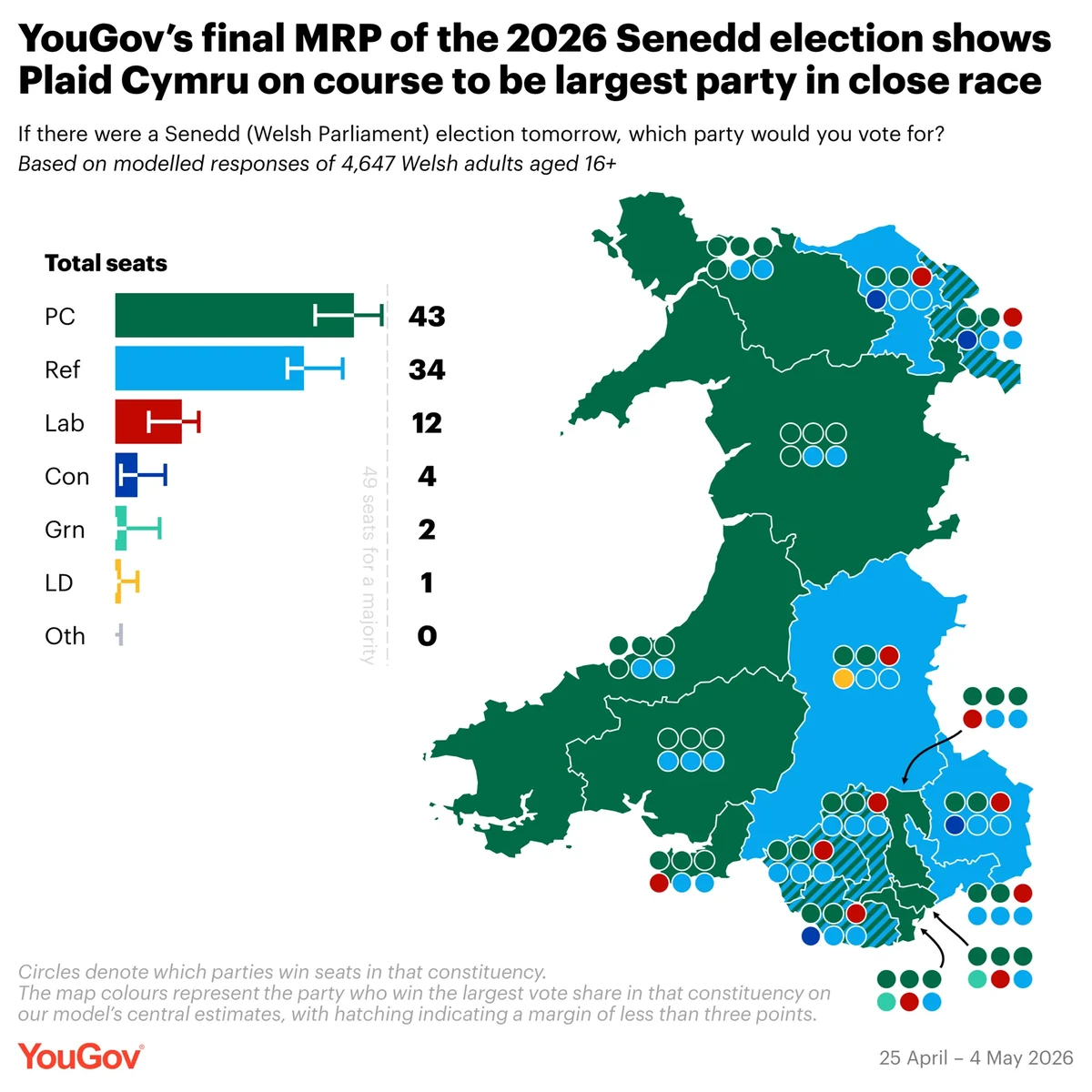
- Plaid Cymru projected to win 43 seats in the 96-member Senedd.
- Reform UK forecast to secure 34 seats, a significant gain from zero in 2021.
- Labour's seat count expected to plummet to just 12 members.
- Conservatives forecast to win only four seats, their worst devolved election result.
- Liberal Democrats projected to win a single seat.
- Greens expected to win their first representation in the Senedd.
- Fieldwork for the model conducted from April 25 to May 4, surveying over 4,600 adults.
A Seismic Shift in Welsh Politics
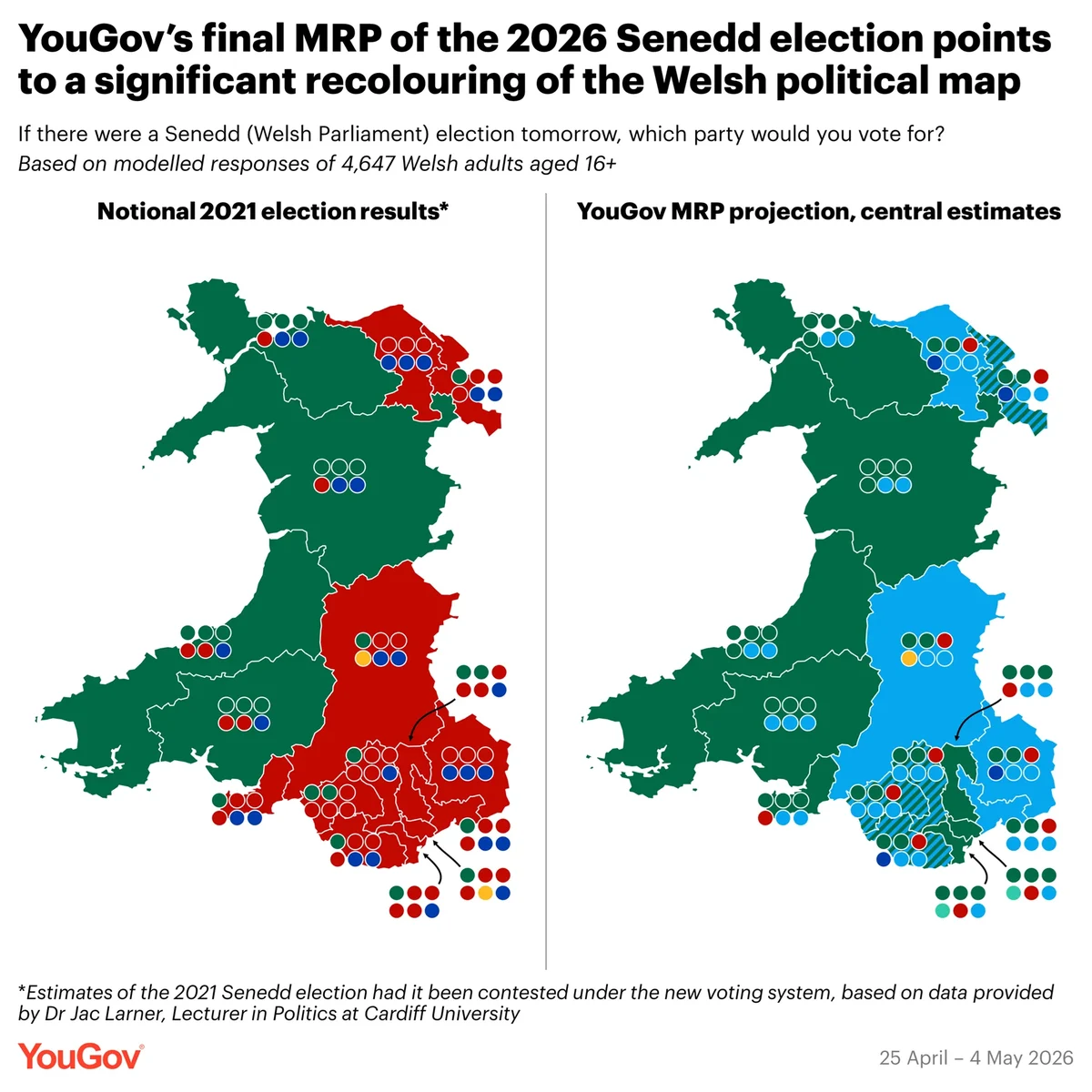
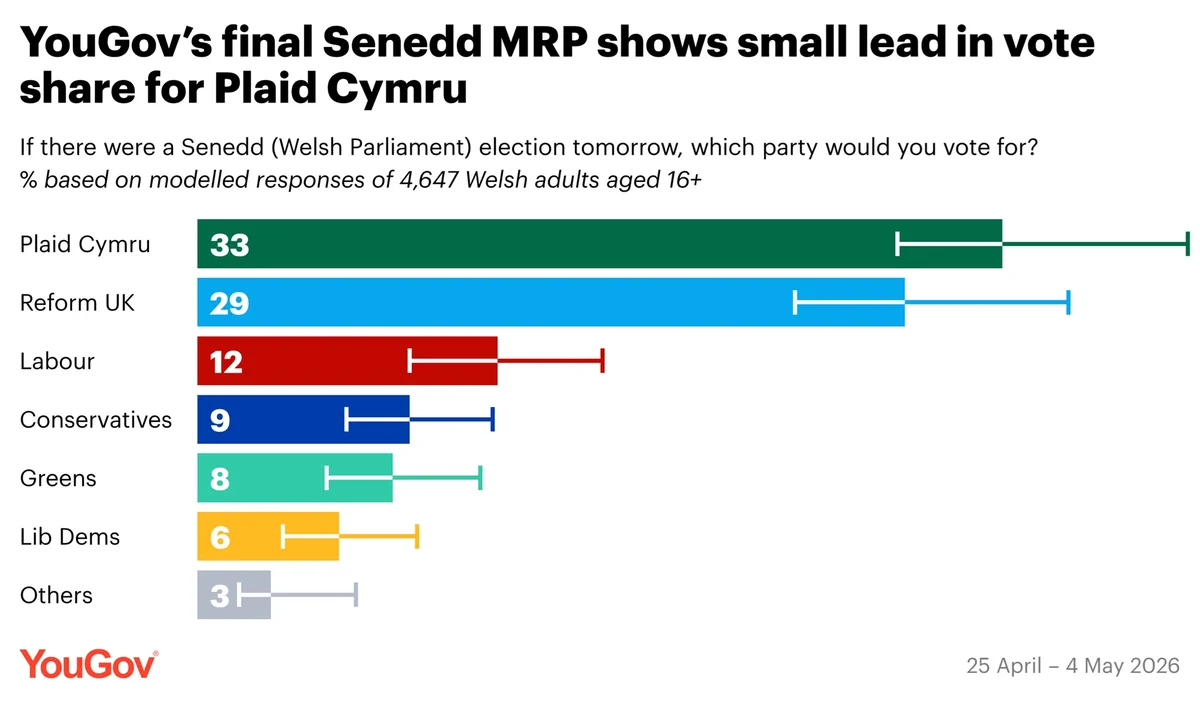
The political landscape of Wales is on the cusp of a dramatic transformation, with projections indicating an end to Labour's century-long hold on power. YouGov's final MRP model for the upcoming Senedd election forecasts a significant surge for Plaid Cymru, potentially positioning its leader, Rhun ap Iorwerth, as the next first minister. This seismic shift comes as Labour faces a historically poor showing, threatening to shatter its long-standing dominance in devolved and national elections. The projections, based on fieldwork among more than 4,600 adults in Wales between April 25 and May 4, paint a starkly different picture from past electoral cycles. The model suggests a future where Plaid Cymru could be the dominant force, while Labour's influence wanes considerably. Such an outcome would represent a fundamental reordering of Welsh political allegiances, with implications reaching far beyond the Senedd itself.
Plaid Cymru's Ascent and Reform UK's Rise
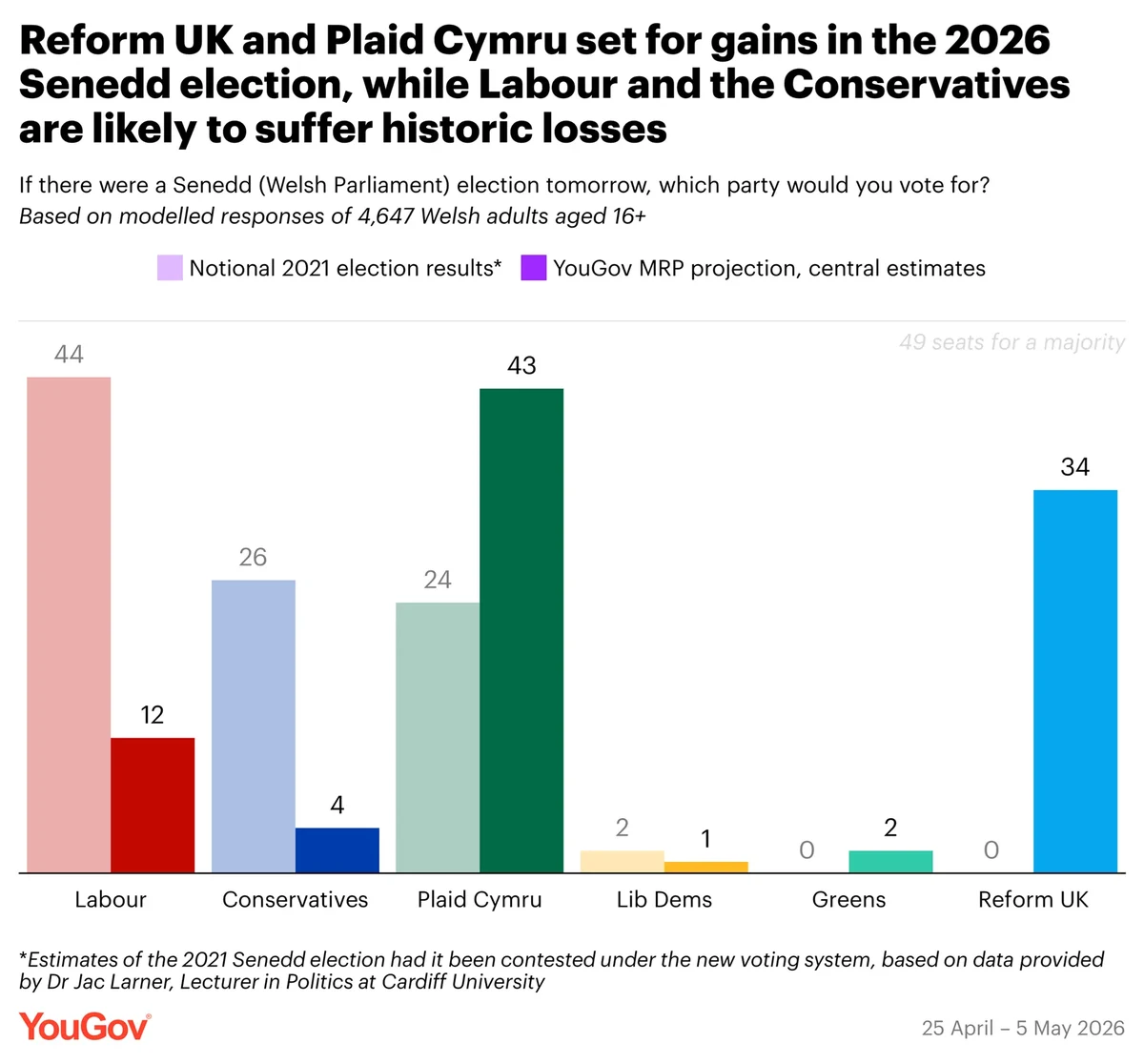
Plaid Cymru's central projection stands at 43 seats in the now 96-member Welsh parliament, falling just six seats short of an outright majority. This represents a substantial increase from its 2021 performance, which would have yielded 24 seats under the new electoral system. The party has reportedly made small gains in the latter stages of the campaign, overtaking the Greens and challenging for the top spot. Simultaneously, Reform UK is forecast to achieve remarkable success, securing a median estimate of 34 seats. This marks a dramatic turnaround for the party, which won only 1% of the vote and zero seats in the 2021 election. Their projected performance places them in a strong second position, a testament to a significant shift in voter sentiment. The model indicates Reform UK could even emerge as the largest party in 13% of simulations, highlighting the volatility of the current political climate.
Labour's Historic Decline
The scale of Labour's projected defeat is unprecedented. The party, which has historically dominated Welsh politics, winning every devolved election and topping the poll in Wales at every Westminster election since 1922, is forecast to be reduced to just 12 members of the Senedd. This represents a notional loss of 32 seats and would see them fail to top the poll in any of the Senedd's 16 constituencies. The forecast suggests Labour could win zero seats in four of the constituencies, including Ceredigion Penfro in the west of the country. This constituency is notable as Eluned Morgan, a key figure in Labour's leadership, is at the top of their candidate list, making it a realistic possibility that a prominent minister could lose their seat. Such a result would underscore the depth of Labour's electoral challenges in Wales.
Conservative Setback and Minor Party Fortunes
The Conservative Party is also bracing for a significant setback, with projections indicating they will be reduced to just four seats. This would be their worst result in a devolved election to date, a stark decline from their notional 2021 outcome of 26 seats. Crucially, this total would leave them short of the five seats required to form a political group in the Senedd, limiting their ability to participate in committee work and question ministers. The Liberal Democrats are similarly expected to struggle, with a median projection of a single seat, likely in the Brycheiniog Tawe Nedd constituency. This would leave Jane Dodds as the party's sole representative. The Green Party, while also projected to fall short of forming a group, is expected to win their first-ever representation in the Senedd, with a seat anticipated in each of the two Cardiff constituencies.
The Impact of the D'Hondt System
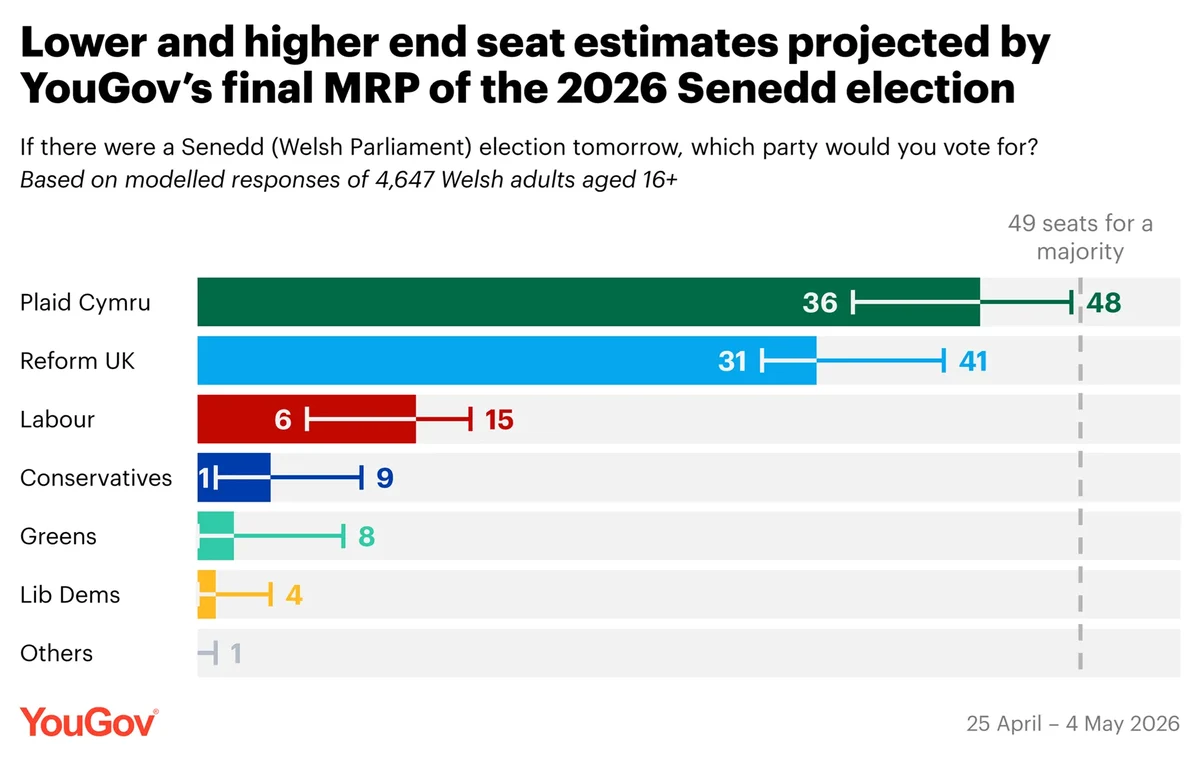
The intricacies of the new D'Hondt voting system are playing a significant role in shaping the projected outcomes, particularly in allocating seats where vote shares are closely contested. The model highlights that the allocation of some seats remains on a knife-edge, with Plaid Cymru's potential seat range spanning from 36 to 48, and Reform UK's from 31 to 41. This sensitivity to minor shifts in vote shares results in relatively wide predicted seat ranges for each party. Such a dynamic electoral environment means that the final results could see further fluctuations. The narrow races in several constituencies, amplified by the proportional representation mechanism, contribute to the uncertainty surrounding the final composition of the Senedd. This underscores the importance of every vote and the potential for marginal gains to have a disproportionate impact on seat allocation.
A New Political Era Dawns
This projected electoral map of Wales signifies more than just a change in government; it heralds a potential new political era. The collapse of Labour's dominance, coupled with the ascendance of Plaid Cymru and the significant gains by Reform UK, points to a fundamental realignment of voter priorities. The traditional political certainties that have defined Welsh elections for decades appear to be dissolving. The implications of these shifts extend to the functioning of the Senedd itself. The struggles of the Conservatives and Liberal Democrats to form groups, and the potential for smaller parties to hold the balance of power, could lead to a more fragmented and potentially more dynamic legislative environment. The coming election, therefore, is not merely a contest for seats but a critical juncture that could redefine Welsh governance for years to come.
The bottom line
- Plaid Cymru is projected to become the largest party in the Senedd, with its leader potentially becoming First Minister.
- Labour faces a historic defeat, potentially losing its long-held dominance in Welsh politics.
- Reform UK is set for substantial gains, becoming a major force in the Welsh parliament.
- The Conservatives are forecast to achieve their worst devolved election result, struggling to form a political group.
- The new D'Hondt electoral system is contributing to seat allocation uncertainty in closely contested constituencies.
- The election could mark a significant realignment of the Welsh political landscape, ending a century of Labour dominance.


Radio Fault Cripples Southern England Rail Network

Dennis Taylor recalls saving Clive Everton's life as snooker legends gather for John Virgo memorial

US Strikes Iranian Boats in Strait of Hormuz as Maersk Vessel Exits Under Military Protection