Russia Test-Fires Sarmat ICBM, Boosting Nuclear Deterrence Capabilities
President Vladimir Putin declared the 'most powerful missile in the world' operational, intensifying an already volatile global nuclear arms landscape.
UNITED KINGDOM —
Key facts
- Russia test-fired an intercontinental ballistic missile (ICBM) on Tuesday.
- The new Sarmat missile is designed to replace the aging Soviet-built Voyevoda.
- Vladimir Putin declared the nuclear-armed Sarmat missile would enter combat service by the end of the year.
- The Sarmat is stated to have a range of more than 21,700 miles and a payload capacity up to 10 tons.
- The last remaining nuclear arms pact between Russia and the U.S. expired in February, ending five decades of caps on the two largest arsenals.
- Moscow's arsenal modernization includes the Avangard hypersonic glide vehicle, capable of flying 27 times faster than the speed of sound.
A New Deterrent Emerges from Russian Arsenals
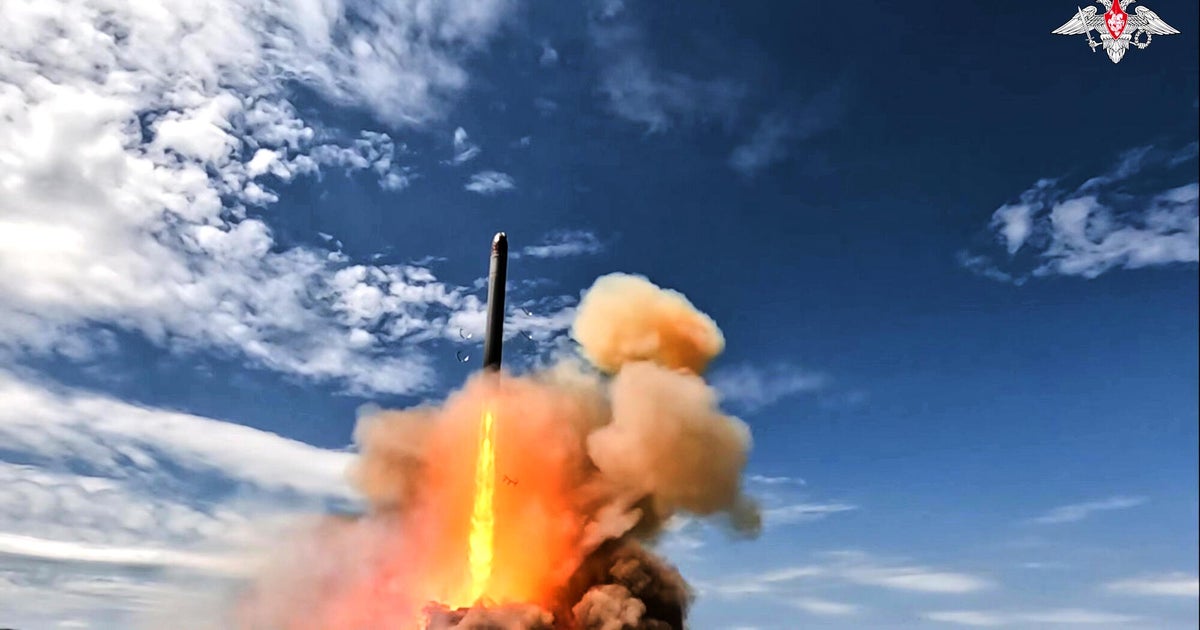
Russia test-fired a new intercontinental ballistic missile (ICBM) on Tuesday, a move framed by Kremlin officials as a crucial component of efforts to modernize the nation’s nuclear forces. Vladimir Putin hailed the test, declaring the nuclear-armed Sarmat missile to be 'the most powerful missile in the world.' This launch occurred just days after Putin stated that the conflict in Ukraine was nearing a close, linking the military development to Russia's broader geopolitical objectives. The Sarmat, designated 'Satan II' by NATO, is engineered to succeed the outdated Soviet-built Voyevoda ICBM. According to presidential statements, the modernized system is equipped with individually targeted warheads whose combined power surpasses that of any Western equivalent by more than four times. The ICBM is classified as a 'heavy' system, capable of carrying a payload of up to 10 tons. Developing the missile began in 2011, and prior to the latest test, the system had reportedly undergone only one known successful trial, following a massive explosion observed at Plesetsk Cosmodrome in northern Russia in 2024.
The Context of the Global Arms Race
Putin has systematically overseen the enhancement of Russia’s nuclear triad since taking office in 2000, efforts that involve deploying new land-based ICBMs, commissioning modern nuclear submarines, and upgrading nuclear-capable bombers. This aggressive upgrade cycle has placed immense pressure on the United States to pursue costly modernizations of its own nuclear arsenal. Critically, the final nuclear arms agreement between Russia and the U.S. expired in February, a pivotal moment that ended five decades of limitations on the world's two largest atomic arsenals. Although the two nations agreed to reestablish formal, high-level military communications that had lapsed in late 2021—prior to Russia’s full-scale invasion of Ukraine—the lapse in treaty caps has fueled fears of an unconstrained nuclear arms race. Moscow’s latest armament reveal also included the Avangard hypersonic glide vehicle, designed to fly at speeds 27 times faster than the speed of sound, alongside the Sarmat.
Technological Claims and Strategic Overreach
The Kremlin emphasized the missile’s advanced capabilities, noting that the Sarmat is intended to provide superior precision compared to the Voyevoda while maintaining comparable power. Furthermore, Putin asserted its capacity for suborbital flight, providing an extended range exceeding 21,700 miles. This extended capability, he claimed, grants the ICBM the ability to penetrate any prospective missile defense systems. These assertions of advanced defense-negating technology underscore Russia’s determination to maintain strategic parity, regardless of Western countermeasures. Alongside the Sarmat, the arsenal modernization represents a comprehensive military effort designed to signal overwhelming power and deter external support for Ukraine. The sheer volume of military development suggests a sustained intention to deter the West, a strategy that has been continuously employed since sending troops into Ukraine in February 2022.
Deterrence and Defense Challenges
Amid escalating global missile tensions, military strategists and political bodies are grappling with the need to update defense postures. Operations conducted by the U.S. and its allies have involved firing hundreds of long-range missiles and defense interceptors. while current stockpiles may suffice for immediate tasks, larger objectives, such as establishing deterrence against aggression from China, remain uncertain. This potential gap necessitates immediate action from Congress to pass munitions supplements designed to replenish and expand military stocks. The current global security environment, defined by missile proliferation and arms buildup, means defense strategies must continually adapt, focusing on technologies that can manage both present and future threats.
Russia’s Nuclear Posturing as a Geopolitical Tool
Putin's repeated brandishing of Russia's nuclear capacity serves a clear geopolitical function, aiming to discourage the West from scaling up military support for Ukraine. The timing of the Sarmat’s reveal, following a military parade commemorating the defeat of Nazi Germany in World War II—a parade notably lacking heavy weapons for the first time in nearly two decades—amplified this message. The rhetoric strongly links Russia's military actions and advanced technological developments to the concept of sovereign security, positioning nuclear power as the ultimate guarantor of national interest. This pattern of escalation complicates international diplomacy and accelerates the arms race narrative across multiple regions. Efforts to manage this heightened tension require multilateral efforts to stabilize arms control regimes while simultaneously modernizing defensive capabilities globally.
The bottom line
- The Sarmat ICBM, set to replace the Voyevoda, boasts a declared range of over 21,700 miles and can penetrate most missile defenses.
- The expiration of the critical U.S.-Russia nuclear arms pact in February ends a five-decade-long period of global arms limitations.
- Moscow's military posture is linked to its goal of deterring continued Western support for Ukraine.
- The continuous buildup of advanced systems, like the hypersonic Avangard, accelerates global flashpoints and arms race fears.
- International militaries are undergoing high operational tempo, necessitating congressional funding increases to manage growing defense needs against varied threats.


Trump Claims Ceasefire Holds Amid Hormuz Exchange

EU's Entry-Exit System Sparks Summer Travel Chaos Fears
