Coach Reinvents Its Ginza Flagship, Marking a New Chapter for the Brand Beloved by Japan's Middle-Aged Generation
The December 19 reopening of the Tokyo store, featuring a giant 'C' sculpture and a mural by Japanese artist Keeenue, signals Coach's evolution from a nostalgic 'youth brand' to a contemporary luxury destination.
JAPAN —
Key facts
- Coach's Ginza flagship, originally opened in 2002 as its first Japanese flagship, reopened on December 19, 2025.
- The store features a giant 'C'-shaped sculpture suspended in the corner window, visible from the street.
- A mural by Japanese artist Keeenue adorns the side of the staircase leading to the second floor.
- The interior includes a circular space called 'The Cocoon' displaying heritage items.
- Coach has appointed Japanese singer-songwriter Lilas Ikuta as its global ambassador.
- Coach's parent company Tapestry filed a lawsuit against Shein for selling counterfeit products.
- Tapestry sold Stuart Weitzman for approximately 15.8 billion yen.
- Coach has been among its top-selling brands for eight consecutive years.
A Flagship Reborn in Ginza
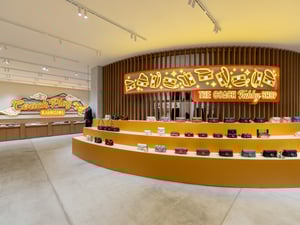
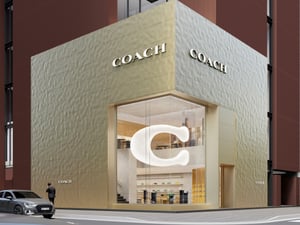
On December 19, 2025, Coach reopened its flagship store in Tokyo's Ginza district, a space that originally debuted in 2002 as the brand's first Japanese flagship. The renovation transforms the store into what the company describes as a 'completely different level' of retail experience, blending New York's urban energy with Tokyo's delicate aesthetics. The most striking addition is a giant 'C'-shaped sculpture suspended in the corner window, visible from the street and adding a dynamic accent to the Ginza cityscape. Inside, the entrance features a display shelf with vertical louvers inspired by the New York skyline, changing appearance depending on the viewing angle. Natural oak, black metal, and exposed concrete create a space that feels both powerful and refined.
Art and Heritage on Display
The store's second-floor staircase is adorned with a mural created in collaboration with Japanese artist Keeenue, integrating art and culture into the shopping experience. A circular space called 'The Cocoon' showcases carefully selected heritage items, allowing visitors to immerse themselves in the brand's history and aesthetics. The store is designed to be enjoyed by families, including multiple generations, making it a destination beyond just shopping. This emphasis on cultural storytelling reflects Coach's broader strategy to appeal to both nostalgic older customers and a new generation of luxury shoppers. The renovation marks a significant step in the brand's evolution from what many Japanese consumers in their 40s and above remember as a 'youth brand'—affordable, stylish, and reliable—to a more sophisticated and contemporary identity.
A Brand in Transition: From 'Youth Brand' to Global Player
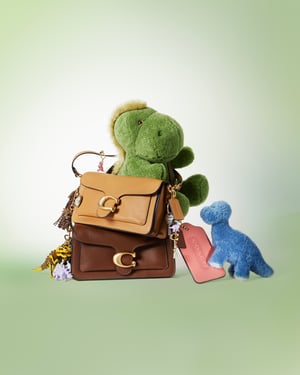
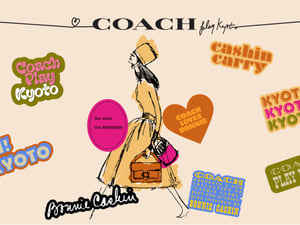
For many Japanese consumers over 40, Coach evokes memories of their youth: the vintage leather bags beloved by their parents' generation, and the then-innovative 'Signature' pattern that captured the imaginations of teenagers and young adults in the 2000s. The brand's recent moves, however, signal a deliberate shift toward modernity and global relevance. In addition to the Ginza flagship, Coach has opened new concept stores in Karuizawa, Kyoto (Coach Play Kyoto), and Osaka (Coach Play Osaka), the latter offering customization services. The brand also launched a pop-up at Isetan Shinjuku to celebrate the 10th anniversary of its dinosaur mascot Rexy, releasing limited-edition bags. A collaboration with Peanuts featuring characters like Snoopy has also hit stores.
New Faces and Legal Battles
Coach appointed Japanese singer-songwriter Lilas Ikuta as its global ambassador, featuring her in a new campaign. The brand also entered into a partnership with the Women's National Basketball Association (WNBA) in the United States, expanding its presence in sports. On the corporate front, Coach's parent company Tapestry filed a lawsuit against fast-fashion giant Shein, demanding damages for the sale of counterfeit Coach products. Separately, Tapestry sold its footwear brand Stuart Weitzman for approximately 15.8 billion yen, streamlining its portfolio. These actions underscore Tapestry's focus on protecting brand integrity and concentrating resources on its core labels.
Market Resilience and Second-Hand Demand
Despite the broader luxury market's fluctuations, Coach has maintained strong consumer demand in Coach has ranked among its top-selling brands for eight consecutive years, alongside The North Face. This enduring popularity in the pre-owned market suggests that Coach bags retain value and desirability over time. The brand's new products, such as the customizable Soho sneakers with shoe charms, and the ongoing Coachtopia line—a sub-brand focused on circular fashion—aim to capture younger, sustainability-conscious shoppers. The Ginza flagship's reopening, with its blend of nostalgia and innovation, positions Coach to compete in an increasingly crowded luxury landscape.
Outlook: Can Coach Sustain Its Momentum?
The Ginza flagship's renovation is a bold statement of intent, but Coach faces challenges. The lawsuit against Shein highlights the persistent threat of counterfeiting, which could undermine brand value. Meanwhile, the sale of Stuart Weitzman suggests Tapestry is doubling down on Coach and its sister brand Kate Spade, but the success of this strategy depends on whether Coach can consistently deliver products that resonate across generations. With its new stores, ambassador appointments, and collaborations, Coach is clearly investing in its future. The question remains whether these efforts will be enough to transform the brand from a nostalgic favorite into a lasting icon for a new era.
The bottom line
- Coach's Ginza flagship reopened on December 19, 2025, with a giant 'C' sculpture and a mural by Japanese artist Keeenue.
- The store includes a heritage display area called 'The Cocoon' and is designed to appeal to multiple generations.
- Coach appointed Lilas Ikuta as global ambassador and partnered with the WNBA.
- Parent company Tapestry sued Shein for counterfeiting and sold Stuart Weitzman for 15.8 billion yen.
- Coach has been a top-selling brand at second-hand retailer Book Off for eight consecutive years.
- The brand is expanding with new concept stores in Karuizawa, Kyoto, and Osaka, and a pop-up at Isetan Shinjuku.




Hantavirus outbreak on Atlantic cruise ship kills three, WHO confirms

Olympic Gold Medalists Riku Miura and Ryuichi Kihara Launch Ice Show 'The Destiny' in Tokyo

VTuber業界、第三極Brave groupが欧州進出——ホロライブ・にじさんじに続く連合戦略
