US KC-135 Stratotanker Vanishes Over Qatar After Sending Distress Signal
The aerial refueling aircraft squawked 7700 over the Strait of Hormuz before disappearing from radar, triggering a search amid heightened Middle East tensions.
KENYA —
Key facts
- Boeing KC-135 Stratotanker issued a 7700 distress signal over the Persian Gulf near Iran.
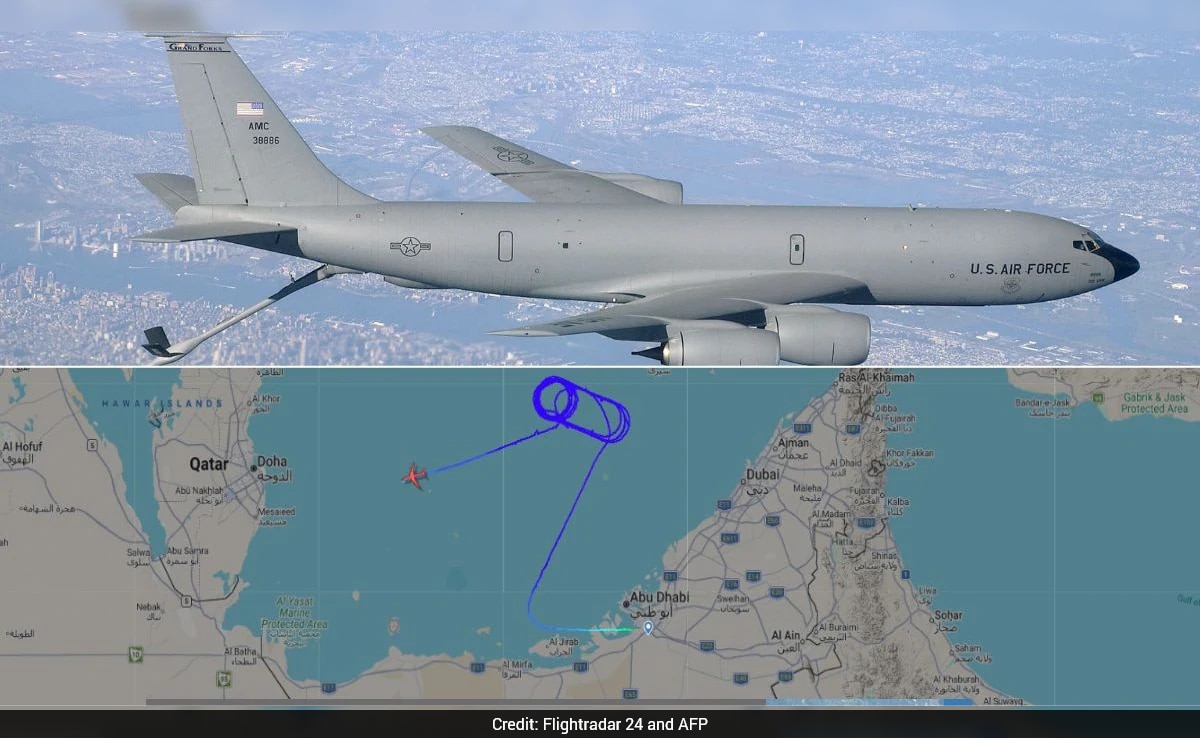
- The aircraft took off from Al Dhafra Air Base in the UAE and lost signals over Qatar.
- Flight tracking data showed the plane flew in a circular pattern before descending toward Qatar.
- Two H125 light utility helicopters departed Al Udeid Air Base, possibly in response.
- Signs of GPS disruption, including jamming and spoofing, were detected in the area.
- In March, a US KC-135 was lost in an Iranian attack in western Iraq, claimed by Iran-backed groups.
Distress Signal Over the Strait of Hormuz
A United States Air Force KC-135R Stratotanker, a four-engine aerial refueling aircraft, transmitted a 7700 emergency code while flying over the Arabian Gulf near the Strait of Hormuz on Tuesday. The internationally recognized squawk indicates a serious in-flight emergency, which can stem from mechanical failure, fire, medical crisis, or external threat. According to publicly available flight tracking data, the tanker had been airborne for hours, conducting refueling operations in support of ongoing military missions. It then began flying in a circular pattern before initiating a descent and altering course toward Qatar. Shortly after, its transponder signal vanished from tracking platforms.
Vanishing Act and Response Efforts
The loss of the transponder signal does not automatically confirm a crash; military aircraft can intentionally disable transponders for operational security, especially in sensitive airspace. However, the sequence of a 7700 code followed by signal loss raises the possibility of a serious incident. indicate that two H125 light utility helicopters departed from Al Udeid Air Base in Qatar, possibly as part of a search or response operation. The US military has not issued any official statement on the aircraft’s status, and the cause of the emergency remains unclear. No link to hostile action has been confirmed.
Heightened Tensions and Historical Context
The incident occurs against a backdrop of elevated Middle East tensions, particularly involving Iran. In March, the US military lost a KC-135 in an attack in western Iraq, for which the Islamic Resistance in Iraq, an umbrella group of Iran-backed armed factions, claimed responsibility. That group stated it shot down the aircraft “in defence of our country’s sovereignty and airspace.” Iran’s semi-official on the disappearance, citing Flightradar24 data, but Tehran has not indicated any involvement. Meanwhile, signs of GPS disruption, including jamming and spoofing, were detected in the area around the time of the emergency, though no direct link has been established.
The KC-135 Stratotanker: A Vital Asset
The KC-135 Stratotanker, based on Boeing’s 367-80 design that also spawned the commercial 707, has been a backbone of US Air Force operations for more than six decades. Powered by four turbofan engines, it serves as a “flying gas station,” transferring fuel mid-air to fighter jets, bombers, and other military aircraft, extending their range and endurance. It also supports aircraft from the US Navy, Marine Corps, and allied nations. Hundreds of KC-135s remain in service with the Air Force, Air National Guard, and Air Force Reserve. The aircraft involved in Tuesday’s incident was a KC-135R variant, operated by the US Air Force.
Unanswered Questions and Next Steps
The exact fate of the KC-135 and its crew remains unknown. Investigators will likely examine flight data recorders, if recovered, and analyze the sequence of events leading to the distress signal. The US military may also assess whether GPS interference played a role. No official confirmation has been provided on whether the aircraft landed safely, crashed, or is still airborne. The incident adds to a series of recent emergencies involving US aircraft in the region, including the loss of a $200 million Triton surveillance drone after a similar distress signal over the Strait of Hormuz three weeks ago.
The bottom line
- A US Air Force KC-135R Stratotanker issued a 7700 emergency code over the Arabian Gulf before disappearing from radar near Qatar.
- The aircraft was conducting aerial refueling operations and had taken off from Al Dhafra Air Base in the UAE.
- Two H125 helicopters were dispatched from Al Udeid Air Base, but the US military has not confirmed the aircraft’s status.
- GPS jamming and spoofing were detected in the area, though no link to the emergency has been established.
- The incident follows a March attack that destroyed a US KC-135 in Iraq, claimed by Iran-backed groups.
- The cause of the emergency remains unclear; no hostile action has been officially confirmed.





Kenya Braces for Intensified Long Rains as Flood Death Toll Reaches 66

Royal Navy Clinch Back-to-Back Inter Services Title as UK Military Faces Equipment and Justice Challenges

De Zerbi Revives Tottenham with Aston Villa Victory, Ending Relegation Fears