US Air Force Tanker Vanishes Over Strait of Hormuz Amid Tensions
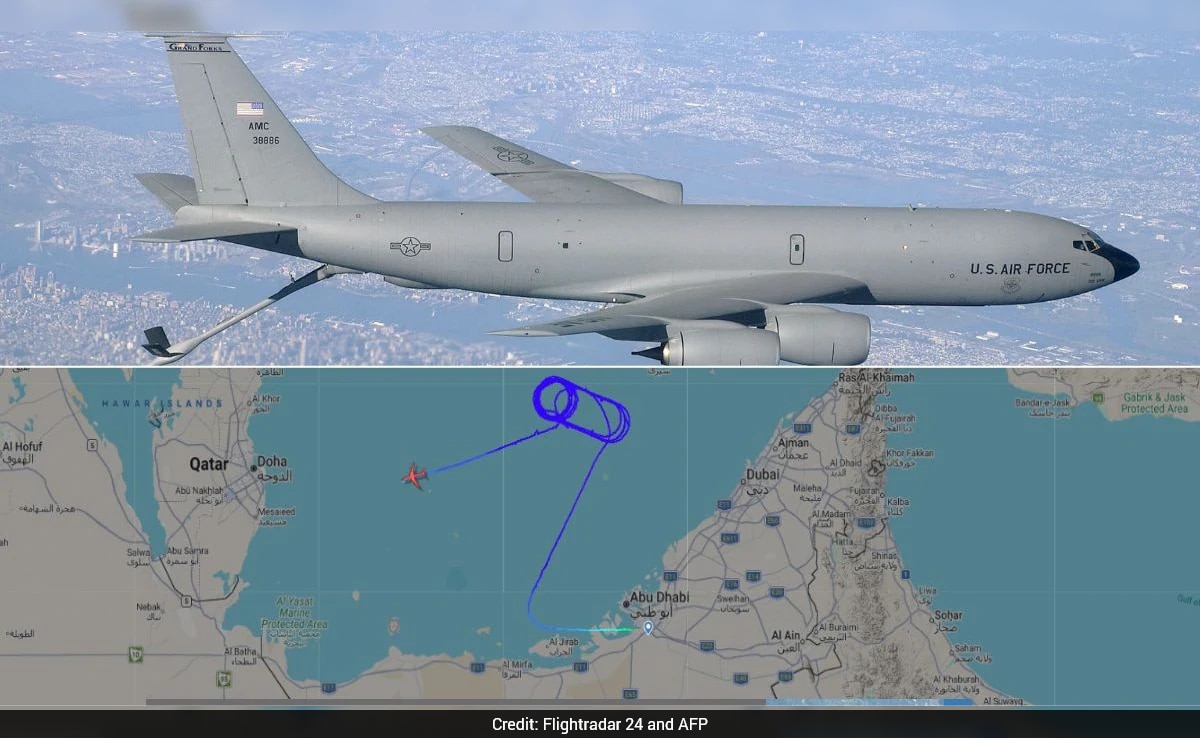
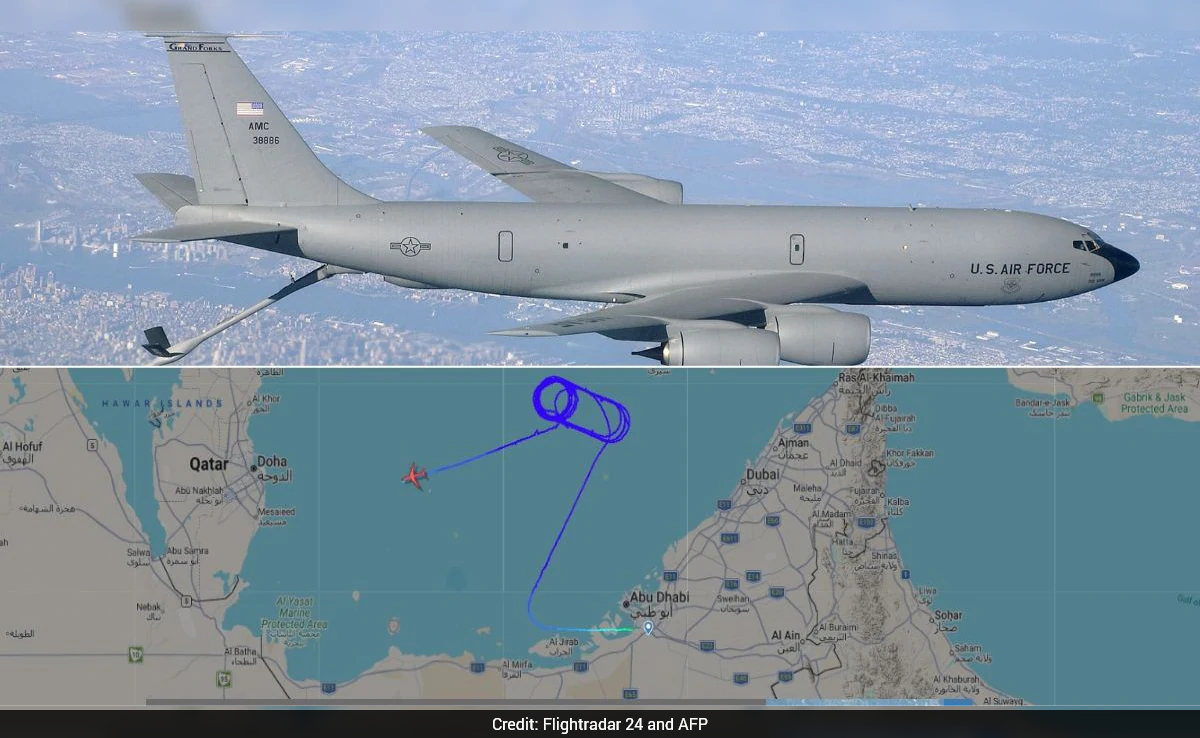
A KC-135 Stratotanker issued a distress signal before disappearing from radar, prompting a search-and-rescue operation.
KENYA —
Key facts
- A US Air Force KC-135 Stratotanker issued a "7700" distress signal over the Persian Gulf.
- The aircraft disappeared from radar over the Strait of Hormuz on Tuesday.
- Two helicopters launched from Al Udeid Air Base in Qatar, suggesting a search-and-rescue effort.
- The tanker had taken off from Al Dhafra Air Base in the UAE.
- The incident occurred during Operation Project Freedom, a US-led mission in the Strait of Hormuz.
- Iran had previously warned the US to stay out of the Strait.
- The Strait of Hormuz carries approximately 20% of the world's seaborne oil supply.
Aerial Tanker Issues Distress Signal Over Persian Gulf
A United States Air Force KC-135 Stratotanker, a vital aerial refueling aircraft, broadcast an international general emergency signal, known as a "7700" squawk code, while flying over the Persian Gulf. Flight tracking data indicated the plane flew in a circular pattern before beginning its descent. The aircraft, which serves as a mobile fuel depot for US military planes, had departed from Al Dhafra Air Base in the United Arab Emirates. Its signal was subsequently lost over Qatar, amid escalating tensions in the Middle East. The aircraft had reportedly been engaged in operations supporting ongoing military activities in the region. The disappearance occurred on the second day of Operation Project Freedom, a US-led mission initiated on May 4 to ensure the passage of commercial vessels through the Strait of Hormuz. Iran, which has asserted control over the waterway, had issued a warning to the US just one day prior to stay clear of the strait. This event marks a significant development in a region already fraught with instability. The Strait of Hormuz is a critical chokepoint, through which approximately 20% of the world's seaborne oil supply transits. Commercial traffic in the waterway has seen a dramatic decline, plummeting by more than 90% since the commencement of hostilities involving Iran.
Search and Rescue Operation Underway
Following the disappearance of the KC-135 Stratotanker, two H125 light utility helicopters were dispatched from Al Udeid Air Base in Qatar. This rapid deployment strongly suggests that a search-and-rescue operation was initiated shortly after the incident. Al Udeid Air Base serves as the primary air hub for the US military in the Gulf region, located approximately 500 kilometers northwest of the Strait of Hormuz. As of the time of reporting, the US Central Command had not officially confirmed the incident. The lack of immediate official statement from US military authorities underscores the evolving and potentially sensitive nature of the situation. The KC-135 Stratotanker, a workhorse of the US Air Force for over six decades, is designed for aerial refueling, enabling other military aircraft to extend their operational range and endurance. These aircraft are crucial for maintaining air superiority and supporting extended missions, particularly in complex operational theaters like the Middle East. Their ability to transfer fuel mid-air allows fighter jets, bombers, and other support aircraft to remain airborne for longer durations and cover greater distances, bolstering the capabilities of US naval, Marine Corps, and allied air assets.
KC-135 Fleet's Vulnerabilities Highlighted
The KC-135 Stratotanker, while a foundational element of US air power, is a decades-old design. Its operational history in the current theater dates back to the commencement of Operation Epic Fury on February 28. The US military has experienced losses of these tankers during the ongoing conflict. Notably, on March 12, a KC-135 crashed over western Iraq following a mid-air collision with another tanker in what was described as friendly airspace. That incident resulted in the tragic loss of all six crew members. Defense experts have consistently pointed to the KC-135 fleet's limited battlefield connectivity as a significant vulnerability, particularly in contested zones. Concerns have been raised that the aircraft largely lacks secure beyond-line-of-sight communications capabilities. This deficiency potentially leaves crews with diminished situational awareness regarding emergent threats in their operational environment. The aging infrastructure of the KC-135 fleet, coupled with the dynamic threat landscape of the Persian Gulf, presents a persistent challenge for military planners.
Iran Denies Involvement Amidst Tensions
The disappearance of the KC-135 occurred on the same day that Iran denied responsibility for a strike that ignited a fire at Fujairah's oil port. Iranian Foreign Minister Abbas Araghchi publicly referred to the US-led Operation Project Freedom as "Project Deadlock." He issued a stern warning to Washington and Abu Dhabi, cautioning them against being "dragged back into quagmire." on the disappearance, citing data from Flightradar24. However, there has been no statement from Iran indicating any involvement in the emergency faced by the US military plane. This denial comes amidst a period of heightened geopolitical friction, where accusations and counter-accusations are common. The Islamic Resistance in Iraq, a coalition of Iran-backed armed factions, had previously claimed responsibility for an attack in March that resulted in the loss of a KC-135 in western Iraq. At that time, the group stated the aircraft was shot down "in defence of our country's sovereignty and airspace."
The KC-135 Stratotanker: A Versatile Aerial Platform
The KC-135 Stratotanker is a robust military aircraft characterized by its four turbofan engines mounted beneath swept wings. Its primary role is aerial refueling, a function critical for extending the operational reach of other aircraft. Beyond its refueling capabilities, the KC-135 possesses a cargo deck situated above the refueling system, enabling it to transport both passengers and equipment. This dual capability makes it an indispensable asset for a wide array of military operations. It facilitates the sustained presence of fighter jets, bombers, and other military platforms in the air, allowing them to cover greater distances. The aircraft also provides essential support to aircraft belonging to the US Navy, Marine Corps, and allied nations, enhancing interoperability and collective defense capabilities. Based on Boeing's 367-80 design, which also spawned the commercial Boeing 707 airliner, the KC-135 has been a mainstay of the US Air Force for over 60 years. Hundreds of these aircraft remain in active service across the Air Force, Air National Guard, and Air Force Reserve. Its utility extends beyond refueling, encompassing aeromedical evacuation missions and the transport of injured or ill patients using specialized medical pallets, often accompanied by a dedicated medical team.
The bottom line
- A US Air Force KC-135 Stratotanker issued a "7700" distress signal and disappeared from radar over the Strait of Hormuz.
- The incident occurred amid heightened regional tensions and a US-led mission to ensure passage through the vital oil transit waterway.
- A search-and-rescue operation was launched involving helicopters from Al Udeid Air Base in Qatar.
- Iran has denied any involvement in the incident, despite previous warnings to the US regarding the Strait.
- The KC-135 fleet's aging technology and limited communication capabilities have been identified as potential vulnerabilities.
- The Strait of Hormuz is a critical global energy chokepoint, with commercial traffic significantly impacted by regional conflict.


Royal Navy Clinch Back-to-Back Inter Services Title as UK Military Faces Equipment and Justice Challenges
US KC-135 Stratotanker Vanishes Over Qatar After Sending Distress Signal

Harley-Davidson profit plunges to $25M as tariff costs hit $45M in first quarter