Europe’s warming accelerates as 95% of continent sees above-normal temperatures in 2023
confirms Europe is the fastest-warming continent, with record heat waves, melting glaciers, and wildfires scorching over a million hectares.
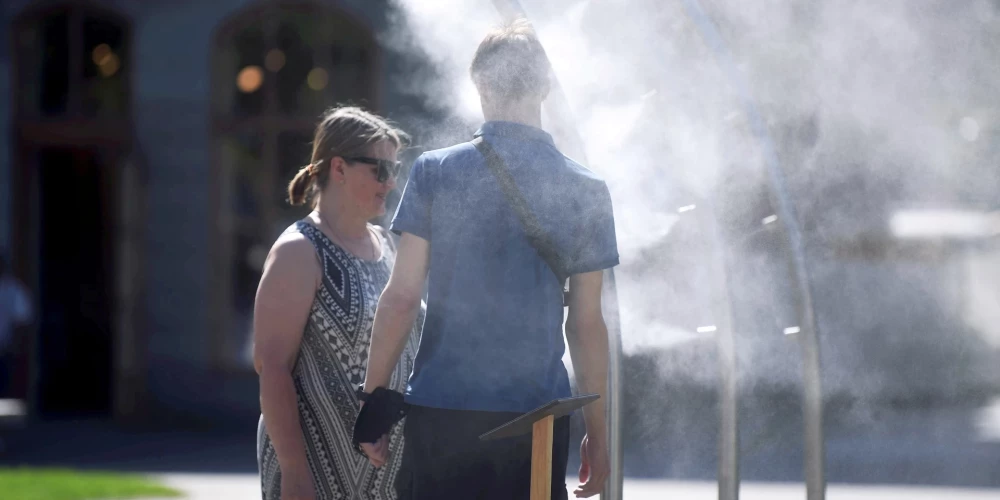
LATVIA —
Key facts
- At least 95% of Europe experienced above-normal average annual temperatures in 2023 relative to the 1991–2020 baseline.
- European sea surface temperatures hit a record high in 2023, the fourth consecutive annual record.
- Wildfires burned over 1 million hectares in Europe in 2023, the largest area on record.
- Glacier mass declined across all European glacier regions; Greenland’s ice sheet lost about 139 gigatonnes of ice.
- In March 2025, European snow cover was 1.32 million square kilometers (31%) below average, equivalent to the combined area of France, Italy, Germany, Switzerland, and Austria.
- Renewable sources supplied nearly half of Europe’s electricity in 2023, with solar panels accounting for a record 12.5%.
- Estonia’s 2023 average air temperature was 1.6°C above the 1991–2020 average, ranking as the third warmest year on record.
- Water levels in 70% of Europe’s rivers were unusually low in 2023, with below-average flow in 11 of 12 months.
Europe’s climate crisis is here
Europe is warming faster than any other continent, and the consequences are no longer a distant forecast but a present reality. The European State of the Climate 2023 report, compiled by the European Centre for Medium-Range Weather Forecasts (ECMWF) and the World Meteorological Organization (WMO), documents a continent under accelerating environmental stress. Last year, at least 95 percent of Europe’s territory recorded average annual air temperatures above the 1991–2020 norm. A record-breaking heat wave stretched from the Mediterranean to the Arctic, while European sea surface temperatures reached their highest ever observed. Wildfires consumed more than one million hectares — the largest area ever measured in a single year.
Melting ice and vanishing snow
The cryosphere is shrinking at an alarming rate. Glacier mass decreased in every European glacier region, and Greenland’s ice sheet shed roughly 139 gigatonnes of ice over the year — about one and a half times the mass of all Alpine glaciers combined. In March 2025, Europe’s snow cover was 1.32 million square kilometers below the seasonal average, an area comparable to France, Italy, Germany, Switzerland, and Austria together. “The facts speak for themselves: climate change is not a threat, but a reality,” said Samantha Burgess, deputy director of ECMWF. The loss of reflective ice and snow accelerates warming because darker ocean and land surfaces absorb more solar radiation, creating a feedback loop that further raises temperatures.
Record ocean heat and its consequences
Oceans have absorbed 90 percent of global warming over recent decades, and Europe’s seas are feeling the heat. The average surface temperature of the Mediterranean in 2023 was the second warmest on record. Warming is moving toward the polar circle, with thermal anomalies already observed in the Norwegian Sea, part of the Arctic Ocean bordering Iceland and Norway. Warmer oceans are less efficient at absorbing energy, moderating global temperature rise. Scientists are increasingly concerned about the rapid warming of the world’s oceans, which store as much heat in the top few dozen meters as the entire atmosphere. This heat contributes to extreme weather, sea-level rise, and marine ecosystem disruption.
Wildfires and water stress
Climate change is driving more frequent heat waves and droughts, fueling massive wildfires. In 2023, Europe saw more than one million hectares of forest burn — an area larger than the island of Cyprus. Emissions from these fires were also record-high, particularly in Spain, Cyprus, the United Kingdom, the Netherlands, and Germany. Water scarcity is another acute symptom. River levels in 70 percent of Europe’s rivers were unusually low last year, with below-average flow recorded in 11 of 12 months. While the number of floods and heavy rainfall events was lower than in recent years, the overall trend points toward more extreme precipitation patterns, with intense downpours raising flood risks in both rural and urban areas.
Baltic states feel the heat
The warming is not confined to southern Europe. Estonia experienced its third warmest year on record in 2023, with average air temperature 1.6°C above the 1991–2020 mean. All five of Estonia’s warmest years have occurred since 2015. “We often think climate change affects distant regions, like drought-ravaged Africa or Asia facing extreme heat waves. In reality, we in Estonia are increasingly seeing its impact: winters have become significantly warmer, heat waves more frequent, and the risk of heavy rain and local flooding has grown,” said Taijmars Ala, director of the Estonian Environmental Protection Agency. Latvia’s Environment, Geology and Meteorology Centre has also assessed past and future climate changes. Experts warn that while Latvia’s vulnerability to physical climate risks is relatively low compared to other regions, the country is already experiencing longer droughts, stronger storms, and flooding. Projections indicate that air temperatures will continue to rise through the 21st century, with more precipitation in winter and potentially less in summer, along with an increase in extreme wind gusts and days with very heavy rainfall.
Renewable energy gains momentum
Amid the grim data, there is a notable shift in energy production. In 2023, renewable sources supplied nearly half of Europe’s electricity. Solar panels, for the first time, accounted for 12.5 percent of generation — a record. This growth helps reduce dependence on fossil fuel imports from Russia and the Middle East, addressing a root cause of both the energy crisis and greenhouse gas emissions. “The sun helps Europeans reduce their reliance on oil, coal, and gas,” the report notes, emphasizing that solar energy also cuts emissions. The European Green Deal aims for climate neutrality by 2050, and the expansion of renewables is a critical step. However, the overall trend of rising temperatures and extreme weather underscores the urgency of both mitigation and adaptation.
Adaptation is no longer optional
makes clear that climate change is already reshaping natural environments, economies, and daily life. “We believe that mitigating climate change and protecting nature must be considered together, because sustainable ecosystems — forests, wetlands, bogs, and coastal areas — help sequester carbon, reduce flood impacts, and increase society’s climate resilience,” said officials from the Environmental Protection Agency. For Latvia and its neighbors, the message is that adaptation is not a future concern but a present necessity. While only a small fraction of Latvia’s population currently views climate change as a major challenge, the accelerating pace of warming demands proactive measures across all sectors. The window for effective action is narrowing, and the costs of inaction are rising with each record broken.
The bottom line
- Europe is the fastest-warming continent, with 95% of its territory experiencing above-normal temperatures in 2023.
- Glacier and snow cover are shrinking at unprecedented rates, accelerating warming through reduced reflectivity.
- Wildfires burned over 1 million hectares in 2023, and 70% of European rivers had unusually low water levels.
- Baltic states like Estonia and Latvia are already seeing significant warming, with more extreme weather expected.
- Renewable energy reached a record share of nearly half of Europe’s electricity in 2023, but fossil fuel dependence remains a challenge.
- Adaptation measures are urgently needed across all sectors to cope with the present reality of climate change.





Latvia’s overnight drone alert sparks public anger over delayed official communication

Estonian Hockey Team Crushes Spain 12-2 in World Championship Division 1B Opener

Vjetnama ieviesīs vienotus bezmaksas mācību grāmatu komplektus no 2029. gada; izmaksas pārsniegs 4 triljonus đồng