Airlines Slash Thousands of Flights as Jet Fuel Prices Surge
Soaring oil costs linked to the Iran conflict are forcing carriers to cut schedules and hike fares, impacting summer travel plans.

NEW ZEALAND —
Key facts
- Jet fuel prices have risen more than 80 percent since late February.
- Airlines have cut 13,000 flights globally in May.
- US-based Spirit Airlines has ceased operations, citing soaring fuel costs.
- Qatar Airways alone slashed two million seats for June through October.
- Global air travel has seen 9.3 million fewer seats scheduled from June 1 to September 30.
- The average international airfare from the US was $1,101 in late April, up 16 percent year-on-year.
- 49% of travel industry executives expected week-to-week price fluctuations in March.
Global Air Travel Faces Disruption Amid Fuel Crisis
Global air travel is emerging as a significant casualty of elevated oil prices, driven by the ongoing conflict in Iran and the potential closure of the Strait of Hormuz. Jet fuel prices have surged dramatically, more than doubling since the start of hostilities and rising over 80 percent since late February. This unprecedented escalation is forcing airlines worldwide to re-evaluate their operations, leading to flight cancellations, reduced schedules, and increased fares, casting a shadow over the upcoming summer travel season. The repercussions are already being felt by travellers. Theodore, a retired tech entrepreneur from Malaysia, abandoned his usual practice of seeking the best deals for his family's annual holiday to South Korea and Japan. Instead, he opted for full-service carriers Korean Air and Malaysia Airlines for August and September bookings, seeking to avoid the "friction and mental cycles" associated with potential last-minute disruptions. "I saw prices going up, saw budget airlines cancelling flights often, and wanted to avoid any friction later on," Theodore stated, emphasizing the value of "an ounce of prevention" in averting travel plan chaos. His sentiment reflects a broader anxiety within the industry and among consumers, as the stability of air travel faces its most significant challenge in years.
Flight Cuts and Carrier Failures Mount
The impact of soaring fuel costs is starkly evident in the significant cuts to flight schedules. Globally, airlines reduced 13,000 flights in May alone. Data from aviation analytics firm Cirium indicates that Munich and Istanbul were among the most affected destinations. More broadly, a staggering 9.3 million seats have been removed from global schedules between June 1 and September 30 across markets including the US, China, Japan, Australia, and much of Europe. The crisis has led to at least one major carrier ceasing operations. US-based Spirit Airlines announced on Saturday that it would permanently shut down, a move widely attributed to the escalating fuel expenses. The fallout is particularly pronounced in the Middle East, where carriers like Qatar Airways have slashed two million seats for June through October, while Emirates and Etihad Airways have cut 700,000 and 450,000 seats respectively. Even established carriers are feeling the pressure. Lufthansa announced a reduction of 20,000 flights, and Virgin Atlantic indicated it could no longer absorb higher fuel costs without increasing fares. IAG, the parent company of British Airways, also signalled "pricing adjustments," while easyJet introduced a "book with confidence" policy guaranteeing no post-purchase price hikes, a move that itself signals underlying instability.
Economic Pressures and Consumer Reactions
The economic ramifications of the fuel price surge are profound. Jet fuel, primarily derived from crude oil, has seen its price escalate to a point where it is now roughly equivalent to the cost of petrol for cars last year. This dramatic increase is forcing airlines to pass on costs to consumers, with ticket prices substantially higher in many instances than before the conflict. According to data from travel search aggregator Kayak, the average international airfare from the US in the last week of April stood at $1,101, a 16 percent increase compared to the same period in the previous year. This inflationary pressure is altering travel behaviour. Jenny Southan, founder of Globetrender, noted in March that 49 percent of travel industry executives anticipated week-to-week price fluctuations. Travellers are responding by delaying bookings and seeking clarity on future pricing. Some industry insiders suggest booking flights to larger airports, as smaller, less-served routes are likely to be the first to face cancellations. This uncertainty is creating a ripple effect, impacting booking patterns and potentially dampening demand during what is typically a peak travel period.
Contingency Plans and Government Assurances
Despite the widespread disruption, authorities in some regions are attempting to reassure the public. In the UK, holidaymakers are being advised not to alter their travel plans, with assurances that there is no current shortage of jet fuel and that contingency plans are in place. British airlines and travel agents maintain that flights are operating normally, and supply remains unaffected. UK airlines purchase jet fuel in advance, and airports maintain sufficient stocks to ensure resilience. Tim Alderslade, chief executive of Airlines UK, stated that "no flights are being cancelled due to fuel shortages" and that UK airlines intend to operate their full summer schedules, including the upcoming May half-term holidays. Abta, representing British travel agents, echoed this sentiment, confirming that "planes are taking off daily and people are continuing to get away on their holidays." The UK government has also implemented contingency plans that will prevent airlines from losing take-off and landing slots if they are forced to cancel flights due to the current circumstances. Passengers are advised to continue checking with their airlines for updates, monitor FCDO travel advice, and ensure they have appropriate travel insurance.
The Long Road to Post-Fossil Fuel Aviation
While the current crisis presents immediate challenges, it also raises questions about the long-term future of air travel and its environmental impact. The extreme volatility in jet fuel prices could potentially accelerate the transition towards more sustainable aviation fuels and technologies. The prospect of running out of conventional fuel, though unlikely in the immediate sense, highlights the inherent vulnerability of an industry heavily reliant on fossil resources. Even if the conflict in Iran resolves and the Strait of Hormuz reopens, it would take months for fuel flows to return to pre-crisis levels. The current situation, where global production was already exceeding consumption last year, means that any disruption has amplified effects. Experts suggest that even a partial blockage of Hormuz, through which approximately 15 million barrels of oil pass daily, could lead to severe price spikes and shortages. This period of unprecedented disruption may serve as a catalyst for innovation. The drive for "jet zero" could gain renewed urgency as airlines and manufacturers explore alternatives to fossil fuels. However, the immediate focus remains on navigating the current economic storm and ensuring the continuity of air travel amidst escalating costs and operational uncertainties.
The bottom line
- The price of jet fuel has more than doubled since the start of the war on Iran, significantly impacting airline operations.
- Airlines globally have cut thousands of flights in May and millions of seats for the summer, with Spirit Airlines ceasing operations.
- Consumers are facing higher airfares and increased uncertainty, leading some to book flights earlier or opt for full-service carriers.
- no immediate fuel supply issues and have contingency plans, global capacity is significantly reduced.
- The crisis underscores the vulnerability of the aviation industry to fossil fuel price volatility and may accelerate the push for sustainable alternatives.
- Even if diplomatic resolutions occur, restoring normal fuel flows will take months, prolonging the period of high prices and disruption.






New Zealand Braces for 140km/h Gales and Heavy Rain
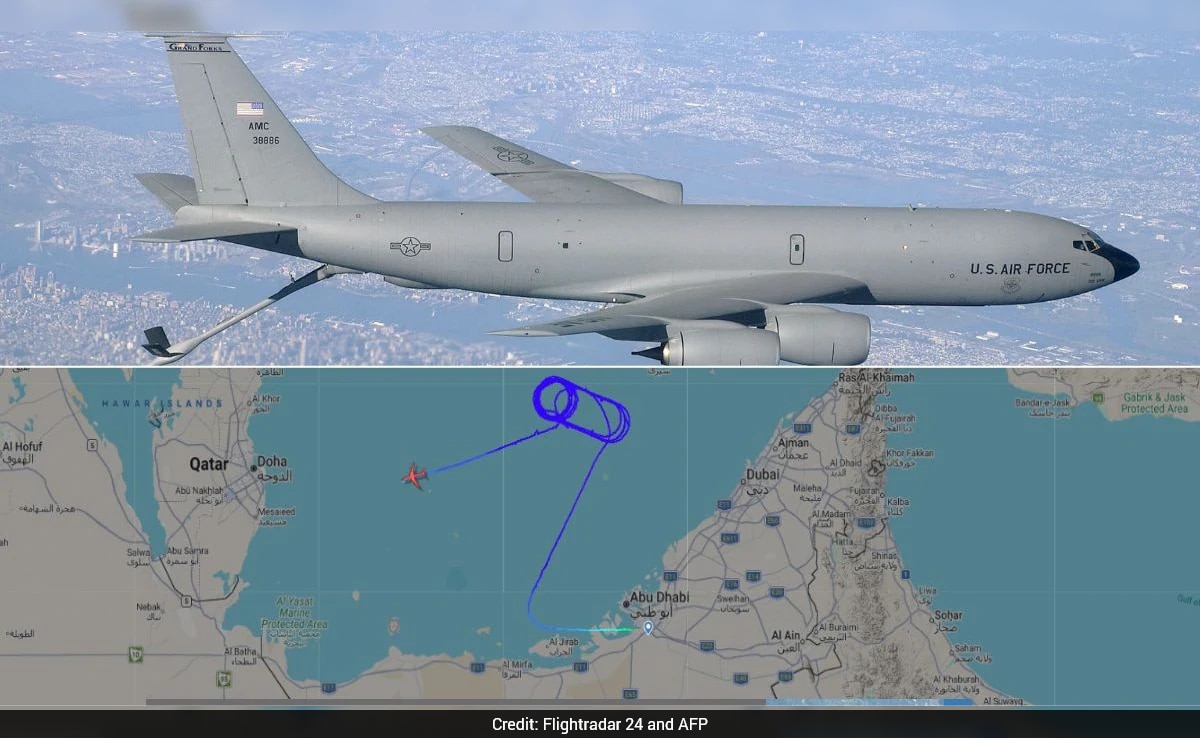
US KC-135 Stratotanker Vanishes Over Qatar After Sending Distress Signal

Man entombed in concrete for a decade; death ruled 'undetermined'