Magnitude 6.0 Earthquake Strikes Eastern Philippines, Jolting Samar Province
The tremor, centered near the town of Nena in Eastern Visayas, was the strongest recorded globally in the past 24 hours and the most significant to hit the Philippines this week.
PHILIPPINES —
Key facts
- Magnitude 6.0 earthquake struck 5 km WNW of Nena, Eastern Samar, Philippines on May 4, 2026.
- The quake occurred at 14:09 local time (Asia/Manila) at a depth of 73 km.
- Epicenter located 71 km (44 mi) from Panalanoy, a city in Leyte.
- No tsunami warning was issued due to the depth of the event.
- The Philippines sits on the Pacific Ring of Fire, a zone of high seismic activity.
- This is the strongest earthquake worldwide in the past 24 hours and the strongest in the Philippines this week.
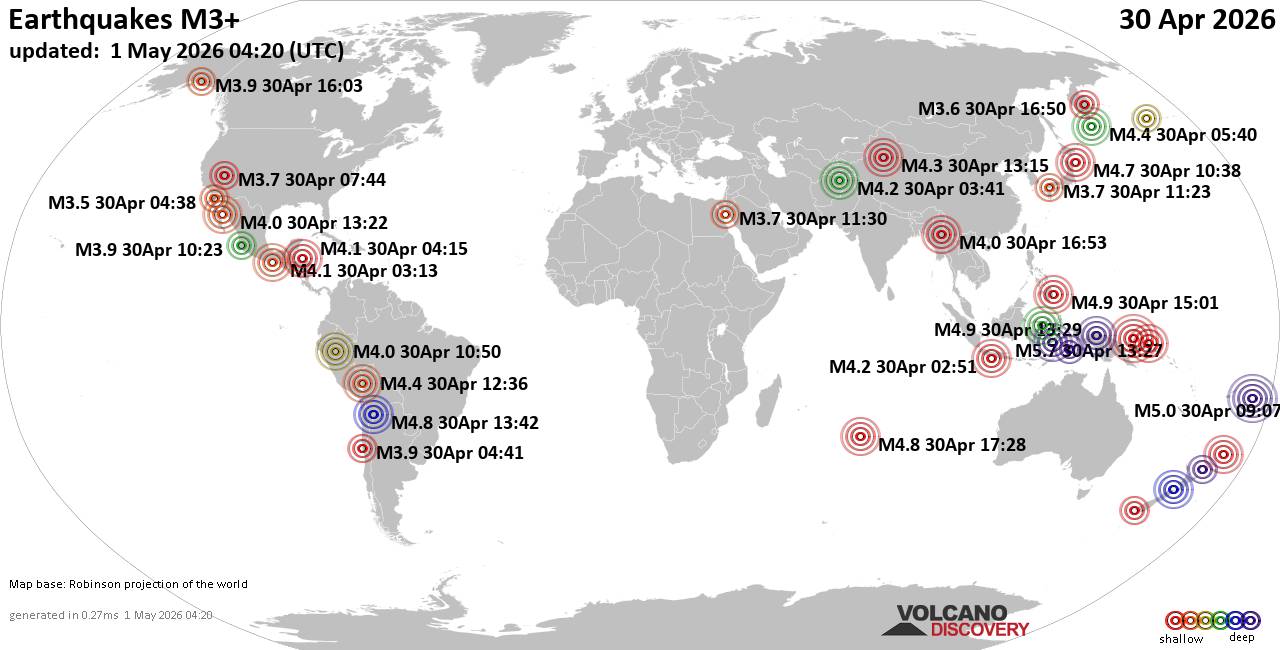
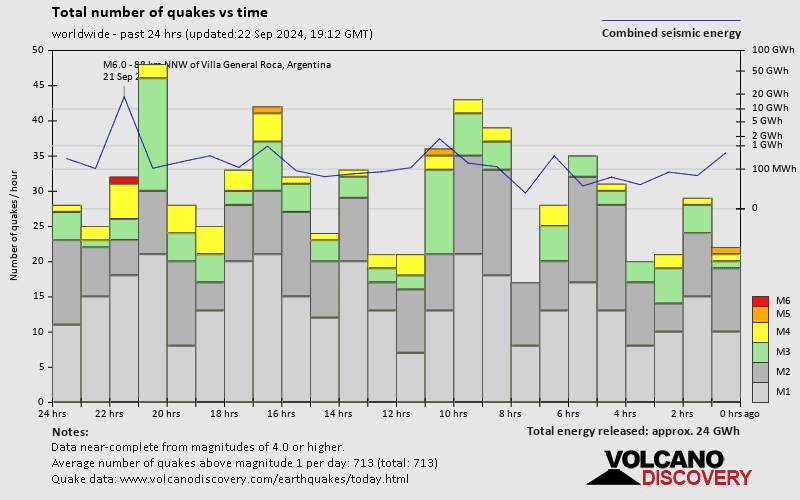
- In the past 24 hours, 304 earthquakes were recorded globally, with 33 of magnitude 4.0 or higher.
A Sudden Jolt in the Afternoon
A powerful earthquake measuring 6.0 on the moment magnitude scale struck the Eastern Visayas region of the Philippines on Monday, May 4, 2026, at 2:09 p.m. local time. The epicenter was located just five kilometers west-northwest of the municipality of Nena in Eastern Samar province, at a depth of 73 kilometers. The tremor was felt across a wide area of the central Philippines, including the cities of Tacloban and Panalanoy on Leyte Island, the latter situated 71 kilometers from the epicenter. strong shaking that sent people rushing out of buildings and into the streets.
The Day's Strongest Quake Worldwide
According to seismic monitoring networks, the 6.0-magnitude event was the most powerful earthquake recorded anywhere on the planet in the preceding 24 hours. It also stands as the largest quake to hit the Philippines this week, surpassing other minor tremors in the region. Globally, seismic activity in the past day has been relatively subdued. Monitoring stations detected a total of 304 earthquakes in the 24-hour period ending May 4, 2026. Of those, 33 registered magnitude 4.0 or higher, and only one exceeded magnitude 5.0—the Philippine quake itself.
Depth Offers Some Protection
The earthquake's depth of 73 kilometers provided a measure of protection against severe surface damage. Deep-focus quakes tend to dissipate energy before reaching the surface, reducing the intensity of shaking. No tsunami warning was issued by Pacific tsunami warning centers, as the depth and location did not pose a risk of generating ocean waves. Local authorities in Eastern major casualties or structural collapses as of the latest updates. However, assessments are ongoing, particularly in rural communities near the epicenter where building standards may be less robust.
A Region Accustomed to Tremors
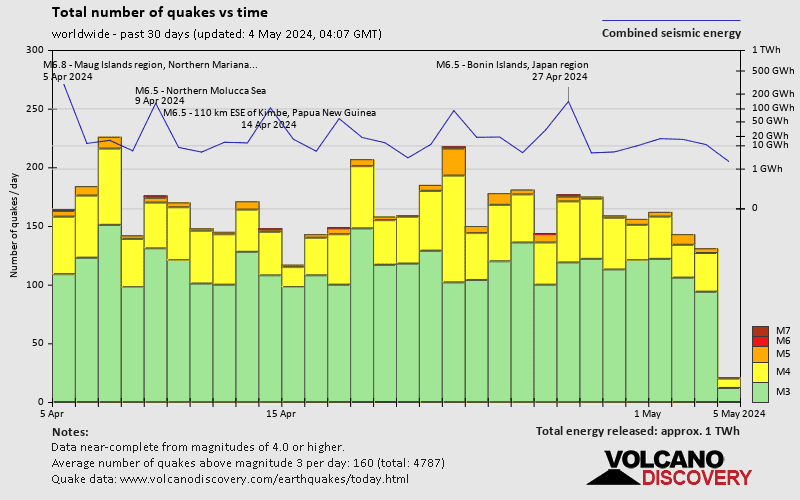
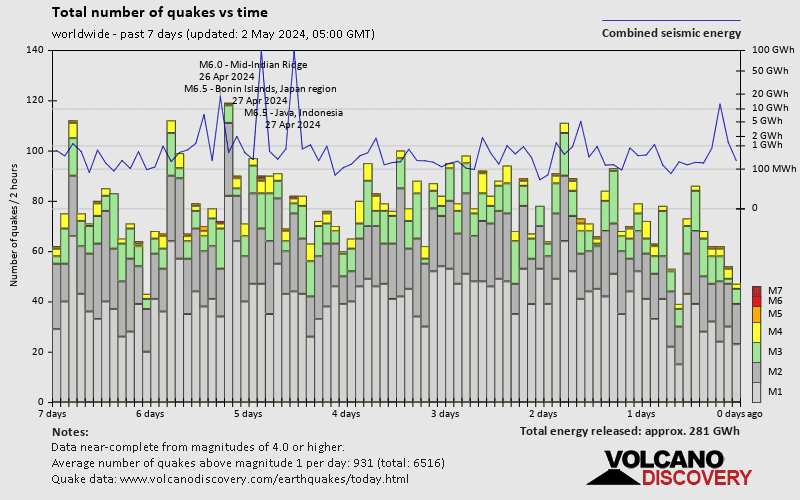
The Philippines lies along the Pacific Ring of Fire, a horseshoe-shaped belt of tectonic plate boundaries encircling the Pacific Ocean. The country experiences frequent seismic activity, with thousands of earthquakes recorded each year. In the past 30 days alone, 5,336 earthquakes have been detected worldwide, with the strongest being a magnitude 7.4 event off the coast of Iwate, Japan, on April 20, 2026. Over the past year, the global tally of earthquakes stands at 53,059, including a magnitude 8.8 quake near Petropavlovsk-Kamchatsky, Russia, in July 2025. The Philippines has seen its share of destructive temblors, including the 2013 Bohol earthquake and the 1990 Luzon earthquake, which caused thousands of casualties.
Monitoring and Public Response
a spike in online searches and visitor traffic to earthquake information pages immediately following the event, a phenomenon that often precedes official data. This digital footprint helps seismologists quickly identify affected areas and gauge public concern. The Philippine Institute of Volcanology and Seismology (PHIVOLCS) is expected to release detailed ground motion maps and aftershock forecasts in the coming hours. Residents are advised to remain vigilant, as aftershocks of lower magnitude are common in the days following a significant earthquake.
What Comes Next
While the immediate danger appears limited, the earthquake serves as a reminder of the persistent seismic risk facing the Philippines. The country's disaster response agencies are on alert, and local governments are conducting rapid damage assessments. The event also underscores the importance of earthquake preparedness in a nation where more than 100 million people live in seismically active zones. As the earth continues to shift along the Philippine Fault and surrounding subduction zones, scientists emphasize that no region is immune to the next major tremor. The 6.0 quake near Nena may prove to be a modest event in the grand scale of global seismicity, but for those who felt the ground move, it was a stark reminder of nature's power.
The bottom line
- A magnitude 6.0 earthquake struck near Nena, Eastern Samar, Philippines on May 4, 2026, at a depth of 73 km.
- It was the strongest earthquake worldwide in the past 24 hours and the largest in the Philippines this week.
- No tsunami warning was issued, and no major damage or casualties have been reported so far.
- The Philippines is part of the Pacific Ring of Fire, experiencing frequent seismic activity.
- Global earthquake counts show 304 quakes in the past 24 hours, with 33 of magnitude 4.0 or higher.
- Aftershocks are possible, and local authorities continue to monitor the situation.


NLEX and Converge Collide in High-Stakes PBA Duel with No. 1 Seed and Playoff Hopes on the Line

Strait of Hormuz Closure Drives Global Fuel Crisis as Oil Hits $110
Philippine Trench Triggers Magnitude 7.4 Earthquake in Davao Oriental, Killing One and Triggering Tsunami Alert