Why Tsunami is making news
Their analysis, published in Geoscience Letters, could help us better understand the tsunami risks faced by local communities, and how to protect them.

PHILIPPINES —
Their analysis, published in Geoscience Letters, could help us better understand the tsunami risks faced by local communities, and how to protect them. Tsunami has emerged this Saturday as one of the stories drawing attention in Philippines.
Key facts
- Their analysis, published in Geoscience Letters, could help us better understand the tsunami risks faced by local communities, and how to protect them.
- “Ever since the 2011 magnitude 9.0 Tohoku-oki earthquake in Japan, we realized that the tsunami data had really valuable information for constraining shallow slip,” said study co-author Diego Melgar.
- On July 29, 2025, a magnitude 8.8 earthquake occurred near the Kamchatka Peninsula.
- Chi-Hsien Tang et al, Lateral extent of coseismic slip and limited shallow rupture during the 29 July 2025 Kamchatka earthquake illuminated by geodetic and tsunami data, Geoscience Letters (2026).
- A powerful tsunami seen from space is overturning what scientists thought they knew about how these waves travel.
What we know
Going deeper, On July 29, 2025, a magnitude 8.8 earthquake occurred near the Kamchatka Peninsula.
On the substance, Chi-Hsien Tang et al, Lateral extent of coseismic slip and limited shallow rupture during the 29 July 2025 Kamchatka earthquake illuminated by geodetic and tsunami data, Geoscience Letters (2026).
Beyond the headlines, a powerful tsunami seen from space is overturning what scientists thought they knew about how these waves travel.
More precisely, this animation shows the simulated tsunami wave heights generated by the M8.8 earthquake.
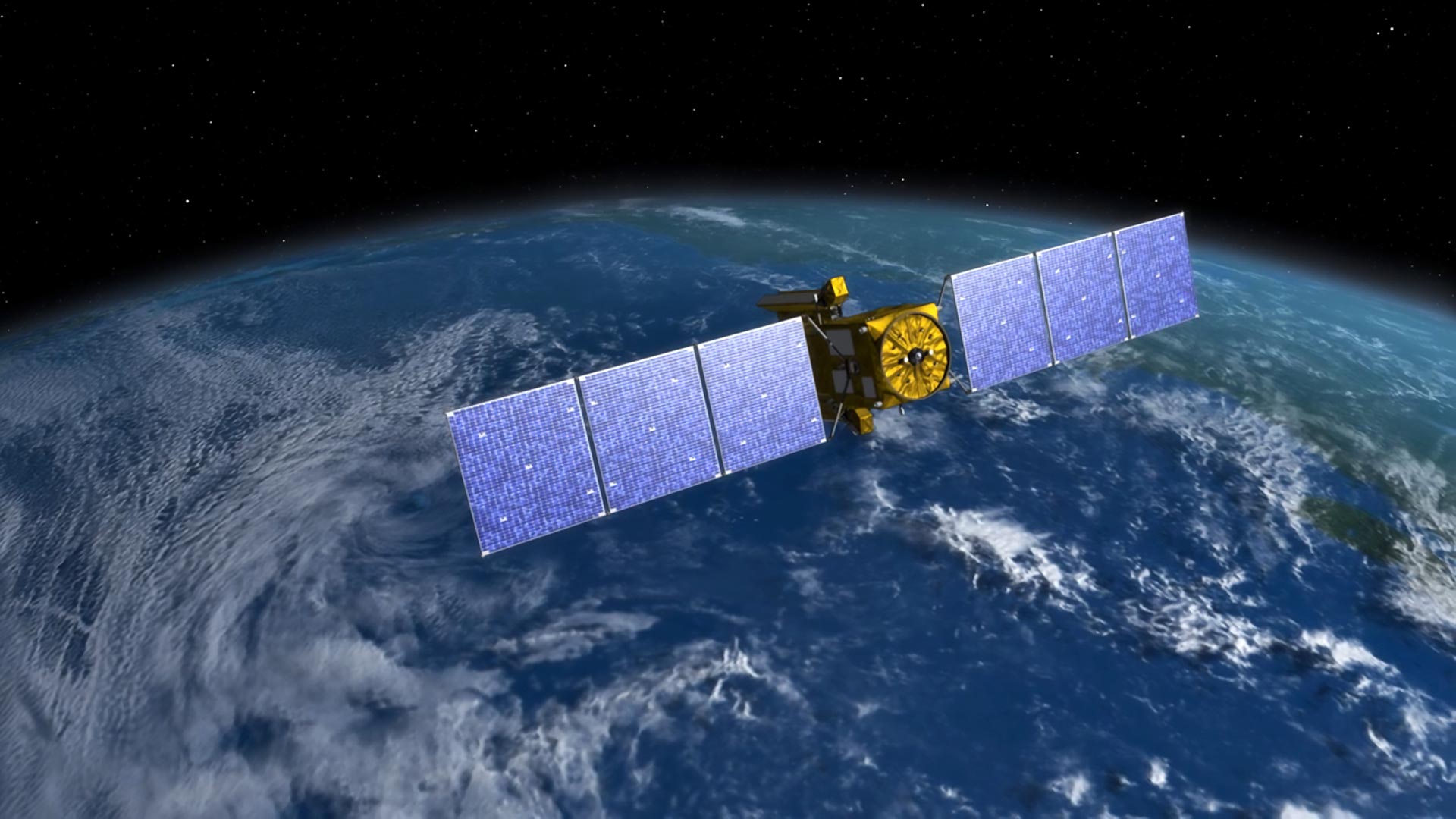
It is worth noting that Around 70 minutes after the earthquake, the path of the SWOT satellite appears, shown in slow motion to illustrate how the fast-moving satellite captured the tsunami and the dispersive waves that followed the main crest.
By the numbers
“Ever since the 2011 magnitude 9.0 Tohoku-oki earthquake in Japan, we realized that the tsunami data had really valuable information for constraining shallow slip,” said study co-author Diego Melgar.
On a related note, that system played a role in issuing alerts during the 2025 tsunami.
Going deeper, Reference: “SWOT Satellite Altimetry Observations and Source Model for the Tsunami from the 2025 M 8.8 Kamchatka Earthquake” by Angel Ruiz‐Angulo, Diego Melgar, Charly de Marez, Aurélien Deniau, Francesco Nencioli and Vala Hjörleifsdóttir, 26 November 2025, The Seismic Record.
On the substance, this subduction zone produces some of the largest earthquakes on Earth, such as the magnitude 9.0 earthquake in 1952.
What they're saying
“I think of SWOT data as a new pair of glasses,” said Ruiz-Angulo. “Before, with DARTs we could only see the tsunami at specific points in the vastness of the ocean.
“The SWOT data for this event has challenged the idea of big tsunamis being non-dispersive,” Ruiz-Angulo explains.
“The main impact that this observation has for tsunami modelers is that we are missing something in the models we used to run,” Ruiz-Angulo added. “This ‘extra’ variability could represent that the main wave could be modulated by the trailing waves as it approaches some coast.
The wider context
On a related note, it was so powerful that it ranks as the sixth-largest earthquake ever recorded by modern instruments.
Going deeper, Using this giant earthquake as a learning opportunity, researchers at Tohoku University's International Research Institute of Disaster Science (IRIDeS) combined multiple datasets in order to reconstruct the movement of the faults (fractures in the earth's crust).
On the substance, the team built three slip models simulating the Kamchatka earthquake and compared them to actual tsunami records.
Beyond the headlines, since seafloor movement is critical for tsunamis, it explains why the resulting tsunami in this case was smaller than early forecasts.
More precisely, the findings indicate that areas north of the rupture zone and the shallow portion of the fault may carry higher tsunami potential.
The bottom line
- A powerful tsunami seen from space is overturning what scientists thought they knew about how these waves travel.
- This animation shows the simulated tsunami wave heights generated by the M8.8 earthquake.
- That system played a role in issuing alerts during the 2025 tsunami.




Knicks Seek Series Win in Game 6 as Hawks Fight to Survive
Magnitude 5.8 Earthquake Strikes Near Yilan, Taiwan, as Global Seismic Activity Intensifies

Colorado Rockies Brace for Up to Two Feet of Snow Amid Historic Drought
