Mortgage Rates Surge to Over One-Month High Amid Geopolitical Tensions
Rising oil prices and inflation fears push average 30-year fixed rates above 6.5%, impacting the housing market.
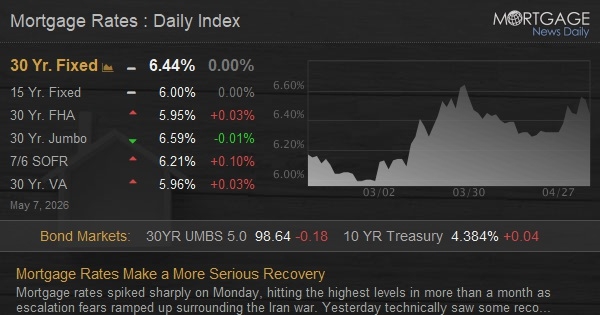
UNITED STATES —
Key facts
- The national average 30-year fixed mortgage APR reached 6.54% on Thursday, May 07, 2026.
- The average 15-year fixed mortgage APR stood at 5.88% on the same date.
- The benchmark 30-year fixed rate mortgage rose to 6.37% this week, up from 6.3% last week.
- Borrowing costs for 15-year fixed-rate mortgages increased to 5.72% from 5.64% last week.
- The 10-year Treasury yield was 4.37% on Thursday, up from 3.97% before the conflict in Iran.
- Sales of previously occupied U.S. homes were down in the first three months of the year compared to a year earlier.
- List prices for homes fell in April from a year earlier for the sixth consecutive month.
Rates Jump Amid War Fears
Mortgage rates experienced a sharp ascent on Monday, reaching their highest point in over a month. This surge was primarily driven by escalating fears surrounding the conflict with Iran, which in turn fueled a rise in oil prices and bond yields. While a slight recovery was observed on Tuesday, current data indicates a more substantial rebound, with average lenders returning to levels seen last Friday. This volatility directly impacts prospective homebuyers and those looking to refinance. The movement in mortgage rates is closely tied to broader market dynamics. Oil prices and bond yields have seen their fastest decline since mid-April, influenced by news of potential progress toward a peace agreement between the U.S. and Iran. Though full details of any accord would require extensive negotiation, the prospect of an end to hostilities has significantly affected financial markets. Bond yields, which directly correlate with interest rates, are a key indicator, though mortgage rates are influenced by specific bonds within the mortgage market. This recent spike brings the average rate on a 30-year fixed mortgage back to where it was four weeks prior. The benchmark rate rose to 6.37% from 6.3% in the preceding week, marking the second consecutive weekly increase. This trend contrasts with figures from one year ago, when the average rate stood at 6.76%.
Economic Indicators and Market Trends
The Federal Reserve announced last week that it would maintain its benchmark federal funds rate without change. Despite this, mortgage rates have continued their upward trajectory, influenced by bond market volatility and inflation concerns stemming from surging oil prices. The U.S. 10-year Treasury bond yield, a key benchmark for mortgage pricing, has climbed to 4.37% in recent trading, a notable increase from 3.97% in late February before the conflict in Iran intensified. This environment has contributed to a subdued start for the spring homebuying season, traditionally the busiest period for the housing market. Sales of previously occupied U.S. homes declined in the first three months of the year compared to the same period in 2025. This marks a continuation of a nationwide housing slump that began in 2022, coinciding with the initial climb in mortgage rates from their pandemic-era lows. Experts anticipate that the expectation of mortgage rates dipping below 6% this spring has diminished. Buyers and sellers are likely to contend with rates in the mid-6% range extending into the summer months. This persistent affordability challenge is reshaping market dynamics for both consumers and industry participants.
Impact on Homebuyers and Sellers
When mortgage rates rise, the cost of borrowing increases significantly, potentially adding hundreds of dollars to monthly payments for home shoppers. This directly limits their purchasing power and the types of homes they can afford. The current volatility and elevated rates are a stark reminder of the financial considerations involved in real estate transactions. For sellers, the softer market conditions are becoming increasingly apparent. The number of homes available for sale saw a 4.6% increase in April compared to the previous year, as properties are taking longer to sell. In response, many sellers are adjusting their expectations and lowering their asking prices. List prices have now decreased year-over-year for six consecutive months, reflecting a shift in market balance. Despite the challenges, home shoppers who remain undeterred by mortgage rate volatility may find opportunities. Buyer-friendly trends are emerging in many housing markets, offering potential advantages to those actively seeking to purchase a home.
National Averages and Lender Offers
On Thursday, May 07, 2026, the national average 30-year fixed mortgage Annual Percentage Rate (APR) was reported at 6.54%, with the average 15-year fixed mortgage APR at 5.88%. For those looking to refinance, the current average 30-year fixed refinance interest rate stood at 6.70%, and the average 15-year refinance interest rate was 6.00%. Surveys of the nation's largest mortgage lenders indicate that for the week of May 3rd, top offers available through financial marketplaces were approximately X% lower than the national average. For a $340,000 30-year loan, this translates to potential annual savings of $XXX. These platforms aim to provide personalized rates and connect consumers with lenders offering terms often well below the national average, displaying interest rates, APRs, and estimated monthly payments for easier comparison. Last week, the average rate for 30-year home loans had risen to 6.37%, according to a national survey of lenders. Rates for 15-year mortgages and 30-year jumbo loans also saw slight increases, underscoring the widespread upward trend across different loan types.
Historical Context and Future Outlook
As recently as late February, the average rate on a 30-year mortgage had briefly dipped below 6%, a level not seen since late 2022. This period offered a brief respite before the current upward pressure resumed, influenced by geopolitical events and economic indicators. The current rate, while below the previous year's average, reflects a period of significant market adjustment. The spring housing market is projected to be considerably more subdued than initially forecast at the end of last year. While a notable decrease in mortgage rates, potentially below the 6% threshold, could stimulate activity, such a scenario appears unlikely in the immediate future. The market's performance is closely monitored for signs of recovery or further contraction. This sustained period of higher borrowing costs, coupled with broader economic uncertainties, is reshaping the landscape for real estate. The interplay between global events, domestic economic policy, and market sentiment will continue to dictate the trajectory of mortgage rates and the health of the housing sector.
The bottom line
- Geopolitical tensions, particularly concerning Iran, are driving up oil prices and bond yields, leading to higher mortgage rates.
- The average 30-year fixed mortgage rate has surpassed 6.5% on some days, reaching over a month's high, impacting affordability.
- The housing market is experiencing a subdued spring season, with declining home sales and falling list prices.
- While rates remain below a year ago, volatility and inflation concerns suggest mid-6% rates may persist through the summer.
- Financial marketplaces offer opportunities for consumers to find rates below the national average through comparison.
- The Federal Reserve has maintained its benchmark federal funds rate, but this has not prevented mortgage rate increases.




Tornadoes Devastate Mississippi, Leaving Homes Destroyed and Residents Trapped
Mississippi Tornado Emergency: Homes Destroyed, Residents Trapped
Tornado Watch vs. Warning: Understanding Alerts When Every Minute Counts
