Minimum Wage, in context
Amid the ongoing affordability crisis, Representatives in Congress have introduced a bill to raise the federal minimum wage for the first time since 2009.

SOUTH AFRICA —
Amid the ongoing affordability crisis, Representatives in Congress have introduced a bill to raise the federal minimum wage for the first time since 2009. Minimum Wage has emerged this Saturday as one of the stories drawing attention in South Africa.
Key facts
- Amid the ongoing affordability crisis, Representatives in Congress have introduced a bill to raise the federal minimum wage for the first time since 2009.
- Representatives in Congress are starting a new push to raise the federal minimum wage to $25 an hour.
- Delia Ramirez (D-Ill.) and Analilia Mejia (D-N.J.), introduced the Living Wage for All act on Tuesday, a bill that would gradually raise the federal minimum wage to $25 an hour.
- If enacted, the bill would require large employers (those with 500 or more employees nationwide or that have gross annual revenues of $1 billion or more) to bring their minimum wage to $25 by 2031, with smaller employers following by 2038.
- From there, the federal minimum would rise periodically to ensure it is always equal to two-thirds of the national median wage, which is around $31 an hour as of the first quarter of 2026, according to Bureau of Labor Statistics data.
What we know
Going deeper, Representatives in Congress are starting a new push to raise the federal minimum wage to $25 an hour.
On the substance, Delia Ramirez (D-Ill.) and Analilia Mejia (D-N.J.), introduced the Living Wage for All act on Tuesday, a bill that would gradually raise the federal minimum wage to $25 an hour.
Beyond the headlines, If enacted, the bill would require large employers (those with 500 or more employees nationwide or that have gross annual revenues of $1 billion or more) to bring their minimum wage to $25 by 2031, with smaller employers following by 2038.
More precisely, From there, the federal minimum would rise periodically to ensure it is always equal to two-thirds of the national median wage, which is around $31 an hour as of the first quarter of 2026, according to Bureau of Labor Statistics data.
It is worth noting that Currently, the federal minimum wage sits at $7.25 an hour and hasn't increased since 2009.
By the numbers
At this stage, the bill would not only raise the federal minimum wage, but also end subminimum wages that currently exist, such as the tipped wage, which allows workers who receive tips to be paid a base wage as low as $2.13 per hour.
On a related note, a joint 2024 study from Harvard Kennedy School's Malcolm Wiener Center for Social Policy and the University of California, San Francisco found no unintended consequences, such as staffing shortages or decreased access to benefits, for minimum wage fast food workers when California raised its minimum.
Going deeper, And 2024 research from the University of Michigan and Carnegie Mellon University found more benefits than drawbacks from minimum wage increases, including stronger worker retention and increased revenue at restaurants that raised workers' pay.
On the substance, On the other hand, a 2023 study by the Federal Reserve Bank of Minneapolis found that while major increases to minimum wage can have positive short-term impacts, the long-term effect could hurt workers by leading to an elimination of lower-skilled and lower-paying roles.
The wider context
On a related note, Around 82,000 workers earn the federal minimum wage of $7.25 an hour, according to 2024 data from the Bureau of Labor Statistics, the most recent available.
Going deeper, Another 760,000 workers earn wages below the federal minimum.
On the substance, In 2012, a group of fast food workers in New York walked off their jobs to demand a $15 minimum wage, spurning the Fight for $15 movement, which saw workers across industries and states push for higher minimum wages.
Beyond the headlines, as of this year, 17 states and Washington D.C. have a minimum wage of $15 or higher.
More precisely, the minimum wage was introduced by President Franklin Roosevelt in 1938 so the lowest-paid workers could still afford to live, putting some of the responsibility on businesses to make sure their employees were paid enough, Jayaraman says.
The bottom line
- The bill would not only raise the federal minimum wage, but also end subminimum wages that currently exist, such as the tipped wage, which allows workers who receive tips to be paid a base wage as low as $2.13 per hour.
- A joint 2024 study from Harvard Kennedy School's Malcolm Wiener Center for Social Policy and the University of California, San Francisco found no unintended consequences, such as staffing shortages or decreased access to benefits, for minimum wage fast food workers when California raised its minimum.
- As of this year, 17 states and Washington D.C. have a minimum wage of $15 or higher.

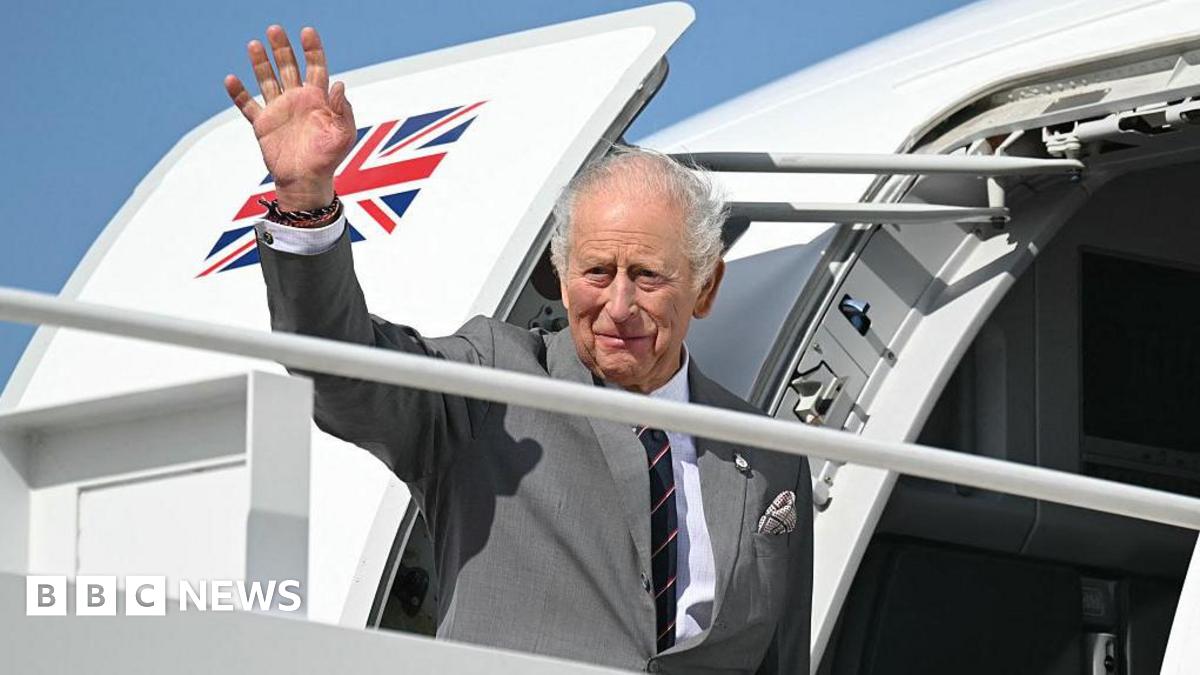
King Charles III and Queen Camilla Conclude US State Visit Amid Diplomatic Outreach

African Continent Edges Closer to Splitting as Turkana Rift Crust Thins to 13 km

Africa Splitting Faster Than Thought as Turkana Rift Crust Thins to 13 km