Rocket Lab Secures Record Launch Contract, Eyes Neutron Debut
The space firm announces a major deal with a mystery client, bolstering its backlog and advancing its ambitious new rocket program.

NEW ZEALAND —
Key facts
- Rocket Lab booked eight launches through 2029 with a single, undisclosed customer.
- The contract includes five Neutron rocket launches and three Electron rocket flights.
- The deal surpasses Rocket Lab's previous record contract value of $190 million.
- Rocket Lab's backlog stood at approximately $2.2 billion by the end of Q1 2026.
- Launches constitute 41.5 percent of Rocket Lab's current backlog.
- The first Neutron launch is targeted for the fourth quarter of 2026.
- Rocket Lab is acquiring space robotics firm Motiv Space Systems.
- The stock trades approximately 10% below its consensus analyst target of $87.56.
Mystery Client Books Eight Launches Through 2029
Rocket Lab has announced a significant block sale of launch services to a confidential customer, securing eight missions through 2029. The agreement encompasses five launches for its heavy-lift Neutron rocket and three for its workhorse Electron rocket. This landmark contract, the largest in the company's history, surpasses its previous record, a $190 million deal for 20 hypersonic test flights of the Haste variant of the Electron rocket for the Department of Defense. The value of this latest contract was not disclosed, but its scale underscores a growing demand for Rocket Lab's launch capabilities. The company's financial health appears robust, with Chief Financial Officer Adam Spice reporting a backlog of approximately $2.2 billion at the close of the first quarter of 2026. A substantial 41.5 percent of this backlog is attributed to launch services, highlighting the central role of this business segment. This influx of secured missions provides a strong foundation for Rocket Lab's ambitious expansion plans. The company is navigating a critical period as it prepares for the maiden flight of its next-generation Neutron rocket, a project that represents a significant leap in its operational capacity and market reach. The success of this new vehicle is paramount to the company's long-term growth strategy.
Neutron Rocket Nears Critical Test Milestones
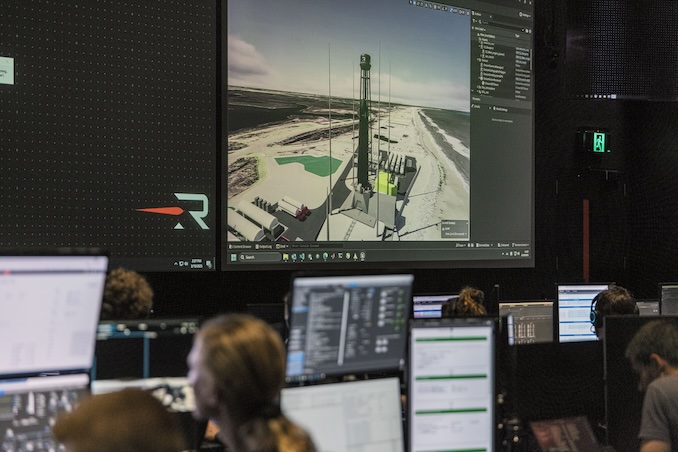
The debut of the Neutron rocket, slated for the fourth quarter of 2026, is being pursued on an "aggressive schedule,". He has urged investors to monitor "placing of items on test stands" as a key indicator of progress. The company is meticulously working through a series of rigorous tests to ensure the vehicle's readiness for its inaugural flight. Significant advancements have been made in component testing. "We’ve cleared separation events at full flight loads on the second stage article and interstage development system," Beck stated, adding that the team is now focused on assessing the resilience of "off-nominal separation events." This means any observed damage during testing should be understood as intentional, a necessary part of validating the system's robustness under extreme conditions. Development of the Neutron's propulsion system is also progressing. The first stage will be powered by nine liquid methane-fueled Archimedes engines, designed to generate nearly 1.5 million pounds of thrust at liftoff, a figure comparable to the SpaceX Falcon 9's 1.7 million pounds of thrust. Extensive testing of these engines is underway at NASA's Stennis Space Center in Mississippi. The integration of flight avionics and fluid systems is occurring at Rocket Lab's Middle River facility before final assembly and integrated systems testing on the launch pad at Launch Complex 3.
Innovative Design Features and Reusability Focus
Neutron is set to feature a novel payload fairing design, dubbed 'Hungry Hippo,' which differs significantly from conventional separation mechanisms. In this configuration, the fairing halves remain attached to the first stage and open to release the second stage. This innovative approach is part of Rocket Lab's broader strategy to enhance reusability and operational efficiency. Furthermore, the company is implementing a qualified reusable fairing system that has undergone thermal protection system (TPS) application upon arrival in Virginia. The integration of avionics and fluid systems for this component is ongoing, preparing it for deployment. Beck indicated that Rocket Lab aims to mirror the successful rollout strategy of its Electron rocket with Neutron. This strategy involves gradually increasing launch cadence: one launch in the first year, three in the second, and five in the third. This measured approach contrasts with the rapid pace of Electron, which completed 21 launches in 2025 after its debut in May 2017, demonstrating a commitment to systematic growth and operational refinement for its new heavy-lift vehicle.
Strategic Acquisitions and Defense Partnerships
Beyond its launch services, Rocket Lab is actively expanding its capabilities through strategic acquisitions. The company has agreed to acquire Motiv Space Systems, a move that will enhance its expertise in space robotics and planetary systems. This acquisition aligns with Rocket Lab's broader objective to become a more integrated player in the space ecosystem, offering a wider array of hardware and services. In parallel, Rocket Lab has been selected by defense contractors Raytheon and Anduril to support hypersonic and missile defense projects. These partnerships signal a deepening engagement in national security space and defense technology sectors. Such collaborations connect the company more directly to pressing U.S. security priorities, particularly concerning hypersonic threats and missile defense systems. These developments collectively position Rocket Lab at the intersection of commercial space infrastructure and government defense spending. The expansion into spacecraft hardware, launch services, and government programs, complemented by the Motiv acquisition's robotics and payload expertise, illustrates management's long-term vision. Investors are advised to monitor how these new programs translate into revenue, margins, and updated financial guidance as they progress from announcement to execution.
Investor Outlook and Market Position
For investors tracking the space and defense industries, these strategic moves by Rocket Lab are significant. They highlight a deliberate effort to diversify revenue streams and strengthen market positioning. The company is simultaneously pushing forward in spacecraft hardware, launch services, and government contracts, while its core business already encompasses small launch vehicles, satellite buses, and components. The stock currently trades at approximately $78.58, which is about 10% below the consensus analyst target of $87.56. While a discounted cash flow valuation is currently unavailable, this suggests potential upside for investors. Recent market performance has been positive, with a 30-day return of 18.49% indicating upward momentum. However, investors should also be aware of potential risks. Three minor risks have been identified, including shareholder dilution and share price volatility. These factors warrant careful consideration regarding position sizing and investment time horizon. The company's trajectory, marked by significant contracts and strategic acquisitions, suggests a complex but potentially rewarding investment landscape.
The bottom line
- Rocket Lab secured its largest launch contract ever, comprising eight missions for an undisclosed client through 2029.
- The new contract includes five Neutron launches and three Electron flights, boosting the company's backlog to approximately $2.2 billion.
- The maiden flight of the Neutron rocket is targeted for Q4 2026, with key component testing underway.
- Rocket Lab is expanding into space robotics and defense technology through the acquisition of Motiv Space Systems and partnerships with Raytheon and Anduril.
- The company's stock currently trades below its consensus analyst target, with recent positive momentum but identified risks including volatility.
- These developments signal Rocket Lab's strategy to integrate space infrastructure and defense spending into its business model.





Hantavirus Outbreak Grips Cruise Ship MV Hondius

Hantavirus Outbreak Linked to Cruise Ship Claims Three Lives

Cruise Ship Hantavirus Deaths Spark Global Health Alert